

By Jimmy Fatunbi
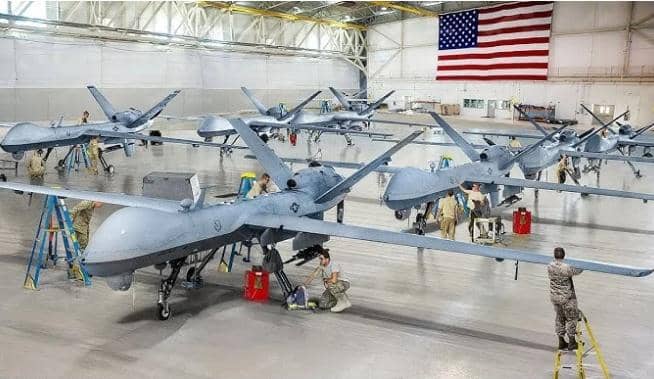
The United States has deployed multiple MQ-9 drones and about 200 military personnel to Nigeria to support ongoing counterinsurgency operations through intelligence sharing and training.
According to a report by Reuters, the mission is strictly non-combat, with U.S. forces providing surveillance and advisory assistance rather than engaging in frontline operations or conducting airstrikes.
Officials from both the United States and Nigeria said the deployment was made at the request of Nigerian authorities to strengthen efforts to identify and respond to terrorist threats, particularly in the northern region.
A U.S. defence official described the move as part of a broader shared security objective, emphasising that the focus remains on intelligence gathering and operational support.
Confirming the development, Samaila Uba, Director of Defence Information, said the U.S. personnel are operating from an airfield in Bauchi State in the northeast.
He explained that the collaboration builds on an existing U.S.-Nigeria intelligence fusion cell, which supplies actionable intelligence to Nigerian field commanders. He added that American personnel remain in a strictly supportive role, with Nigerian forces leading all operations.
The MQ-9 drones—widely known as Reapers—are capable of long-endurance flights exceeding 24 hours and are typically used for both surveillance and precision strikes. However, officials stressed that those currently deployed in Nigeria are being used solely for reconnaissance purposes.
The latest move comes amid renewed security concerns across northern Nigeria, with continued attacks linked to extremist groups such as Boko Haram and the Islamic State West Africa Province (ISWAP).
Military authorities warned that these groups may continue to target vulnerable locations in a bid to maintain relevance through high-profile attacks.
The duration of the U.S. deployment, officials said, will be determined jointly by both countries, reflecting an evolving security partnership focused on intelligence-sharing and capacity-building.
The development follows earlier cooperation between both nations, including reported U.S. air operations targeting extremist elements and prior troop deployments aimed at strengthening Nigeria’s counterterrorism capabilities.
