

By Peter Omopo
The South African government has condemned the reported installation of Solomon Eziko as Igwe Ndigbo of East London, describing the development as unlawful and a violation of the country’s traditional leadership system.
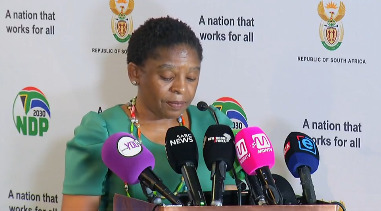
Minister in the Presidency, Khumbudzo Ntshavheni, made the government’s position known while briefing journalists in Pretoria following a Cabinet meeting.
She said the government was concerned about the development, which has triggered unrest in East London, leading to protests that escalated into violence, including the burning of vehicles and looting of properties.
“Our heritage and customs must be respected by all, particularly our visitors,” Ntshavheni said, adding that the so-called coronation had no legal backing.
“The Cabinet expressed disgust at the so-called coronation of a Nigerian national as an alleged chief in KuGompo City in the Eastern Cape. It is a mere kindergarten gimmick and has no legal effect,” she stated.
The minister emphasised that the recognition of traditional authorities in South Africa is strictly governed by law and warned that any parallel structure outside the legal framework would not be recognised.
She also disclosed that the Cabinet acknowledged an apology from the Nigerian High Commission in Pretoria and directed the Department of International Relations and Cooperation to continue diplomatic engagement over the matter.
While addressing the violence that followed the controversy, Ntshavheni cautioned against unlawful protests, stressing that grievances must be expressed peacefully and within the confines of the law.
Meanwhile, the Nigerian High Commission distanced itself from the incident, stating that the gathering was not an official coronation.
“Contrary to the narrative in the public domain, no coronation took place, and none was intended,” the commission said, urging Nigerians in South Africa to remain cautious and avoid actions that could escalate tensions.
In a bid to ease diplomatic strain, the commission also apologised to Oscar Mabuyane, describing the event as a cultural gathering and expressing regret over the controversy it generated.
The incident has drawn participation from political and civic groups, intensifying debates around cultural identity, migration, and the recognition of traditional authority in South Africa.
