

By Peter Omopo
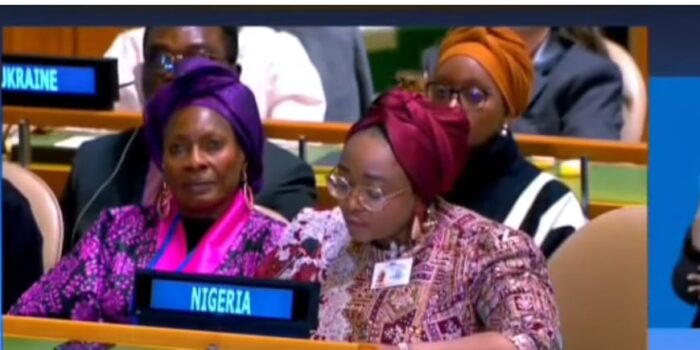
The Minister of Women Affairs and Social Development, Imaan Sulaiman-Ibrahim, has said the Renewed Hope Agenda of President Bola Ahmed Tinubu is delivering significant progress for women, families and vulnerable groups across Nigeria.
The minister made the remarks while addressing delegates at the 70th Session of the United Nations Commission on the Status of Women held at the United Nations Headquarters in New York on Tuesday.
Sulaiman-Ibrahim said the Tinubu administration had strengthened Nigeria’s social protection systems while prioritising policies aimed at empowering women, supporting families and protecting children.
She noted that the President had also declared 2026 as Nigeria’s Year of Families and Social Development, describing the move as historic and reflective of the government’s commitment to strengthening families as the foundation for women’s empowerment, child protection and stable communities.
According to the minister, Nigeria’s social protection programmes have expanded significantly over the years, growing from fewer than one million beneficiary households in 2015 to nearly ten million households in 2026.
She added that women account for more than 70 per cent of the programme’s primary beneficiaries.
Sulaiman-Ibrahim further disclosed that the government is expanding the Renewed Hope Social Impact Interventions 774 initiative, which she described as the largest locally driven investment in women’s empowerment in the country’s history.
The programme focuses on livelihood support, financial inclusion, access to clean energy, digital empowerment and broader social protection coverage.
She also highlighted the Women Digital Harmony Initiative, which includes the Happy Woman App, a digital platform designed to connect more than 20 million Nigerian women to mentorship, information and economic opportunities.
On gender-based violence, the minister said the government is strengthening its national safeguarding framework through improved coordination and accountability measures, including the introduction of a National Electronic Dashboard for real-time monitoring of cases.
She added that efforts are also being intensified to address emerging threats such as technology-facilitated gender-based violence.
The minister noted that the government is promoting the care economy as a pathway to gender equality and inclusive growth by expanding childcare, eldercare and other social support services while addressing the burden of unpaid care work often carried by women.
Sulaiman-Ibrahim reaffirmed Nigeria’s commitment to enforcing key legal frameworks that protect women and children, including the Violence Against Persons (Prohibition) Act and the Child Rights Act.
She also disclosed that the Federal Government has approved an affirmative procurement framework aimed at increasing opportunities for women-owned and women-led businesses to participate in public procurement.
While acknowledging progress made, the minister noted that women’s representation in Nigeria’s parliament remains below 10 per cent, adding that the proposed Reserved Special Seats Bill could significantly improve women’s participation in elective governance.
She further highlighted ongoing initiatives promoting positive masculinity and the development of a National Boy Child Policy, alongside partnerships such as the World Bank-supported Nigeria for Women Programme targeting 4.5 million women through economic empowerment and social support.
Sulaiman-Ibrahim reaffirmed Nigeria’s commitment to working with the international community to promote gender equality, expand opportunities for women and girls, strengthen families and support inclusive national development.
