

By Peter Omopo
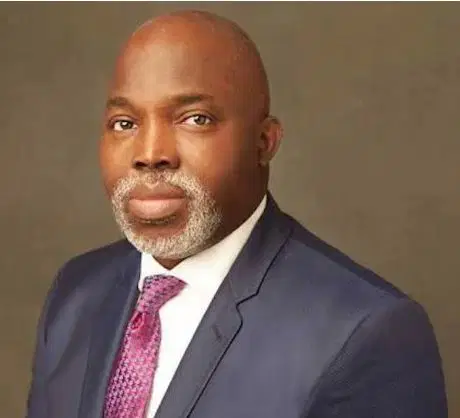
Former President of the Nigeria Football Federation (NFF), Amaju Pinnick, has come under criticism following remarks in which he described himself as the “life president” of the federation, a statement that has sparked debate within Nigeria’s football community amid the country’s absence from the ongoing 2026 FIFA World Cup.
In an opinion article published by Vanguard and authored by Douglas Baye-Osagie, Pinnick’s comments during an interview on Arise Television were described as inappropriate and inconsistent with the principles of accountability and democratic governance expected of modern sports administration.
During the interview, Pinnick stated that he remains actively engaged in football affairs, noting that he still communicates with players and considers himself a critical stakeholder in the game. He remarked that he sees himself as the “life president” of the NFF, a statement that has generated widespread discussion among football followers.
The article argued that while Pinnick’s passion for Nigerian football is not in doubt, administrative leadership should ultimately be assessed by measurable achievements and long-term institutional development rather than personal influence or continued visibility after leaving office.
Pinnick, who served as NFF president from 2014 to 2022, was credited with improving the federation’s profile, attracting sponsorship opportunities and strengthening relationships within African football circles. However, the commentary noted that several longstanding challenges in Nigerian football persisted throughout his tenure, including concerns over grassroots development, domestic league stability, youth football structures and infrastructural growth.
Particular attention was drawn to Nigeria’s failure to qualify for the 2022 FIFA World Cup, ending the Super Eagles’ streak of three consecutive World Cup appearances. The article further observed that the country also failed to secure qualification for the 2026 tournament, a development many football stakeholders regard as a major setback for one of Africa’s traditional football powers.
According to the writer, football administration extends beyond maintaining relationships with players and requires effective management of development programmes, league systems, coaching structures, financial accountability and strategic planning.
The article stressed that institutions such as the NFF should not revolve around any individual, regardless of their contributions, noting that football governance must be guided by strong systems and continuity rather than personal influence.
While acknowledging Pinnick’s contributions during his years in office, the commentary maintained that public declarations such as “life president” risk creating unnecessary controversy and may blur the distinction between former and current leadership within the federation.
The piece concluded by urging stakeholders to focus on structural reforms, investment in youth development, improved coaching standards and stronger support for domestic football, arguing that sustainable progress in Nigerian football will be achieved through institutional strengthening rather than personal titles or public declarations.
