

By Peter Omopo
Nigeria on January 15, 2026, marked 60 years since the country’s first military coup of 1966, an event that fundamentally altered its political history. The date is observed annually as Armed Forces Remembrance Day to honour members of the Nigerian Armed Forces who lost their lives in the two World Wars, the Nigerian Civil War, as well as in peacekeeping and internal security operations.
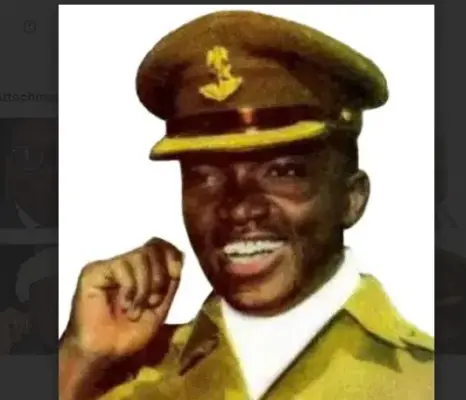
The January 15, 1966 coup, led by Major Patrick Chukwuma Kaduna Nzeogwu, brought an abrupt end to Nigeria’s First Republic, which was headed by Prime Minister Tafawa Balewa and ceremonial President Nnamdi Azikiwe. The uprising ushered in an era of military intervention in governance that would span more than three decades.
Following the coup, Major General Johnson Aguiyi-Ironsi assumed power as Nigeria’s first military Head of State. He ruled from January 16, 1966, until July 29, 1966, when he was assassinated during a counter-coup led by officers from the Northern Region. The counter-coup also claimed the life of the Military Governor of the Western Region, Lt. Col. Adekunle Fajuyi.
Lieutenant Colonel Yakubu Gowon emerged as Head of State after the July 1966 counter-coup. Gowon led Nigeria through the Civil War from 1967 to 1970 and remained in power until July 29, 1975, when he was overthrown in a bloodless coup. During his tenure, he promoted himself to Major General before the civil war and later to full General at its conclusion.
General Murtala Ramat Muhammed succeeded Gowon in 1975 but was assassinated on February 13, 1976, during a failed coup led by Lt. Col. Bukar Suka Dimka. The coup attempt was foiled within hours, leading to the arrest and execution of several plotters.
Following Muhammed’s assassination, General Olusegun Obasanjo assumed office and ruled from February 1976 to 1979. Obasanjo continued Murtala’s reform agenda and eventually oversaw Nigeria’s return to civilian rule with the handover of power to an elected government in 1979, marking the beginning of the Second Republic.
Military rule returned in December 1983 when Major General Muhammadu Buhari led a coup that ousted the civilian administration of President Shehu Shagari. Buhari ruled until August 1985, when he was removed in a palace coup led by General Ibrahim Babangida.
Babangida governed from 1985 to 1993 and introduced a prolonged transition programme to civilian rule. His annulment of the June 12, 1993 presidential election, widely regarded as Nigeria’s freest, plunged the country into political crisis. He later stepped aside, handing power to an Interim National Government headed by Chief Ernest Shonekan.
On November 17, 1993, General Sani Abacha seized power from the interim government. His regime, which lasted until his death in June 1998, was marked by widespread human rights abuses and international isolation.
Abacha was succeeded by General Abdulsalami Abubakar, who initiated a swift transition to democracy. Under his leadership, elections were conducted, culminating in the handover of power to an elected civilian president, Olusegun Obasanjo, on May 29, 1999, ending 33 years of intermittent military rule.
As Nigeria commemorates Armed Forces Remembrance Day and six decades since the first military coup, the occasion serves both as a tribute to fallen soldiers and a reflection on the country’s long journey from military rule to democratic governance.
