

By Peter Omopo
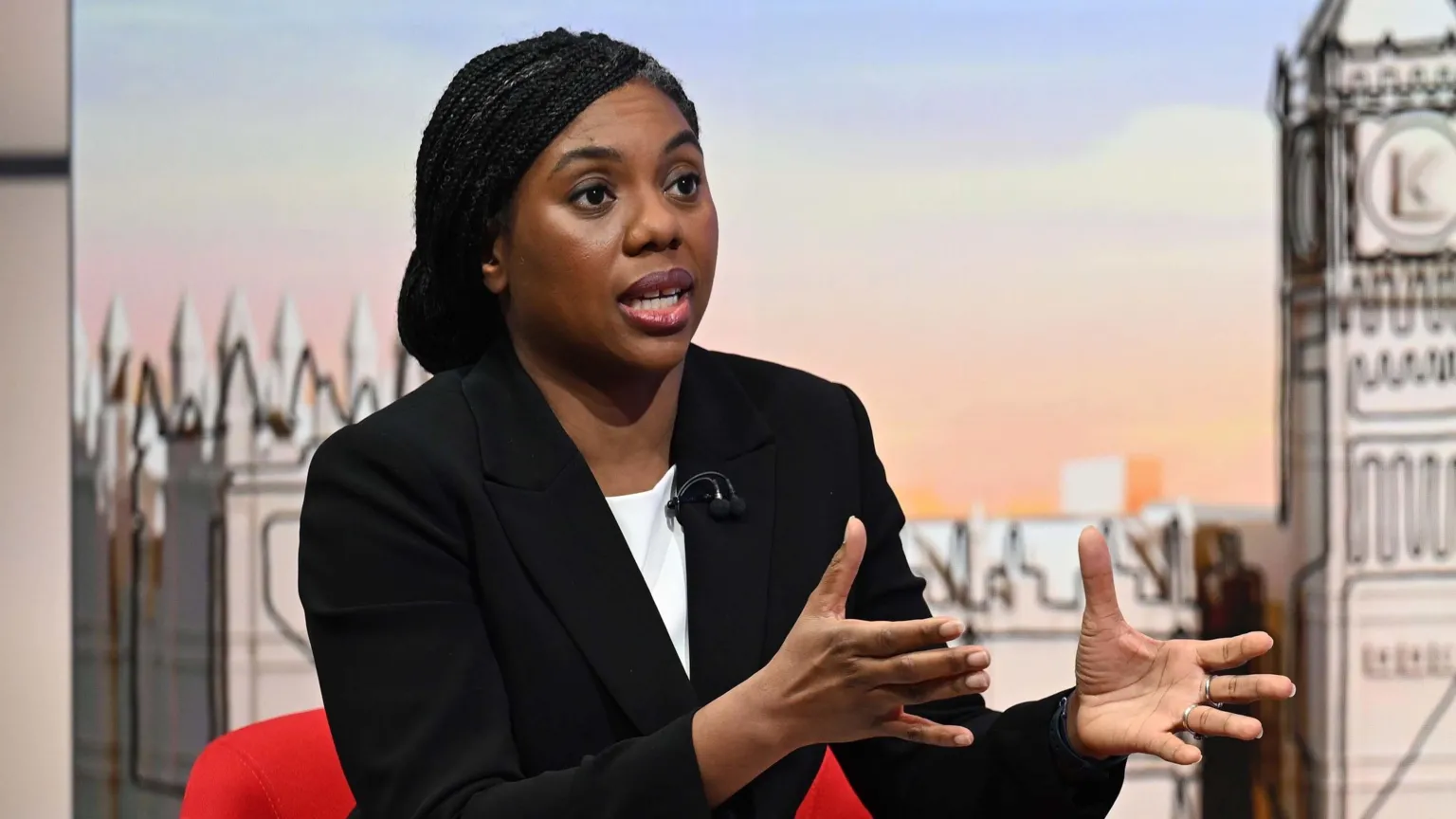
Conservative Party leader Kemi Badenoch has said she intends to channel growing public anger towards the Labour government, as she seeks to re-establish the Conservatives as the party prepared to take what she described as the “tough decisions” facing the United Kingdom.
Speaking on BBC One’s Sunday with Laura Kuenssberg, Badenoch accused Prime Minister Sir Keir Starmer of mismanaging public spending, arguing that while overall expenditure is too high, key areas such as defence remain underfunded. She also claimed that Labour’s approach to governance had become increasingly “draconian” after 18 months in office.
“I’m trying to channel the anger that a lot of people out there feel about the way the country is being run,” Badenoch said, adding that Labour’s policies had become clearer to voters and, in turn, clarified what the Conservatives now stand in opposition to.
The Conservative leader, who took over the party in November 2024 following its defeat in the general election, said her party had learned important lessons from its 14 years in government. She argued that the Conservatives were the only party both “competent enough and brave enough” to make difficult decisions needed to put the country on a firmer footing.
Labour responded by rejecting her claims, saying the public was still “paying the price” for Conservative failures while in office. A Labour spokesperson said the current government would not return to what it described as Tory-era austerity, which it said had damaged public services and driven NHS waiting lists higher.
Badenoch also used the interview to launch fresh attacks on Reform UK, accusing the party of promoting what she described as an “authoritarian” economic agenda. She criticised Reform’s support for lifting the two-child benefit cap, proposals for state-backed investment in oil and gas projects, and suggestions that the government should take a stake in Rolls-Royce in exchange for contracts to build small nuclear reactors.
“They want to increase welfare spending, they want to nationalise Rolls-Royce, oil and gas — that’s not where we want to be,” she said, dismissing any prospect of an electoral pact with Reform to avoid splitting right-leaning voters.
On foreign policy, Badenoch said she supported the principle of working with the United States to remove Iran’s leadership, citing Tehran’s crackdown on protesters and what she described as hostile actions against the UK. She labelled Iran an “enemy” and said she had “no issue” with removing a regime that sought to harm Britain, though she declined to say whether this should involve UK military action.
She also played down speculation about British involvement in any hypothetical defence of Greenland following controversial remarks by former US President Donald Trump, describing the issue as secondary compared with the threat posed by Iran.
Despite some modest improvement in Conservative poll ratings, Badenoch faces a significant challenge in rebuilding support as the party competes with Reform UK for voters disillusioned with Labour. However, she insisted the Conservatives were now focused on opposing what she sees as excessive government intervention and offering an alternative vision for the country’s future.
