

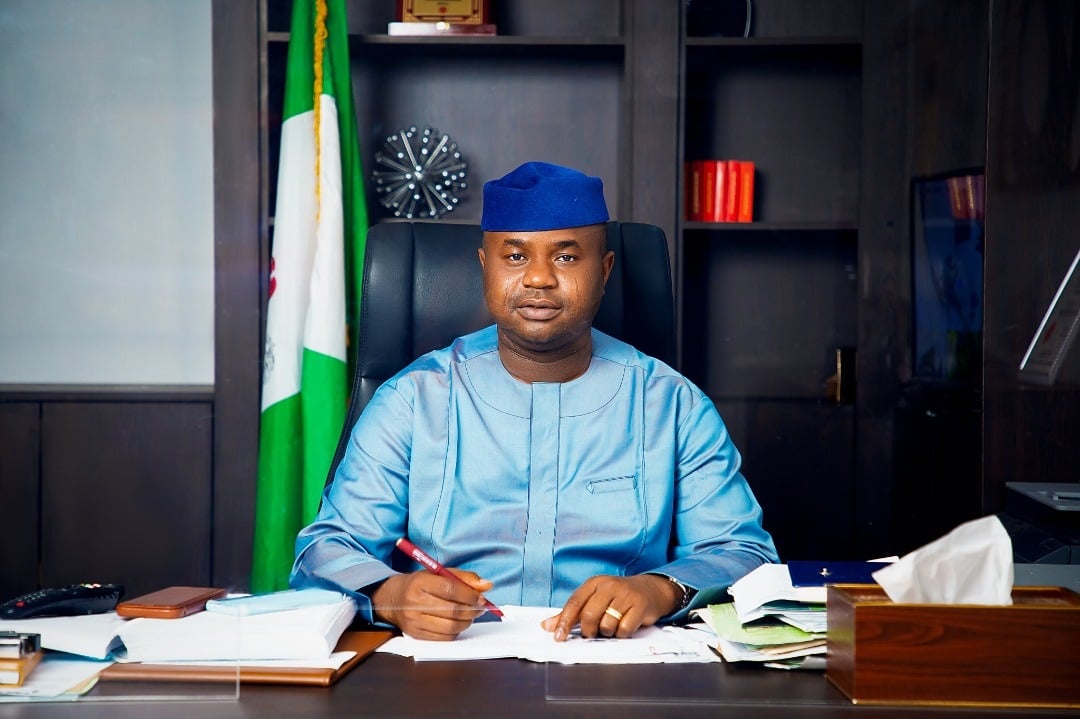
By Peter Omopo
Abuja, September 17, 2025 — The Executive Chairman of the Federal Inland Revenue Service (FIRS), Zacch Adedeji, has defended the Federal Government’s continued resort to borrowing, despite a record-breaking rise in revenue collection.
Speaking on Tuesday at the State House during the Meet-the-Press session organised by the Presidential Communications Team, Adedeji disclosed that federal revenue hit ₦3.64 trillion in September 2025, marking a 411 per cent increase from the ₦711 billion collected in May 2023.
He insisted that borrowing remains a legitimate component of Nigeria’s fiscal strategy, rejecting criticisms that it reflects economic weakness.
“Borrowing is not a problem. Is it not part of the budget we submitted to the National Assembly? Was it not approved? Are we borrowing outside what was approved?” Adedeji asked journalists.
The comments come amid heightened debate over Nigeria’s debt profile. In July, President Bola Tinubu sought approval for a $21.5 billion external loan, including a $2 billion foreign currency bond and a ₦757.98 billion domestic bond to clear pension liabilities. Earlier, in September, the President had declared that Nigeria met its 2025 revenue targets ahead of schedule, suggesting borrowing would no longer be necessary — a statement that sparked fresh scrutiny of government finances.
Borrowing as “Economic Ecosystem”
Adedeji explained that government borrowing should not be seen as reckless spending but as part of a structured economic ecosystem.
He likened it to a business model in which expenditures, revenues, and loans must be balanced:
“If my expenditure is ₦100,000 and I project ₦80,000 from revenue, I will borrow ₦20,000. If I eventually make ₦90,000 in revenue and borrow ₦10,000 as approved, what is wrong with that?”
The FIRS boss stressed that loans are primarily channeled into long-term investments, not recurrent spending such as salaries. He described the approach as part of a “Matchy Concept” — ensuring that projects whose benefits will extend to future generations are not shouldered entirely by the present one.
“Borrowing to build a road means future users will contribute through taxes to pay back. That is fairness,” he argued.
Revenue Reform Gains
Adedeji attributed the sharp revenue jump to sweeping fiscal reforms introduced in the past two years. Non-oil tax receipts rose to ₦1.06 trillion in September, up from ₦151 billion in 2023, while oil-related revenue climbed to ₦644 billion. Value Added Tax (VAT) collections also tripled, reaching ₦723 billion.
He highlighted reforms that streamlined taxes, eased burdens on small businesses, and rationalised incentives. He further disclosed that new initiatives — including a fiscal policy framework, e-invoicing, harmonisation of subnational levies, and a presumptive regime for hard-to-tax groups — will expand compliance and broaden the tax net.
Adedeji also revealed that plans are underway to reduce corporate tax rates in line with broader constitutional and spending reforms.
Critics Brushed Aside
Addressing public concerns, Adedeji dismissed critics — whom he described as “container economists” — for relying on surface-level narratives and social media debates.
“There is no country or individual in the world that survives only on income without borrowing,” he maintained. “Banks, governments, and even households operate within an ecosystem where borrowing sustains growth and creates profit streams that generate more taxes.”
With the sharp revenue gains, the administration argues that borrowing is strategic rather than desperate, a position likely to fuel further debate as Nigeria balances rising fiscal inflows with its heavy debt obligations.
