


A Lagosian Magazine Editorial
In the noisy theatre of Nigeria’s social media, reputations are often built—and battered—at breakneck speed. But every so often, a plot twist forces a pause. The recent public apology by a prominent blogger, popularly known as Aunty Adunni, to Dr. Daniel Olukoya, founder of the Mountain of Fire and Miracles Ministries (MFM), is one such moment.
It is not just the apology that has stirred conversation. It is what the apology represents: a rare reversal in a digital culture that too often rewards certainty over truth, virality over verification.
From Amplifier to Apologist
For months, the name Aunty Adunni featured prominently in online narratives critical of Dr. Olukoya and MFM. Through her platform, she amplified allegations—many of them serious—originating from figures such as Funke Ashekun and Maureen Badejo.
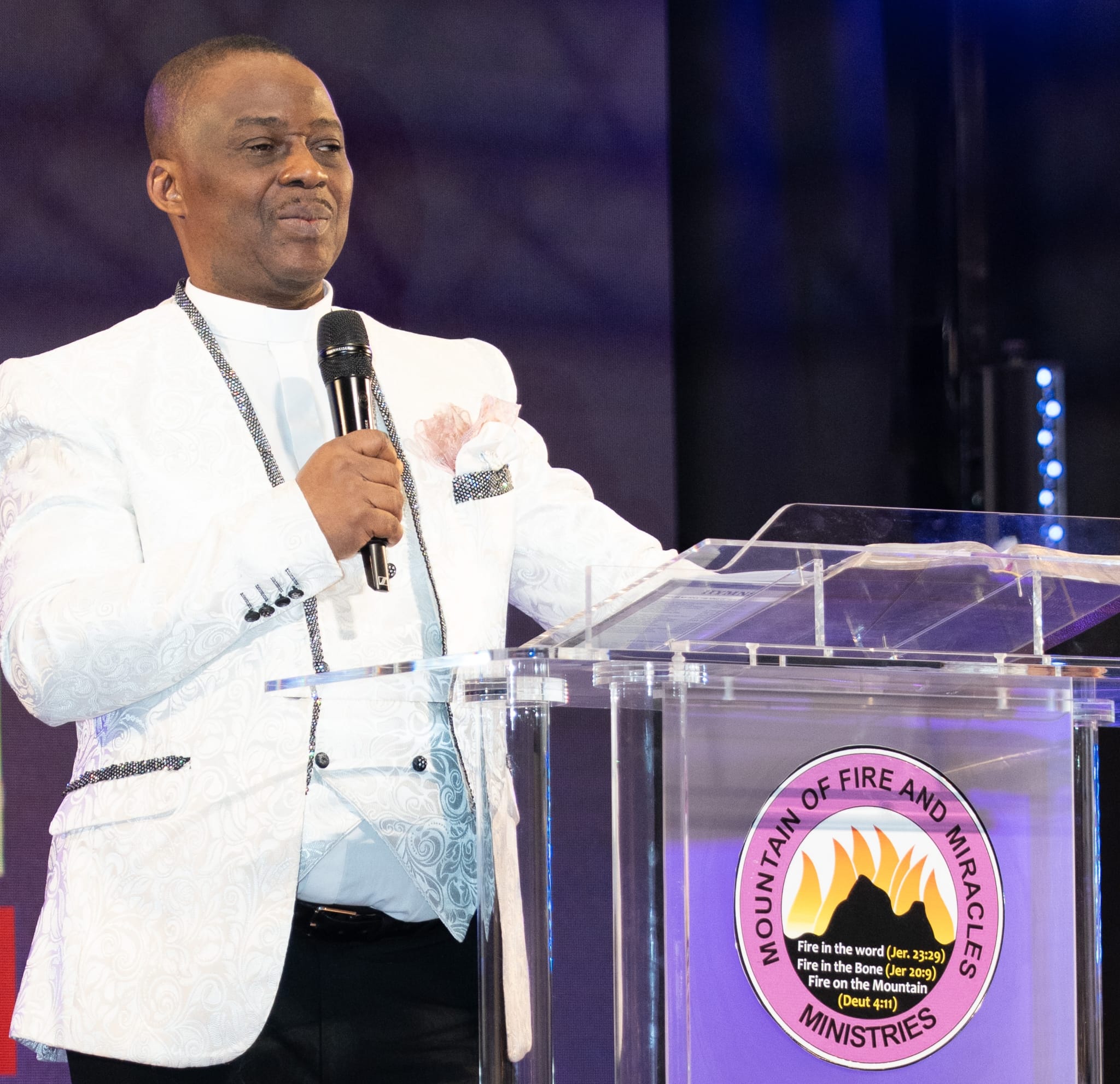
Her voice carried weight. Her audience listened.
But in a startling turn, she went live to retract, reflect, and repent.
In her own words, she admitted three crucial points:
She had never met Dr. Olukoya.
He had never personally offended her.
She propagated claims she could not independently verify.
That admission alone cuts to the heart of a growing problem: the industrial scale at which unverified narratives are circulated in Nigeria’s digital ecosystem.
Her apology was not hedged. It was direct, emotional, and unusually introspective. She acknowledged harm—not just to a public figure, but to a ministry and its followers. And in a media culture where doubling down is often the default, that moment of reversal is significant.
A Fracture Within the Accusers’ Camp
Even more consequential than the apology itself is what followed.
Aunty Adunni did not merely withdraw her earlier stance—she distanced herself from her former allies and went a step further: declaring readiness to testify in court against Funke Ashekun.

That is no small escalation.
If carried through, it signals a breakdown of what once appeared to be a coordinated front. It raises uncomfortable questions:
Were these allegations independently sourced or collectively orchestrated?
To what extent were platforms used as instruments rather than forums?
And how many others, knowingly or unknowingly, became conduits for narratives they did not fully interrogate?
In her own account, she hinted at pressure, persuasion, and hindsight regret—suggesting that what began as advocacy may have drifted into something less defensible.
The Human Cost of Digital Battles
Lost in the noise of accusations and counter-accusations is the collateral damage.
By her admission, lives were disrupted. Families strained. Jobs reportedly lost. Legal consequences—particularly in jurisdictions like the United States—loomed large.
This is the often-overlooked reality of digital crusades: behind every trending topic are real people, real institutions, and real consequences.
And once reputational harm is done, apologies—however sincere—rarely rewind the clock completely.
Faith, Power, and Public Perception
For supporters of Dr. Olukoya and MFM, this development reinforces a familiar narrative: that truth, eventually, asserts itself. Within religious circles, it is already being framed as vindication.
For critics, however, the episode raises a different concern: not necessarily about the innocence or guilt of individuals, but about the mechanisms through which public opinion is shaped—and reshaped—online.
The silence, so far, from Dr. Olukoya and the MFM leadership adds another layer of intrigue. Acceptance or rejection of the apology will carry symbolic weight. It will signal whether reconciliation is possible—or whether this saga is far from over.
A Teachable Moment for the Media Age
Beyond personalities, this episode offers a broader lesson.
Nigeria’s digital public square is powerful—but dangerously unregulated in practice. The barriers to publication are low; the incentives for sensationalism are high.
And yet, as this case illustrates, the consequences—legal, reputational, and moral—are very real.
Aunty Adunni’s closing reflection may well be the most important takeaway: that being “quick to listen but slow to speak” is not just moral advice—it is a professional necessity in the age of instant broadcasting.
What Happens Next?
Several questions remain unanswered:
Will her testimony materialize in court?
How will Funke Ashekun respond to this public rupture?
Will MFM formally respond—or allow events to speak for themselves?
For now, the story sits at a delicate intersection of law, media, and morality.
One thing, however, is certain:
In a landscape where narratives shift overnight, credibility—once lost—may be the hardest thing to recover.
And in that sense, this is more than a scandal.
It is a cautionary tale.
