

By Peter Omopo
The UK government has denied that its deal to transfer sovereignty of the Chagos Islands to Mauritius has been paused, despite earlier comments from a minister suggesting a temporary halt in the legislative process.
A government source said there is no pause and that no deadline had ever been set for the legislation, adding that timings would be announced in the usual way. The clarification came after Foreign Office Minister Hamish Falconer told MPs in the House of Commons that the UK was “pausing” the process while discussions take place with the United States.
Falconer said there had previously been support from the US administration for the treaty, and that position had not changed, but acknowledged a recent statement by US President Donald Trump opposing the agreement. He told MPs the government was discussing US concerns directly and would return to Parliament at the appropriate time.
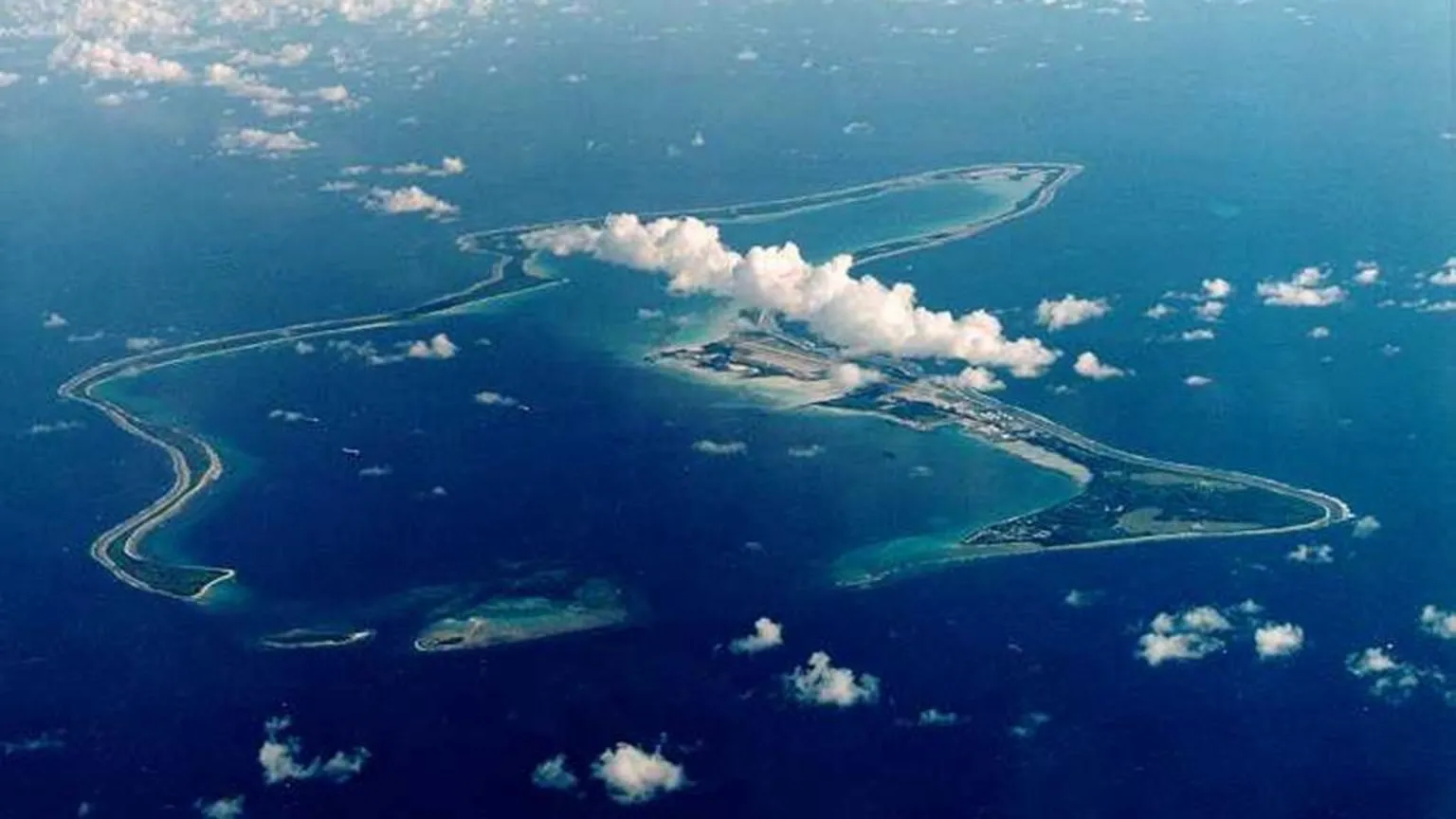
The Chagos Islands, officially known as the British Indian Ocean Territory, are located in the Indian Ocean and have been under British control since the early 19th century. Under the proposed deal, the UK would cede sovereignty of the territory to Mauritius and pay an average of £101 million per year to lease back the joint UK-US military base on Diego Garcia, the largest island in the archipelago.
The agreement has faced renewed scrutiny after President Trump urged Prime Minister Sir Keir Starmer not to “give away Diego Garcia,” calling the deal a blight on a key US ally. His remarks came shortly after the US Department of State had expressed official backing for the UK’s plan to proceed with the agreement.
Legislation to ratify the deal, titled the Diego Garcia Military Base and British Indian Ocean Territory Bill, is in its final stages in the House of Lords. A scheduled debate was pulled in January after the Conservative Party tabled an amendment calling for a pause due to changing geopolitical circumstances. The bill has not returned to the order paper since, although Justice Minister Alex Davies-Jones has said it will come back as soon as parliamentary time allows.
Mauritius’s Attorney General, Gavin Glover, said he was not surprised by Falconer’s remarks and noted there had been no discussion on the legislative process for the past three weeks. He said he remained in close contact with the Foreign, Commonwealth and Development Office and interpreted the comments as a pause rather than a withdrawal from the agreement.
Britain has controlled the islands since 1814 and formally established them as an overseas territory in 1965 after paying Mauritius £3 million to retain the archipelago. In the 1960s, islanders were evicted to make way for the military base on Diego Garcia.
Last year, the UK government agreed to hand control of the islands to Mauritius, arguing that recent international court decisions had threatened the long-term future of the military base. Under the terms of the deal, the UK would pay £101 million annually for 99 years to maintain control of the base.
The agreement has drawn opposition from the Conservatives and Reform UK, as well as from many Chagossians who view the deal as a betrayal and want Britain to retain sovereignty so they can eventually return to their homeland.
Reform UK MP Nigel Farage told the Commons there was no historical or cultural basis for Mauritius to claim the islands and warned of potential geopolitical tensions in the region involving India and China. He also claimed the Maldives could issue a counter-claim at the International Court of Justice.
Shadow foreign minister Wendy Morton criticised the deal as a political choice that would leave Britain weaker, poorer and less safe, arguing it was not a legal necessity but a decision that would ultimately burden taxpayers.
