

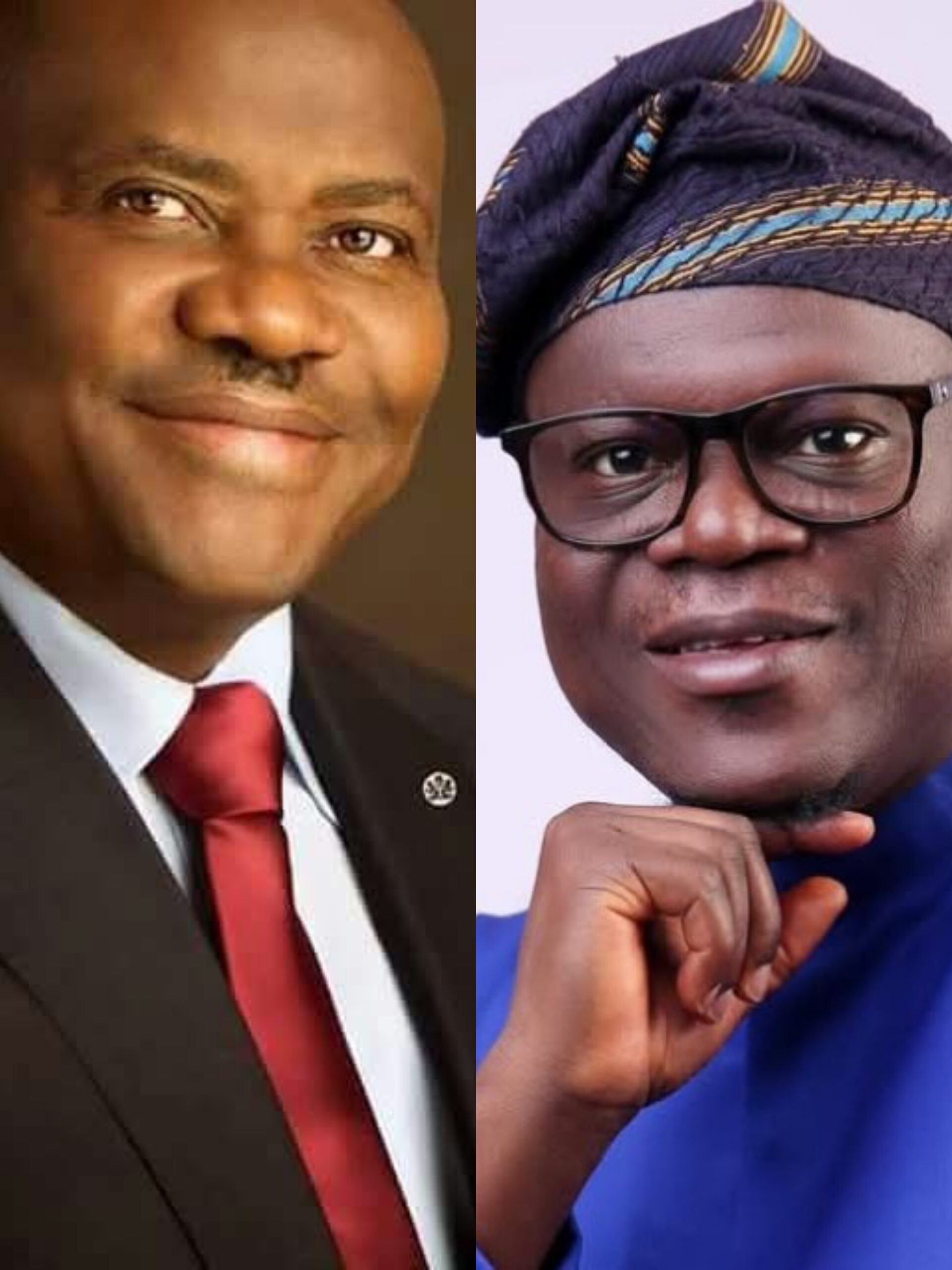
By Malik Awuzie
The recent television interview by Ajibola Basiru, National Secretary of the All Progressives Congress (APC), on TVC News has once again pulled back the curtain on the deeper currents shaping Nigerian politics.
Far beyond the soundbites and daily partisan skirmishes, the interview—aired on Thursday, January 29, 2026—laid bare a striking political reality: Nyesom Wike, former Rivers Governor and current FCT Minister remains one of the most consequential power brokers in Nigeria today, commanding relevance that cuts across party boundaries, institutions, and political generations. Basiru’s candid admission—that Wike is a critical stakeholder in the APC-led government despite not being a card-carrying APC member—was more than a tactical comment.
It was a public recognition of a fact long understood by political insiders: Wike’s influence is irresistible because it is rooted in structure, loyalty, and results, not mere affiliation.
Influence That Defies Party Labels
In orthodox political thinking, party membership is the primary currency of power. Wike’s career challenges that assumption. A former two-term governor of Rivers State and a dominant force within the Peoples Democratic Party (PDP) for years, Wike crossed a psychological and strategic Rubicon in 2023 by openly backing Tinubu’s presidential ambition. That decision shocked many, angered others, but ultimately proved decisive. Basiru’s remarks confirm that the APC has since chosen pragmatism over purism. In acknowledging Wike as an “avowed supporter” of Tinubu and a key actor in resolving the Rivers State crisis, the ruling party has effectively conceded that political utility now outweighs partisan orthodoxy. What matters is not whose logo one flies, but who can deliver stability, votes, and governability.
Rivers State: The Fortress of Enduring Control
Nowhere is Wike’s political gravity more evident than in Rivers State. Even after leaving office in 2023, he has remained the central reference point in the state’s political equation. The ongoing turmoil—marked by tensions with Governor Siminalayi Fubara, defections, impeachment threats in the State Assembly, and fierce public exchanges—has paradoxically reinforced, rather than weakened, Wike’s stature. Why? Because political crises expose where real power lies. Wike’s enduring grip on party structures, lawmakers, local government networks, and grassroots mobilization has made him impossible to sideline. That the APC—now hosting Governor Fubara—still sees Wike as indispensable to peace-building in Rivers speaks volumes. You do not invite a powerless man to mediate a crisis; you invite the one who commands obedience. Basiru’s call for engagement rather than confrontation is thus an implicit admission: Rivers State cannot be stabilized against Wike; it can only be stabilized with him.
National Power Amplified by Federal Office
Wike’s appointment as Minister of the Federal Capital Territory (FCT) has further elevated his national standing. The FCT is not just another portfolio; it is the political nerve center of Nigeria. Control of Abuja’s development, land administration, and infrastructure places Wike at the intersection of power, policy, and patronage. From that vantage point, Wike has become a bridge—sometimes a battering ram—between the presidency and multiple political blocs. His visibility in national governance has normalized his presence within the APC-led administration, even as he remains formally outside the party. In effect, Wike has become a functional insider without being an institutional member.
Cross-Party Pragmatism and the Tinubu Project
Basiru’s interview also reveals a strategic calculation tied to the future. Rivers State is economically vital, politically volatile, and electorally significant. Any serious roadmap toward Tinubu’s governance success—and especially toward 2027—must account for Rivers. The APC’s willingness to work with Wike is therefore not ideological generosity; it is cold political arithmetic. Earlier calls by some APC figures urging Wike to resign or accusing him of overreach now appear out of step with the party’s national mood. The leadership, as Basiru’s tone suggests, has opted for realism: you manage power where it exists, not where you wish it were.
Power Beyond Formal Office
Wike’s case underscores a timeless truth in Nigerian politics: formal titles do not always confer real power. Power flows from the ability to mobilize people, control institutions, shape narratives, and deliver outcomes. Wike’s record as governor—his infrastructure drive, confrontational style, and command of loyalty—created a political machinery that did not dissolve with his exit from office. That machinery still hums, dictating alignments, influencing decisions, and compelling even opponents to negotiate. It explains why national actors speak of Wike in tones reserved not for former officials, but for reigning forces.
An Unsettled Drama, a Settled Reality
The Rivers crisis remains unresolved, and the national political chessboard continues to shift. Yet one reality now appears settled: Nyesom Wike is not a marginal actor waiting to be contained; he is a central force to be reckoned with. Basiru’s interview did not create this reality—it merely confirmed it in plain language.
In the end, the Wike phenomenon illustrates the essence of Nigerian politics: influence is earned through leverage, sustained through loyalty, and validated by necessity. Party labels may change, alliances may shift, and tempers may flare, but as long as outcomes matter, Wike’s influence—both in Rivers State and at the national level—remains, unmistakably, irresistible.
Awuzie, a Public Commentator and Political Analyst writes from Abuja FCT.
