

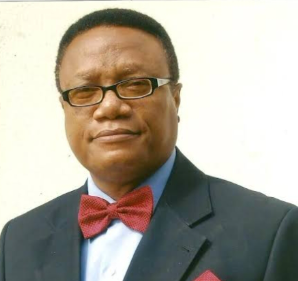
By Hope EGHAGHA
There are times in the life of a nation when a leader is faced with the need to make tough decisions which in the short run can destabilize families and twist the economic fortunes of the business community.
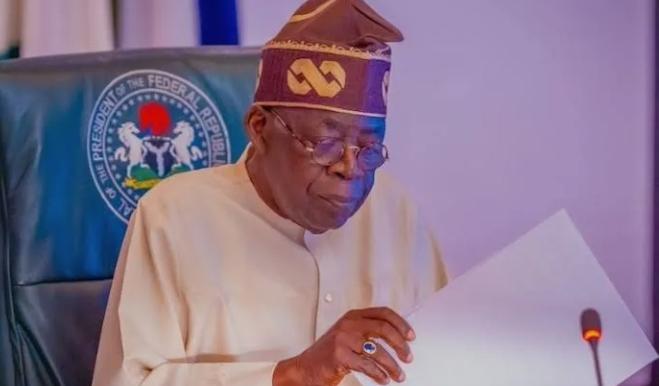
When Bola Ahmed Tinubu was sworn in as President of Nigeria on May 29, 2023, he inherited a country at a crossroads. Africa’s largest economy was battered by debt, inflation, insecurity, and a profound loss of public trust. His predecessor had left behind a system held together by subsidies, controls, and borrowing. Tinubu promised a break — a “Renewed Hope” agenda built on bold reforms, private-sector growth, and a stronger federal state.
Three years into his administration, the question is no longer whether Tinubu was willing to take difficult decisions. He clearly was. The question is whether those decisions will translate into lasting prosperity, or whether the cost of reform will overwhelm its benefits. The prospects and the challenges of his presidency are inseparable, because they come from the same source: the speed and scale of his reforms.
The most defining act of the Tinubu administration came on its first day. In his inaugural speech, Tinubu declared that “fuel subsidy is gone.” For decades, Nigeria had spent trillions of naira subsidising petrol, enriching a small cartel of importers and marketers while draining the treasury. Economists across the political spectrum had long agreed the subsidy was unsustainable. Yet no president had dared to remove it outright, fearing protests and political backlash.
Tinubu did it without a phased plan or a cushion. The immediate effect was brutal: petrol prices tripled overnight, transport costs soared, and food inflation exploded. For millions of Nigerians living on the edge, the reform felt less like medicine and more like punishment. But for the state, the effect was transformative. For the first time in years, the federal government, states, and local governments began receiving significantly higher allocations from the Federation Account. States that had struggled to pay salaries suddenly had money for roads, schools, and infrastructure. The subsidy removal also killed the incentive for smuggling petrol to neighbouring countries, a trade that had bled Nigeria for decades.
Closely linked was the second major reform: the unification of the exchange rate. Under the previous administration, Nigeria operated a multiple exchange rate system, with an official rate far below the parallel market rate. That gap created a paradise for rent-seekers who could access cheap dollars from the Central Bank and sell them at a massive profit. Tinubu’s Central Bank floated the naira, allowing the market to determine its value. The cost of living started killing the living!
Again, the short-term pain was severe. The naira lost more than half its value against the dollar in months, making imports, medicines, and school fees abroad dramatically more expensive. Inflation, already high, surged past 30 percent. But the reform restored a measure of credibility to Nigeria’s economic management. Foreign investors, who had fled because they could not repatriate profits at a realistic rate, began to return. The backlog of trapped airline funds and foreign investor dividends was gradually cleared. Nigeria, for the first time in years, began to look like a country where the rules were the same for everyone.
These two reforms form the core of the administration’s economic prospect: a leaner, more transparent, more market-driven economy. If they hold, Nigeria could finally break the cycle of boom-and-bust oil dependence. The Tinubu government has used the fiscal space to push an ambitious infrastructure agenda — the Lagos-Calabar Coastal Highway, the Sokoto-Badagry Superhighway, massive railway rehabilitation, and new investments in power. It has also pushed tax reform, aiming to simplify Nigeria’s chaotic tax system, widen the tax net, and reduce the burden on small businesses while making large corporations pay their fair share. The new tax laws, passed in 2025, are among the most significant structural changes in decades.
There is also a political prospect that is often overlooked: the state police reform. In 2026, after years of debate, the National Assembly passed a constitutional amendment to create state police, and by November 2026, more than 30 state assemblies had concurred. If fully implemented, this would be the most profound restructuring of Nigeria’s security architecture since independence. It would allow states like Lagos, Kano, Borno, and Rivers to build police forces tailored to local threats — banditry in the Northwest, terrorism in the Northeast, kidnapping in the Southeast, and cultism in the South-South. For Tinubu, who built his political career as Governor of Lagos demanding true federalism, this is a legacy project.
But the challenges are formidable, and they threaten to undo the prospects.
The first challenge is the cost of living. Reform without relief is politically dangerous. Despite higher government revenues, many Nigerians feel poorer today than in 2023. Wages have not kept up with inflation. The new minimum wage of ₦70,000, while a significant increase on paper, buys far less than the old ₦30,000 did before subsidy removal. Palliatives — bags of rice, cash transfers, CNG buses — have been widely seen as inadequate, poorly targeted, and often captured by politicians. The administration’s greatest vulnerability is not the opposition, but the quiet anger of ordinary people who were told to sacrifice and have not yet seen the reward.
The second challenge is insecurity. Tinubu inherited a security crisis that has mutated rather than improved. Banditry, kidnapping for ransom, farmer-herder clashes, and separatist violence remain daily realities. While the military has recorded successes against Boko Haram and ISWAP in the Northeast, the Northwest has become the new epicentre of terror, with heavily armed gangs controlling highways and villages. State police, if implemented, could help, but it will take years to recruit, train, and fund new forces — and there are real fears that governors could abuse state police for political vendettas.
The third challenge is corruption and trust. Tinubu’s reforms depend on Nigerians believing that the money saved from subsidy removal is being used wisely. Yet scandals around humanitarian ministry funds, opaque contract awards, and the lavish spending of the National Assembly have eroded that trust. The administration has made high-profile arrests through the EFCC, but critics argue that anti-corruption has been selective. Without a visible crackdown on waste at the top, it is hard to ask for sacrifice at the bottom.
The fourth challenge is the politics of 2027. Tinubu is already in campaign mode, and the reform agenda is increasingly being filtered through electoral calculations. The coalition of opposition figures — from Atiku Abubakar to Peter Obi to Rotimi Amaechi — is attempting to unite around a single message: that Tinubu’s reforms have enriched the elite and impoverished the masses. If the economy does not show tangible improvement — lower food prices, stable electricity, jobs — by early 2027, the president will face a far more difficult re-election than his allies expect.
Ultimately, the Tinubu administration will be judged not by its intentions, but by its outcomes. Its prospects are real: a more honest exchange rate, a subsidy-free budget, higher state revenues, tax reform, and state police could, together, lay the foundation for a modern Nigerian state. Its challenges are equally real: hunger, insecurity, distrust, and the ticking clock of politics. In the midst of these challenges, Tinubu is facing a second term re-election bid. The optics are bad. But he seems to count on the goodwill and popularity of the state governors and political appointees to convince the people that there is hope for the people and that the people will reap the benefits of the reforms if he is given a second chance. The truth is that President Tinubu is the candidate to beat.
Tinubu bet his presidency on the idea that Nigerians would endure short-term pain for long-term gain. History will decide whether that bet was visionary or reckless. What is certain is that Nigeria will not return to the old system. The subsidy is gone. The old exchange rate regime is gone. The question now is what Nigeria will build in their place — and whether ordinary Nigerians will live long enough, and well enough, to enjoy it.
