

By Peter Omopo
Lagos State Governor, Babajide Sanwo-Olu, has reaffirmed his administration’s commitment to delivering the Lagos International Financial Centre (LIFC), urging public and private sector stakeholders to strengthen collaboration to position Lagos as a leading global financial hub.
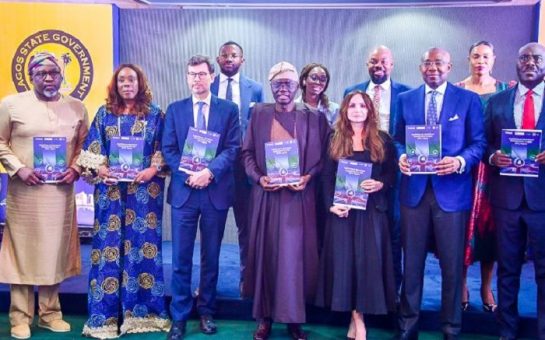
The governor made the call on Thursday at the unveiling of the Phase One report of the LIFC at the Lagos State House, Marina. Sanwo-Olu, who chairs the Lagos International Financial Centre Council (LIFCC), described the initiative as a far-reaching economic reform aimed at boosting Nigeria’s global competitiveness and elevating Lagos into the league of international financial centres.
He explained that the project, conceived about two years ago, was designed to attract foreign capital, deepen financial markets and unlock sustainable economic opportunities for both Lagos State and the country at large. According to him, the success of the LIFC depends on a clear long-term vision, strong institutions and consistent policy support.
“For me, it is all about leadership and confidence. If you can dream it and envision it, then you can achieve it. The foundation we are laying today is for the future of our economy, our children and generations to come. This is not just about Lagos; it is about building an economic legacy that will transform Nigeria’s financial ecosystem,” the governor said.
Sanwo-Olu noted that extensive groundwork had already been carried out through policy consultations, technical partnerships and institutional capacity development, adding that the focus would now shift to implementation and key structural reforms.
He acknowledged the support of the United Kingdom government and TheCityUK, stressing that establishing a credible international financial centre requires a robust institutional framework and strong strategic investment partnerships.
The governor also emphasised the importance of insulating the project from political transitions, revealing that both state and federal institutions have been integrated into the implementation framework to ensure continuity.
“We have designed a model that involves both state and national institutions so that the project becomes institutional rather than personality-driven. It is about building a sustainable structure that will outlive any administration,” he said.
Calling for deeper public-private sector collaboration, Sanwo-Olu said shared risk, joint investment strategies and collective ownership would be critical to achieving the objectives of the LIFC.
Speaking at the event, British Deputy High Commissioner to Nigeria, Jonny Baxter, described the initiative as a significant economic milestone capable of attracting domestic and international capital for infrastructure development, job creation and long-term economic growth. He commended the Lagos State Government and EnterpriseNGR for driving the project and strengthening engagement with federal institutions.
Also speaking, Co-Chairman of the LIFCC, Aigboje Aig-Imokhuede, highlighted the pivotal role of the private sector, describing the LIFC as a collaborative economic ecosystem dependent on strong partnerships between government and business.
He said EnterpriseNGR had played a leading role in advancing the initiative by drawing lessons from established global financial centres such as London, New York and Kigali, adapting global best practices to Lagos’ unique economic context.
The Lagos International Financial Centre is expected to serve as a catalyst for financial sector growth, capital market expansion and broader economic transformation in Nigeria.
