

By Kolawole Omotola Olaide
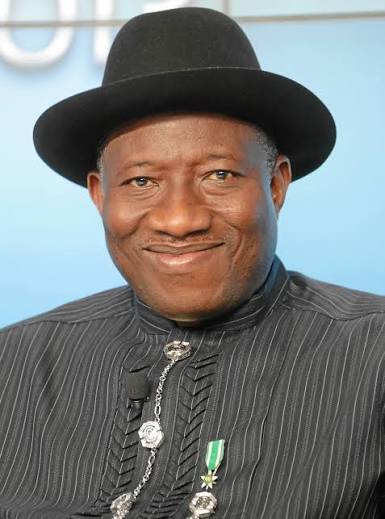
Fresh conversations surrounding the 2027 presidential election have once again placed former Nigerian President Goodluck Jonathan at the center of constitutional debate over whether he can legally return to the ballot.
The renewed argument follows a suit currently before the Federal High Court in Abuja, where a legal practitioner is asking the court to declare Jonathan ineligible to contest for president again. The plaintiff argues that the former president had already taken the presidential oath twice — first in 2010 after the death of late President Umaru Musa Yar’Adua and again after winning the 2011 presidential election.
Jonathan, who served as Nigeria’s vice-president from 2007 until 2010, assumed office following Yar’Adua’s death and completed the remaining tenure before later securing victory in the 2011 general election. He eventually lost his re-election bid in 2015.
However, legal disputes over Jonathan’s eligibility are not new in Nigeria’s political history.
Earlier Court Battles
The first major legal confrontation emerged ahead of the 2015 presidential election when a suit was filed at an FCT High Court in Abuja challenging Jonathan’s right to seek another term.
The plaintiff in that case argued that Jonathan’s first oath of office in May 2010 should count as a full presidential term, insisting that his second oath in 2011 meant he had already exhausted the constitutional limit allowed under Nigerian law.
Jonathan’s legal team, however, maintained that he was only “elected” president once — during the 2011 election. According to his lawyers, his 2010 emergence came through constitutional succession and not through an electoral process.
In its judgement delivered in 2013, the court ruled in Jonathan’s favour, explaining that Section 137(1)(b) of the Nigerian Constitution only disqualifies individuals elected at two previous presidential elections. The court held that Jonathan had only won one election.
The presiding judge further stated that Jonathan’s succession in 2010 was purely constitutional following Yar’Adua’s death and could not be regarded as an election victory.
Appeal Court Affirms Decision
The matter later proceeded to the Court of Appeal, where a five-member panel upheld the earlier judgement in 2015.
According to the appellate court, the word “election” clearly refers to a democratic process involving voting, nomination, result collation, and declaration of winners — conditions that did not apply when Jonathan succeeded Yar’Adua in 2010.
The court concluded that constitutional succession could not be interpreted as an election for the purpose of denying an individual the right to contest.
Constitutional Amendment Changes Debate
Years after the legal controversy,
Nigeria amended its constitution in 2018 by introducing Section 137(3), which states that anyone sworn in to complete the tenure of another elected president cannot later be elected to the office for more than a single additional term.
The amendment reignited debates over Jonathan’s eligibility ahead of the 2023 election season.
In 2022, another suit was filed at the Federal High Court in Yenagoa seeking to stop Jonathan from contesting under the All Progressives Congress.
The plaintiffs relied heavily on the new constitutional provision, arguing that Jonathan’s 2010 oath and subsequent 2011 election effectively prevented him from seeking office again.
Jonathan’s defence team countered that the constitutional amendment introduced in 2018 could not be applied retroactively against him because his political rights existed before the amendment became law.
The court agreed with Jonathan’s argument and ruled that the constitutional provision could not disqualify him retrospectively. The judge also reaffirmed earlier judicial interpretations that distinguished constitutional succession from election victory.
Fresh Legal Challenge Emerges
Now, with political discussions ahead of 2027 intensifying, the constitutional debate has resurfaced once again.
Jonathan’s legal team reportedly insists that courts of competent jurisdiction had already settled the issue in earlier rulings and that those decisions remain valid since they have not been overturned by the Supreme Court.
The lawyers also argue that the current case represents another attempt to reopen matters previously decided by Nigerian courts.
As political calculations continue ahead of the next presidential race, legal analysts believe the outcome of the latest suit could shape future interpretations of presidential tenure and succession in Nigeria’s constitutional democracy.
