

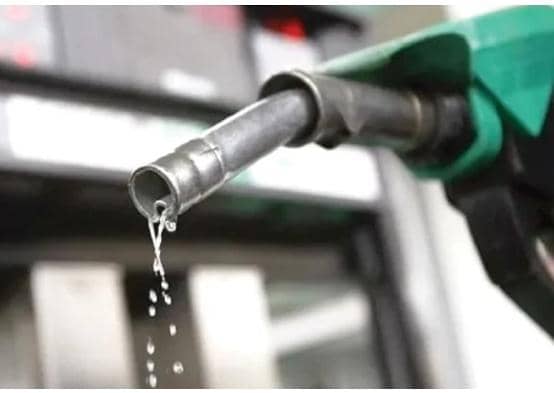
By Jimmy Fatunbi
Businesses across Nigeria are preparing for a possible increase in operating costs after petrol prices climbed to about N1,300 per litre in several parts of the country on Monday.
Economists and members of the Organised Private Sector (OPS) warned that the development could trigger renewed inflationary pressures, affecting the prices of goods and services as companies adjust budgets and pricing strategies to cope with higher energy costs.
The surge in fuel prices follows the recent escalation in the US–Iran conflict, which has pushed global oil markets into volatility. The situation was compounded after the Dangote Petroleum Refinery raised its gantry price for Premium Motor Spirit (PMS) from N995 to N1,175 per litre. As a result, many filling stations nationwide adjusted their pump prices upward.
Across the country, petrol was sold between N1,250 and N1,400 per litre at various outlets on Monday, reflecting the ripple effect of the refinery’s latest price adjustment.
Business leaders warned that the increase could raise transportation and logistics costs, which may subsequently drive up food prices and other essential commodities. They urged the Federal Government to strengthen local refining capacity and introduce innovative measures to stabilise fuel prices.
Meanwhile, the Nigeria Labour Congress criticised the repeated increases in petrol prices by the refinery, expressing concern about the growing burden on ordinary Nigerians.
The price hike marks the third upward adjustment by the refinery within a week, coinciding with sharp movements in the global crude oil market. Crude prices briefly rose to around $115 per barrel before easing to about $98 later in the day.
A senior official of the refinery, who spoke on condition of anonymity, confirmed the adjustment and said the new prices had already been communicated to marketers and depot operators.
“The gantry prices have been reviewed. PMS now sells at N1,175 per litre, while Automotive Gas Oil (diesel) is N1,620 per litre,” the official said. “Recent volatility in the global oil market has significantly increased replacement costs, and the adjustments reflect prevailing market realities.”
Industry data from petroleumprice.ng showed that the revised rates had already been reflected across depot pricing systems used by downstream marketers.
Following the announcement, filling stations quickly adjusted their pump prices. Some outlets raised prices from around N1,060 per litre to as high as N1,250.
Refinery Defends Price Adjustment
In a statement shared via its social media platform, the Dangote Group defended the price increase, saying global supply disruptions and rising crude oil prices had forced the adjustment.
The Managing Director and CEO of the refinery, David Bird, explained that despite domestic refining, the company still buys Nigerian crude at international benchmark prices.
He noted that crude prices had surged from the mid-$60 range to nearly $120 per barrel within a week, while freight and shipping costs had also risen sharply. According to him, tanker costs had jumped from about $800,000 to roughly $3.5 million per shipment.
Bird added that the refinery is currently operating at its full production capacity of about 650,000 barrels per day, with the potential to increase output to around 700,000 barrels daily.
Industry Reaction.
The Independent Petroleum Marketers Association of Nigeria said the price surge might be temporary, noting that petrol prices could fall once global crude prices stabilise after the conflict.
According to the association’s spokesperson, Chinedu Ukadike, marketers are simply adjusting pump prices to reflect the cost of purchasing fuel from depots and refineries.
Similarly, Eche Idoko of the Crude Oil Refineries Association of Nigeria said there is little that authorities can do immediately, as global geopolitical tensions are the primary drivers of the price surge.
Inflation Concerns
Leaders of the Organised Private Sector warned that rising fuel costs could quickly translate into higher transportation and food prices.
The Director-General of the Lagos Chamber of Commerce and Industry, Chinyere Almona, said the increase had already begun to affect logistics costs across the economy.
She explained that higher freight costs caused by tensions in the Middle East could further increase the cost of imported goods, potentially reversing recent progress made in moderating inflation.
Almona urged the government to intensify investment in domestic manufacturing and refining capacity to reduce Nigeria’s exposure to global shocks.
Similarly, the Director-General of the Nigeria Employers’ Consultative Association, Adewale Oyerinde, warned that sustained increases in energy costs could worsen inflation, particularly food inflation.
According to him, higher fuel prices increase production, distribution, and transportation costs across major sectors such as agriculture and manufacturing. Businesses often pass these costs to consumers, which weakens purchasing power and deepens inflationary pressures.
However, he noted that Nigeria’s growing local refining capacity could help cushion the impact of global oil price volatility if supported by transparent pricing policies and efficient supply chains.
