

By Peter Omopo
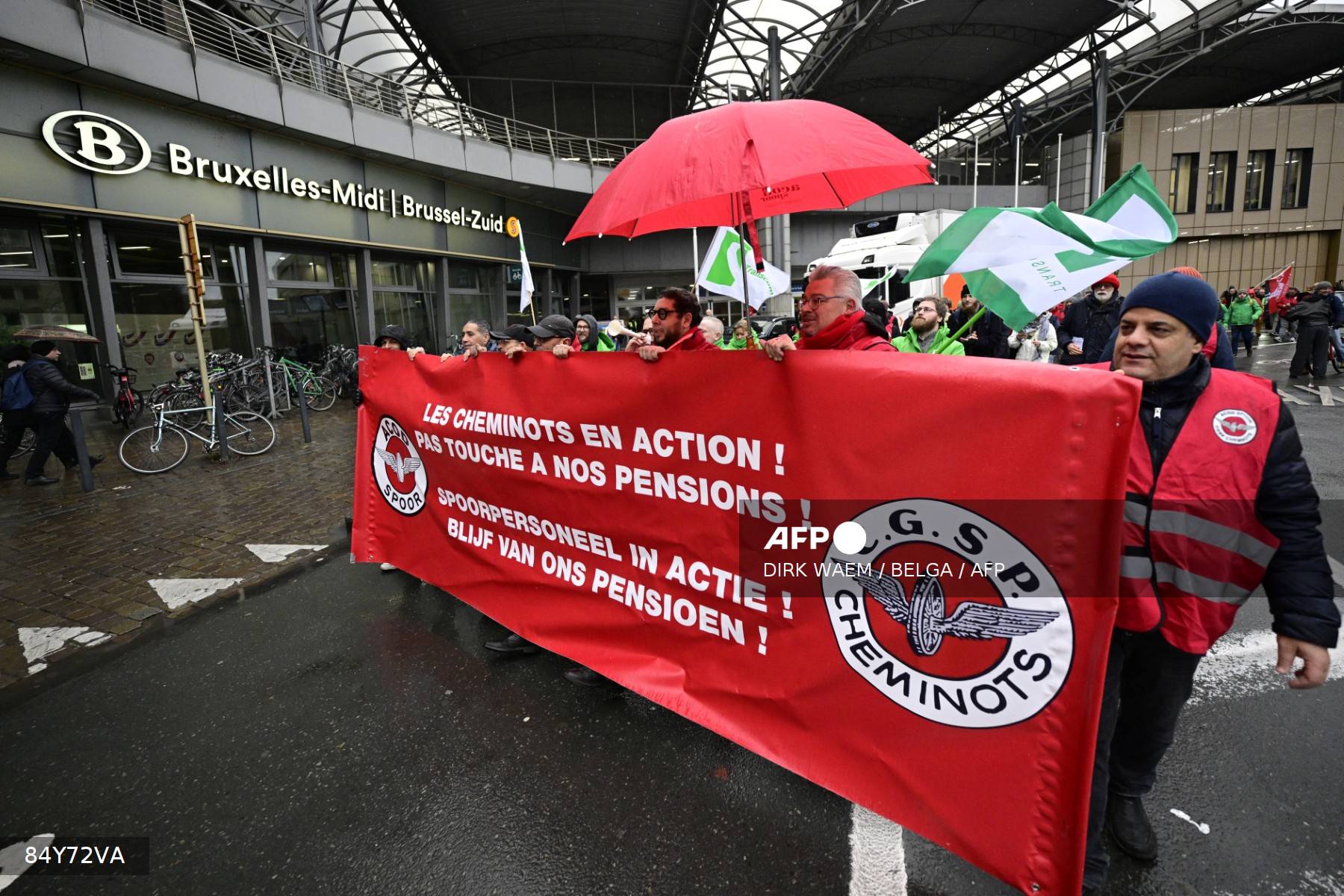
Belgium faced widespread disruptions on Monday as major labour unions launched a three-day nationwide strike to oppose the federal government’s proposed austerity measures and structural reforms aimed at cutting the country’s soaring national debt.
The coordinated industrial action—expected to be one of the largest in recent years—began with rail and public transport workers downing tools, forcing te national rail operator, SNCB, to operate at just one-third to two-thirds of normal capacity. Several international services, including Eurostar trains linking Brussels and Paris, were cancelled.
Schools, Hospitals and Airports to Shut Down
The strike is rolling out in phases. On Tuesday, workers in public services—including schools, nurseries, and hospitals—are expected to join the action. By Wednesday, unions have called for a complete general strike covering all economic sectors.
Air travel will be particularly hard hit, with Belgium’s two major airports—Brussels Airport (Zaventem) and Charleroi Airport—announcing that no flights will operate on Wednesday due to the walkout of aviation and ground staff.
Unions Protest Debt-Reduction Drive
The action is being spearheaded by Belgium’s main labour unions, who accuse Prime Minister Bart De Wever’s government of imposing harsh austerity on workers and dismantling social welfare protections.
Belgium has one of the highest public debt levels in Europe, comparable to Greece, Italy and France, prompting De Wever’s coalition to push for spending cuts and reforms as part of a multi-year budget overhaul.
Just hours before the strike began, De Wever’s five-party coalition announced it had reached a long-awaited agreement on a sweeping budget plan. The deal includes significant spending cuts and new revenue measures, such as increases to specific VAT rates and investment taxes. Part of the savings is expected to fund a rise in military expenditure.
“Work today, and reap the fruits tomorrow,” De Wever said on X, insisting the reforms are essential despite their short-term pain.
Unions Decry “Contempt” for Workers
Unions argue that the government’s policies will disproportionately burden ordinary citizens while eroding Belgium’s long-standing social protections.
In a joint statement, they urged the government “to put an end to the dismantling of social programs.”
The socialist union FGTB accused the Prime Minister of showing “contempt” and “disrespect” for workers, while warning that the current reforms would deepen inequality.
Political Divisions Hamper Reforms
Since taking office in February, De Wever has promoted wide-ranging structural reforms covering labour market liberalisation, unemployment benefits, and pensions. But many of the proposals have met resistance within his governing coalition, resulting in limited implementation so far.
The strikes are intended to increase pressure on coalition partners as internal negotiations continue.
Earlier Protests Signalled Growing Unrest
The latest round of industrial action builds on weeks of social tension. In mid-October, tens of thousands of demonstrators marched through Brussels to condemn what they described as “brutal” budget cuts.
As the strikes escalate, Belgium braces for further economic disruption, with unions vowing to intensify action unless the government revisits its austerity agenda.
