

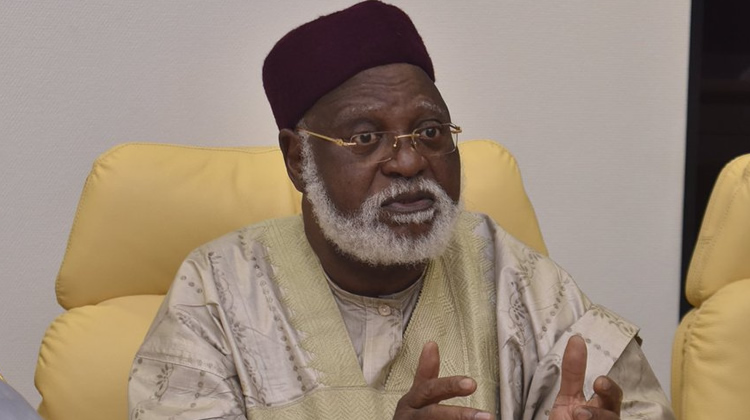
By Kolawole Omotola Olaide
Former Nigerian Head of State, Abdulsalami Abubakar, has rejected persistent allegations that the late Chief Moshood Kashimawo Olawale Abiola was poisoned, stating that a comprehensive international autopsy concluded that the acclaimed winner of the June 12, 1993 presidential election died from natural causes.
Abdulsalami made the disclosure in his autobiography, Call of Duty, unveiled in Abuja during activities marking his 84th birthday celebration. In the publication, the retired general revisited the circumstances surrounding Abiola’s death and sought to address long-standing suspicions that have lingered for nearly three decades.
Abiola died on July 7, 1998, while in detention during a meeting with a delegation from the United States that included Tom Pickering and Susan Rice.
For years, many Nigerians have believed that the businessman and politician was deliberately poisoned, with one of the most popular narratives suggesting that a cup of tea served during the meeting caused his death. However, Abdulsalami insisted that medical investigations carried out after the incident found no evidence to support such claims.
According to him, Abiola’s family requested an autopsy, prompting the government to assemble a team of pathologists from the United States, Britain, Nigeria, and Canada. He said the experts unanimously concluded that the late politician died of natural causes.
The former military ruler further revealed that Abiola had a history of serious health challenges before his detention. He noted that medical records available as far back as 1994 indicated that the late democracy icon suffered from hypertension-related heart disease and had an enlarged heart.
Drawing from accounts contained in Susan Rice’s memoir, Abdulsalami explained that Abiola reportedly developed a severe coughing episode during the meeting, complained of feeling unusually hot, and later collapsed. Medical personnel who attended to him allegedly diagnosed a heart attack.
He also referenced Pickering’s account, which described how Abiola experienced breathing difficulties and was rushed for emergency medical attention, but efforts to revive him proved unsuccessful.
Recalling the moment he received news of the tragedy, Abdulsalami said his Chief Security Officer, Abdulrasheed Aliyu, informed him over the phone that Abiola had died, a revelation he described as shocking and devastating.
Beyond the issue of Abiola’s death, the former Head of State used his memoir to shed light on other significant events in Nigeria’s political history, including the annulment of the June 12 election, the death of former military ruler Sani Abacha, and his own emergence as Nigeria’s leader in 1998.
Abiola’s death, which occurred just weeks after Abacha’s passing, remains one of the most controversial chapters in Nigeria’s democratic struggle. Nevertheless, Abdulsalami maintains that available medical evidence does not support claims that the late politician was poisoned while in detention.
