

By Abu-Ubaida Ibrahim Kuna
In today’s evolving political climate, one thing has become increasingly clear: the people are more informed, more aware, and more demanding than ever before. In Gombe State, this awareness is shaping a new kind of political conversation one driven not by sentiment or influence, but by track records, impact, and credibility.
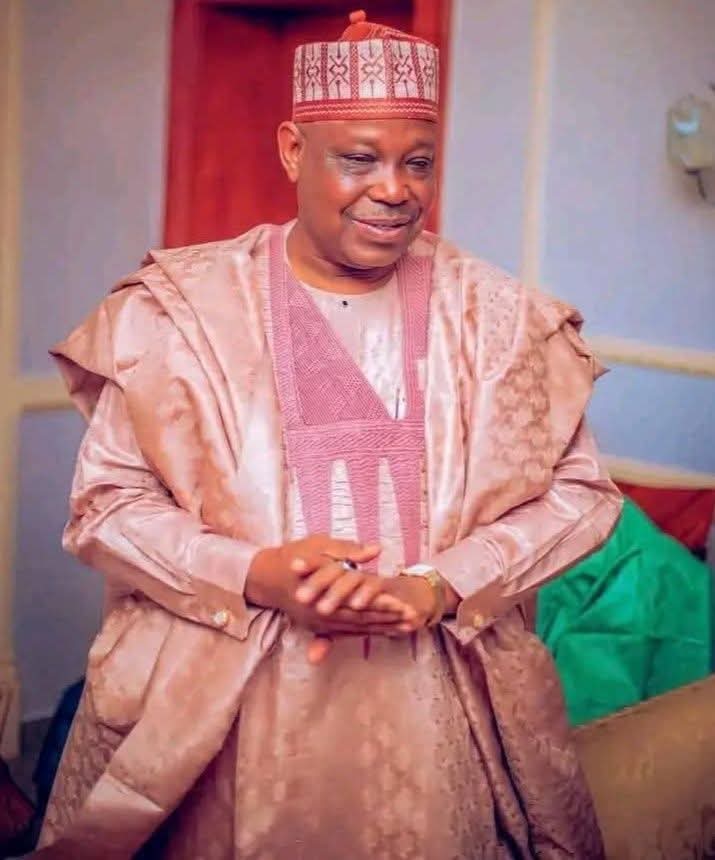
This is where the name Arc. Yunusa Yakubu, popularly known as Yunusa Lubell, has begun to attract growing attention.
This is not an attack. It is not an insult. It is a question one that many indigenes of Gombe State, especially the youth, are beginning to ask openly:
What tangible contributions has Arc. Yunusa Yakubu (Yunusa Lubell) made to Gombe State and its people?
Speaking as a proud indigene of Gombe State someone born, raised, and educated largely within the state for nearly four decades it becomes difficult to point to clear, verifiable examples of impact directly attributed to him. From primary education to tertiary level, with over 70% of life spent within Gombe, the expectation would naturally be familiarity with notable individuals who have shaped the state. Yet, in this case, there appears to be a gap.
Apart from unverified claims about supporting a single individual, widely referred to as Anas Lubel, there is little publicly acknowledged evidence of mentorship, youth empowerment, or community development initiatives linked to him.
Yes, there is mention of a Juma’at Mosque in New GRA, often associated with him: Masjidut Taqwa (Yusuf Pantami Masjid). However, even this project is said, by various sources, to be a collective effort involving multiple contributors.
So again, the question remains:
Beyond personal wealth and influence, where is the measurable impact?
This question becomes even more critical in light of growing political speculations that the current Governor of Gombe State, Muhammadu Inuwa Yahaya, may consider presenting him as a potential successor.
If such a move were to materialize, what narrative would be presented to the people?
What legacy, what record, what visible contributions would be used to convince the citizens of Gombe State that he is prepared, committed, and capable of leading?
Gombe is no longer a politically passive state. It is home to educated, conscious, and discerning young people who understand governance beyond slogans and financial inducement. While it is true that vote-buying still exists in some quarters, the broader political trend is shifting towards accountability, transparency, and performance.
Today’s electorate is asking critical questions:
What have you done for the people?
Whose lives have you impacted?
What evidence exists of your commitment to public good?
Gombe State has been shaped over the years by different administrations from the era of Abubakar Hashidu, Danjuma Goje to Dr. Ibrahim Hassan Dankwambo, and now under Governor Inuwa Yahaya. Throughout these periods, Arc. Yunusa Yakubu (Yunusa Lubell) is believed to have maintained strong connections within political and economic circles, and is widely regarded as one of the wealthiest individuals associated with the state.
Yet, paradoxically, there remains a perceived absence of visible contributions that directly benefit the people.
This contradiction is what fuels concern.
Because leadership, especially in a state like Gombe, cannot be built on proximity to power or personal wealth alone. It must be grounded in service, sacrifice, and a proven commitment to the collective good.
If indeed he is being considered as a potential successor, then it becomes not only fair but necessary for the people to demand clarity.
Who is Arc. Yunusa Yakubu (Yunusa Lubell) in the context of public service?
What has he done that qualifies him to lead?
Why should the people trust him with the future of Gombe State?
These are not hostile questions. They are democratic questions.
And in a time where information flows freely and public consciousness is rising, any aspiring leader must be ready not just to answer these questions but to answer them with evidence.
Because in the end, leadership is not about what you have. It is about what you have done and what you are willing to do for the people.
Kuna writes from Gombe State, Nigeria.
