

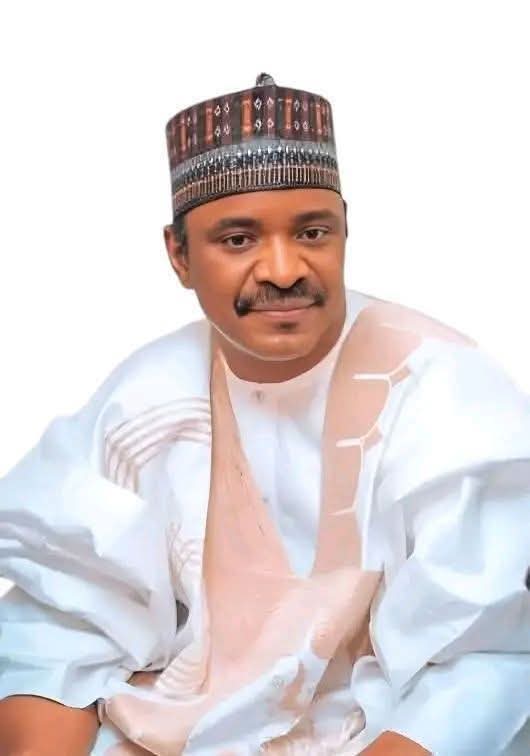
By Abu-Ubaida Ibrahim Kuna
In politics, timing, structure, and relationships matter just as much as ambition. That is why the reported decision by Nigeria’s Minister of Transportation, Saidu Alkali, to resign his position and pursue the governorship of Gombe State is increasingly being viewed as a high-stakes gamble, one that may not pay off.
At the center of this unfolding drama is the sitting governor, Muhammadu Inuwa Yahaya, a man widely regarded as calculated, firm, and politically grounded. In the unwritten but deeply entrenched tradition of Nigerian politics, especially within the All Progressives Congress (APC), a sitting governor holds significant influence if not outright control over who succeeds him. Ignoring this political reality is not boldness; it is miscalculation.
Sources suggest that Alkali’s strategy is to bypass the governor by leveraging connections “from above,” reportedly through the office of the Vice President, Kashim Shettima, and even the First Lady, Oluremi Tinubu. While such high-level endorsements may carry weight in Abuja, politics at the state level especially in Gombe is a different terrain entirely. It is local, deeply personal, and heavily influenced by loyalty networks built over time.
More critically, such a move risks being perceived as an affront to the authority of Governor Yahaya, who is not known to be a passive actor in matters concerning his political legacy. Attempting to impose a candidate over his preference may not only fail but could also trigger resistance within the party structure.
Beyond the question of strategy lies a deeper concern: acceptability. Politics is not just about securing a ticket it is about winning elections and governing effectively. A viable successor must command respect across a wide spectrum of stakeholders: traditional rulers, religious leaders, civil servants, labor unions, business communities, party loyalists across APC, PDP, and ADC, as well as elder statesmen and grassroots mobilizers.
There are growing concerns that Alkali falls short in this regard. Critics describe him as politically disconnected from key blocs within the state, with strained relationships across critical segments. Questions about his temperament particularly allegations of arrogance and a perceived lack of loyalty further complicate his standing.
Even more troubling are reports that he does not fully recognize Governor Yahaya as the political “landlord” of the APC in Gombe State. In a system where structure and hierarchy are everything, such a posture could prove fatal to his ambitions.
Ultimately, Governor Yahaya faces a defining decision: choosing a successor who can protect his legacy, unify the party, and win decisively with minimal friction. That choice is unlikely to be based on external pressure, but rather on internal cohesion, trust, and broad-based acceptance.
In that equation, the odds do not appear to favor Saidu Alkali.
Ambition may drive men to take bold steps but in politics, not every bold step leads forward. Sometimes, it leads straight into uncertainty.
