

By Peter Omopo
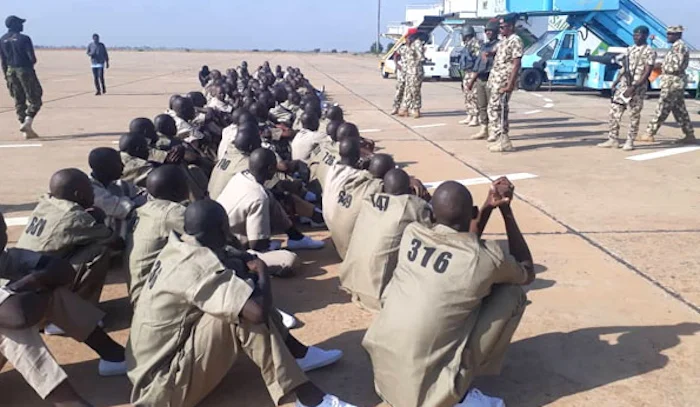
No fewer than 117 repentant terrorists from Borno State have completed the Disarmament, Rehabilitation and Reintegration (DRR) programme under , as authorities expand the initiative to other regions of the country.
The development was disclosed at a high-level stakeholders’ meeting convened by Defence Headquarters at the Nigerian Army Resource Centre to finalise modalities for transferring rehabilitated clients to national and state authorities for reintegration.
In a statement issued on Thursday by the Director of Defence Information, Major General , the Coordinator of Operation Safe Corridor, Brigadier General , said the 117 beneficiaries completed the DRR process at Mallam Sidi Camp in Borno State.
Ali described the graduation as evidence of strengthened coordination between federal and state authorities in the areas of reception, monitoring and community reintegration.
He also announced the expansion of Operation Safe Corridor to the North West, where a DRR camp established in February last year marked what he termed a significant stabilisation milestone. Ongoing discussions with Zamfara State, he added, are aimed at repositioning the facility into a comprehensive Victim Healing, Rehabilitation and Reintegration framework, incorporating psychosocial recovery, community reconciliation, livelihood support and structured monitoring.
In the North Central region, the Benue State Government has formally requested the establishment of a DRR camp. Ali disclosed that Defence Headquarters had assessed proposed sites and advised that any approval would be subject to alignment with national infrastructure, security and sustainability standards.
Participants at the meeting included representatives of federal ministries, the Office of the National Security Adviser, state governments and neighbouring countries—Burkina Faso, Chad, Niger and Cameroon—as well as international partners such as the International Committee of the Red Cross, the International Organization for Migration, Norway, the United Kingdom, the European Union and the Foreign, Commonwealth and Development Office.
Delivering the keynote address, the Chief of Defence Staff and Chairman of the Operation Safe Corridor National Steering Committee, General , represented by the Chief of Defence Operations, Major General , described the programme as a critical component of Nigeria’s security architecture.
He noted that while kinetic military operations create space for stability, structured rehabilitation and reintegration remain essential to sustaining security gains and preventing a relapse into violence.
Launched in 2016, Operation Safe Corridor forms part of Nigeria’s broader counter-insurgency strategy, combining military action with deradicalisation and reintegration efforts. The programme is now being extended beyond the North East as more states affected by insurgency and banditry seek to establish DRR camps to support stabilisation and recovery initiatives.
