

By Peter Omopo
The Chairman and Chief Executive Officer of the National Drug Law Enforcement Agency (NDLEA), Brigadier General Mohamed Buba Marwa (retd.), has revealed that about 15 million Nigerians aged between 15 and 64 years are involved in drug use, a figure nearly three times higher than the global average.
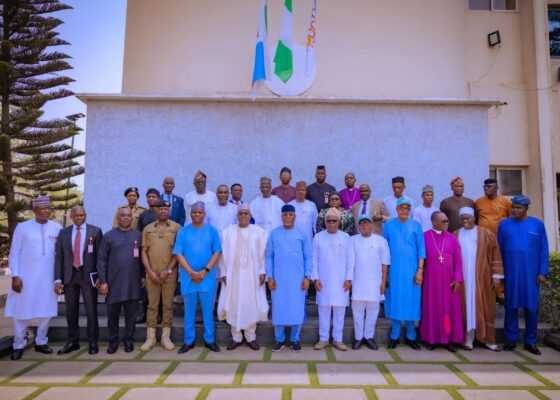
Marwa disclosed this on Monday during a courtesy visit with his delegation to Ondo State Governor, Lucky Orimisan Aiyedatiwa, at the Governor’s Office in Akure, where he presented data on drug use prevalence, enforcement outcomes and cannabis production across the country, with particular focus on Ondo State.
According to the NDLEA boss, one in every seven Nigerians within the active age bracket consumes drugs, describing the situation as alarming. He noted that drug use prevalence in Ondo State stands at 17 per cent, representing an estimated 400,000 users, compared with 33 per cent in Lagos State, amounting to about two million users, and 24 per cent in Oyo State.
Providing operational statistics, Marwa said the NDLEA command in Ondo State recorded 336 arrests in 2025, seized 22,316 kilogrammes of illicit drugs, and secured 62 convictions within the period. He further disclosed that 207,000 kilogrammes of cannabis were seized and destroyed from farms and plantations across the state.
The NDLEA chairman also revealed that the agency’s counselling and rehabilitation centre in Ondo State treated 243 drug users in the past year. He described Ondo as the highest producer of cannabis in Nigeria, attributing this to favourable climatic and soil conditions.
In his response, Governor Aiyedatiwa pledged the full support of the Ondo State Government to the NDLEA, particularly following the launch of the agency’s Alternative Development Programme in the state. He commended Marwa for personally leading the initiative, describing it as a clear demonstration of commitment to tackling illicit drug cultivation, production, trafficking and abuse.
The governor also praised the NDLEA for complementing enforcement with developmental interventions, noting that the programme would provide alternative livelihoods for farmers and help address the root causes of drug production in the state.
