

By Peter Omopo
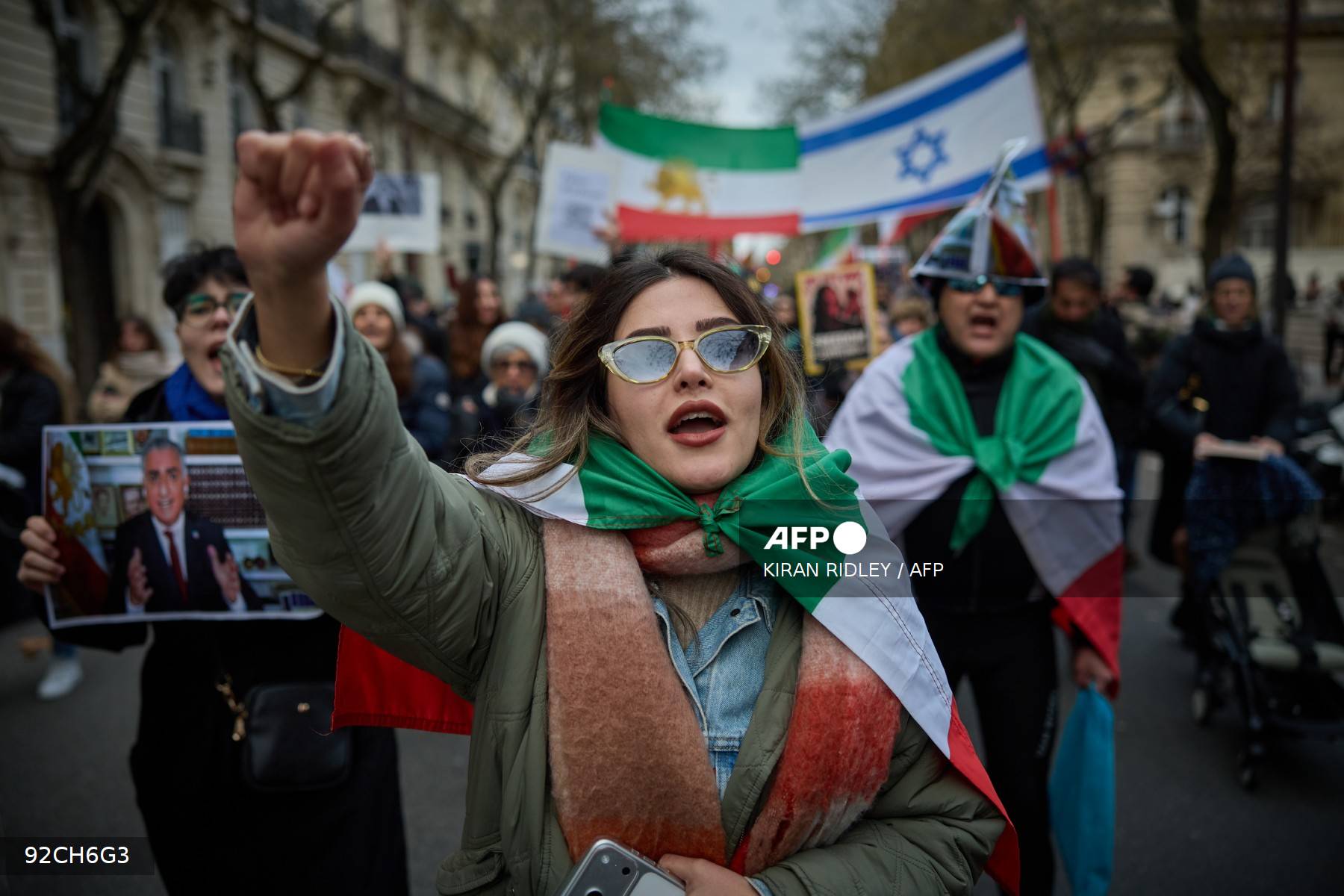
Thousands of people across the United States on Sunday staged large demonstrations condemning the Iranian government’s deadly crackdown on anti-government protesters in the Islamic Republic.
Several thousand demonstrators marched in Los Angeles, home to the world’s largest Iranian diaspora, while several hundred others gathered in New York, according to reports by AFP journalists in both cities.
Protesters carried placards denouncing what they described as a “genocide in the making,” a “new Holocaust,” and the “terror” of the Iranian government, as outrage grew over reports of widespread killings during recent unrest in Iran.
“My heart is heavy, and my soul is crushed. I’m at a loss for words to describe how angry I am,” said Perry Faraz, a 62-year-old payroll manager who fled Iran in 2006 and attended the demonstration in Los Angeles.
Faraz said she recently learned that a young cousin had been killed during protests in Iran. “He wasn’t even 10 years old. That’s horrible,” she said.
The demonstrations follow weeks of unrest in Iran, which began in late December amid anger over economic hardship and quickly evolved into one of the most serious challenges to the country’s leadership in recent years. The protests subsided after a forceful government crackdown that human rights groups have described as a “massacre,” carried out under a nationwide communications blackout that began on January 8.
Norway-based Iran Human Rights said it has verified the deaths of 3,428 protesters killed by security forces, based on information from health and medical sources inside Iran, eyewitnesses and independent reports. The group warned that the actual death toll could be significantly higher. The figures could not be independently verified, and Iranian authorities have not released an official death count.
At the Los Angeles rally, some demonstrators called for stronger US action against Iran. “This mass murdering of the population is terribly upsetting,” said Ali Parvaneh, a 65-year-old lawyer who attended the protest. He and others urged US President Donald Trump to take action against Iran’s Islamic Revolutionary Guard Corps (IRGC).
Some protesters went further, openly calling for the removal of Iran’s Supreme Leader, Ayatollah Ali Khamenei, who has been in power for more than 25 years.
President Trump, who ordered strikes on Iranian nuclear sites in June, has sent mixed signals on possible US intervention. While he initially warned of action if protesters were killed, he later said he was satisfied with Iranian assurances that demonstrators would not be executed.
“I really hope that Trump will go one step beyond just voicing support,” Parvaneh said.
Many demonstrators in Los Angeles chanted slogans backing the US president and Reza Pahlavi, the son of Iran’s former Shah, who was overthrown in the 1979 revolution. Pahlavi, who lives in exile near Washington, has said he is willing to return to Iran, though his political support inside the country remains unclear.
The issue has divided Iran’s diaspora. While some see the former monarchy as a better alternative, others caution against foreign-backed political solutions. Last week, tensions flared when a man drove a truck into a protest in Los Angeles, causing minor injuries. The vehicle displayed a sign reading: “No Shah. No Regime. USA: Don’t Repeat 1953. No Mullah,” referencing the US- and UK-backed coup that restored the Shah to power in 1953.
In Los Angeles’s Westwood neighbourhood, known as “Tehrangeles,” restaurant owner Roozbeh Farahanipour said the diaspora should support Iranians without imposing external political figures. “They don’t need a puppet implanted by the West,” he said.
Similar sentiments were echoed elsewhere in California. Poet and academic Karim Farsis criticised US sanctions and the withdrawal from the Iran nuclear deal, saying these actions had worsened the suffering of ordinary Iranians. She also condemned the near-total ban on Iranian entry into the United States since June.
“We’re living in a really twisted moment,” she said. “Trump is telling Iranians to keep protesting and take over their institutions, but if they are in danger, they can’t even find refuge in the United States.”
