

By Peter Omopo
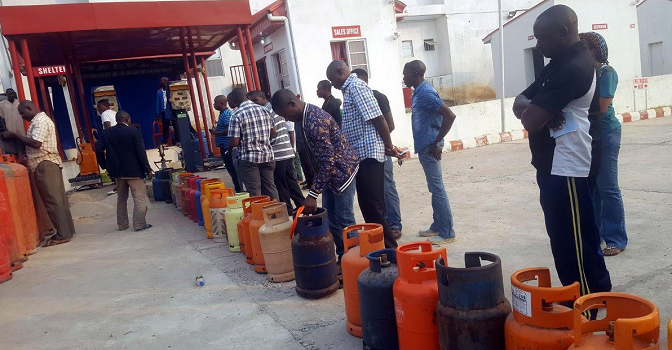
Nigerians are expressing growing concern as the price of cooking gas surges sharply, with a kilogram now selling for as high as ₦2,000 in some parts of the country.
However, gas marketers insist that the increase is not due to any official price hike, but rather temporary supply disruptions and opportunistic profiteering by some operators.
The National President of the Nigerian Association of Liquefied Petroleum Gas Marketers (NALPGAM), Oladapo Olatunbosun, made this clarification on Wednesday while speaking on The Morning Brief on Channels Television.
“I sympathise with Nigerians as the President of NALPGAM because we never intended to have a situation like this,” Olatunbosun said.
“There has been no official increment in the price of cooking gas. What we’re seeing is some marketers taking advantage of supply shortages caused by recent disruptions in distribution. They are cashing in to make quick profits, which is wrong.”
Supply Chain Disruptions
Olatunbosun explained that the shortage began after the Dangote Refinery—which had been a stabilizing force in domestic supply—temporarily suspended operations for maintenance. This affected truck loading and created delays across the supply chain.
“Before the strike, Dangote was loading up to 50 trucks daily, supplying the South-West and parts of the North,” he noted.
“But when the refinery commenced renovation, truck loading slowed drastically. Marketers then turned to Apapa depots for supplies.”
The situation worsened, he said, when the Petroleum and Natural Gas Senior Staff Association of Nigeria (PENGASSAN) embarked on a strike, halting vessel discharges and product inspections. The combined effect of the maintenance and strike caused a ripple of scarcity nationwide.
“Even when a vessel berthed at the NOJ axis, inspectors were unavailable due to the strike,” Olatunbosun explained. “This created a five-day delay, deepening the supply gap.”
Artificial Inflation and Market Exploitation
The NALPGAM president stressed that the sudden surge to ₦1,700–₦2,000 per kilogram — and up to ₦3,000 in some locations — was largely artificial and temporary.
He said that while genuine gas bottling plants were still selling at ₦1,000–₦1,300 per kilogram, many consumers were being exploited by middlemen and illegal sellers.
“If you buy from a third or fourth party, expect inflated prices. But if you go directly to licensed gas plants, you’ll get fairer rates,” he stated. “Our members are committed to maintaining reasonable pricing within the ₦1,000–₦1,300 range.”
Nigeria’s Growing LPG Demand
Olatunbosun noted that Nigeria’s national LPG consumption had risen from 1.2 million metric tonnes three years ago to nearly 2 million metric tonnes today, meaning even small disruptions now have wider consequences.
“The South-West consumes the largest share of LPG in Nigeria,” he said. “So any delay in distribution from the main depots hits that region hardest.”
Hope for Price Stabilisation
The NALPGAM president assured Nigerians that normalcy was expected to return soon, following the end of the PENGASSAN strike and the resumption of full operations at Dangote Refinery.
“Now that the strike is over and product discharge has resumed, supply will stabilise in a few days,” he said. “We are working closely with regulators and depot owners to restore balance to the market.”
Despite the temporary relief in sight, consumers continue to urge the Federal Government to improve oversight of the LPG market, to prevent exploitative pricing whenever supply disruptions occur.
