

By Peter Omopo
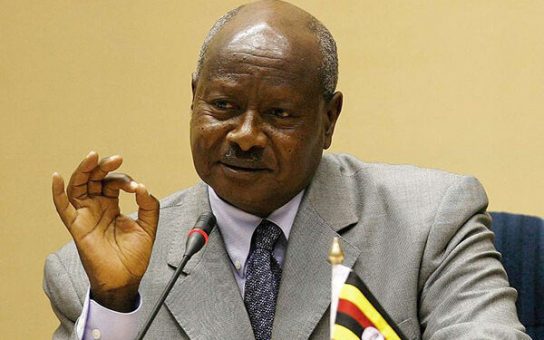
Ugandan President Yoweri Museveni, 81, is seeking a seventh term in office as the country heads to elections on Thursday, nearly four decades after he first came to power in 1986.
Museveni, a former rebel leader, took control of Uganda after overthrowing the government of Tito Okello, promising at the time to end a history of poor leadership and prolonged rule. In one of his earliest statements, he argued that Africa’s challenge was not its people but leaders who overstayed in power. Today, he stands as Uganda’s longest-serving president, having governed a nation where most citizens have never known another leader.
He initially rose to power on a wave of optimism after years of political instability and military rule. His early years in office earned international acclaim for restoring order, attracting foreign investment and improving living standards. However, that goodwill has gradually given way to accusations of corruption and authoritarianism.
“Corruption has been central to his rule from the beginning,” Kristof Titeca, a professor at the University of Antwerp, told Reuters. Museveni has acknowledged the existence of corruption within government but maintains that officials found culpable have been prosecuted.
On the international stage, Museveni has positioned Uganda as a key security partner for Western countries, deploying peacekeepers to conflict zones such as Somalia and South Sudan and hosting large numbers of refugees. In recent years, he has also expanded diplomatic and economic ties with China, Russia, Iran and the United Arab Emirates in a bid to reduce reliance on Western partners.
At home, his record has been mixed. His administration is credited with progress in combating HIV/AIDS and defeating the Lord’s Resistance Army insurgency, which plagued the country for nearly two decades. However, corruption has undermined public services, with UNICEF data showing that only about one in four Ugandan children complete primary school and transition to secondary education, while unemployment and underemployment remain widespread.
Museveni’s political career dates back to militant movements that helped overthrow dictator Idi Amin and later challenged successive governments. After his National Resistance Movement seized power in 1986, he declared that his victory represented a fundamental shift in Uganda’s politics.
Over time, however, public frustration grew, particularly over corruption linked to privatisation programmes that saw state assets sold cheaply to political allies and relatives, according to parliamentary reports. One of his most prominent critics, Kizza Besigye—once his personal doctor during the insurgency years—broke ranks with Museveni, accusing him of corruption and human rights abuses.
Museveni has won all six presidential elections he has contested, four of them against Besigye. In 2005, parliament removed presidential term limits, a move critics say paved the way for him to remain in power indefinitely. Opposition parties have repeatedly rejected election outcomes, citing irregularities, while authorities have denied wrongdoing and security agencies have dispersed protests. Museveni has often dismissed Western criticism, arguing that external actors misunderstand Uganda’s political realities.
The discovery of significant oil reserves has further strengthened his grip on power, with major agreements signed with TotalEnergies and China’s CNOOC to develop an export pipeline.
His main challenger in the current election is Bobi Wine, a 43-year-old pop star turned politician who has galvanized support among younger voters. While analysts broadly expect Museveni to retain power, attention has increasingly shifted to questions about succession, particularly given the president’s advancing age and signs of frailty.
Professor Titeca said the rise of Muhoozi Kainerugaba, Museveni’s son and Uganda’s military chief, has intensified debate over a possible dynastic transition. Opposition figures accuse the president of accelerating his son’s career to prepare him as a successor, allegations the government has rejected.
Former newspaper editor Charles Onyango-Obbo noted that the significance of the election may lie less in the official results than in public sentiment. He said a weaker-than-expected showing could push Museveni to promote other party figures to counter claims of dynastic succession.
“This is less about the results that will be announced, and more about the mood on the ground,” Onyango-Obbo said, adding that despite his age, Museveni remains determined to hold on to power.
