

By Jimmy Fatunbi
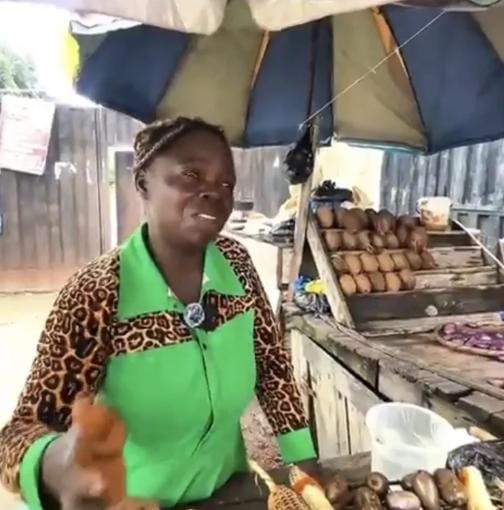
A viral video of a corn seller claiming to earn more than ₦2.5 million every month has ignited widespread debate on social media, with many Nigerians questioning the credibility of the claim while others argued that it could be achievable under certain circumstances.
The video, shared on X by @ChuksEricE, captured a woman asking the corn seller how much she earned from her business. In response, the seller confidently stated that she made about ₦2.5 million monthly. It remains unclear whether the video was a spontaneous street interview or a scripted content creation skit.
Despite the uncertainty, the clip quickly gained traction, attracting thousands of reactions across X and Instagram.
Many users expressed disbelief, arguing that the figures did not add up. One commenter calculated that such earnings would require an average daily profit of about ₦84,000, which they considered unrealistic for a roasted corn business. Others suggested that the seller either misunderstood the question or exaggerated her earnings.
Some social media users, however, refrained from dismissing the claim outright. They wondered whether the seller owned multiple outlets or had additional sources of income that could explain the reported earnings. Others questioned how she would sustain such revenue outside the corn-selling season.
The viral attention also raised security concerns, with some users warning that publicising such claims could make the woman a target for criminals seeking ransom. Others reacted humorously, making light of the situation with jokes about the seller’s sudden fame.
The renewed debate comes weeks after encouraged Nigerian women to venture into low-capital businesses such as frying akara, roasting corn and producing kulikuli, describing them as sustainable enterprises that could benefit from government grants instead of loans.
Her remarks drew criticism from many Nigerians, who argued that they failed to reflect the country’s worsening economic realities, including rising inflation, high food prices and unemployment.
In response to the criticism, defended the government’s empowerment programmes, explaining that they support a wide range of petty traders, including sellers of tomatoes, pepper, vegetables and roasted plantain. He also announced that the Federal Government had provided ₦100 million to the Government to empower 2,000 petty traders with grants of ₦50,000 each under the Renewed Hope Initiative.
The President’s Special Assistant on Social Media, , also defended the First Lady, arguing that critics had ignored the broader achievements of the Renewed Hope Initiative in promoting women’s empowerment, healthcare and support for vulnerable groups.
The discussion has since extended beyond social media and politics. It recently appeared in an examination at , where students were asked to develop an advocacy advertisement based on the First Lady’s remarks, reflecting the continued national conversation on entrepreneurship, economic empowerment and the role of petty trading in Nigeria’s economy.
