

By Peter Omopo
The Trump administration on Thursday finalized rules revoking the Environmental Protection Agency’s authority to regulate greenhouse gas emissions, dismantling a cornerstone of US climate policy and setting up a legal fight with far-reaching implications.
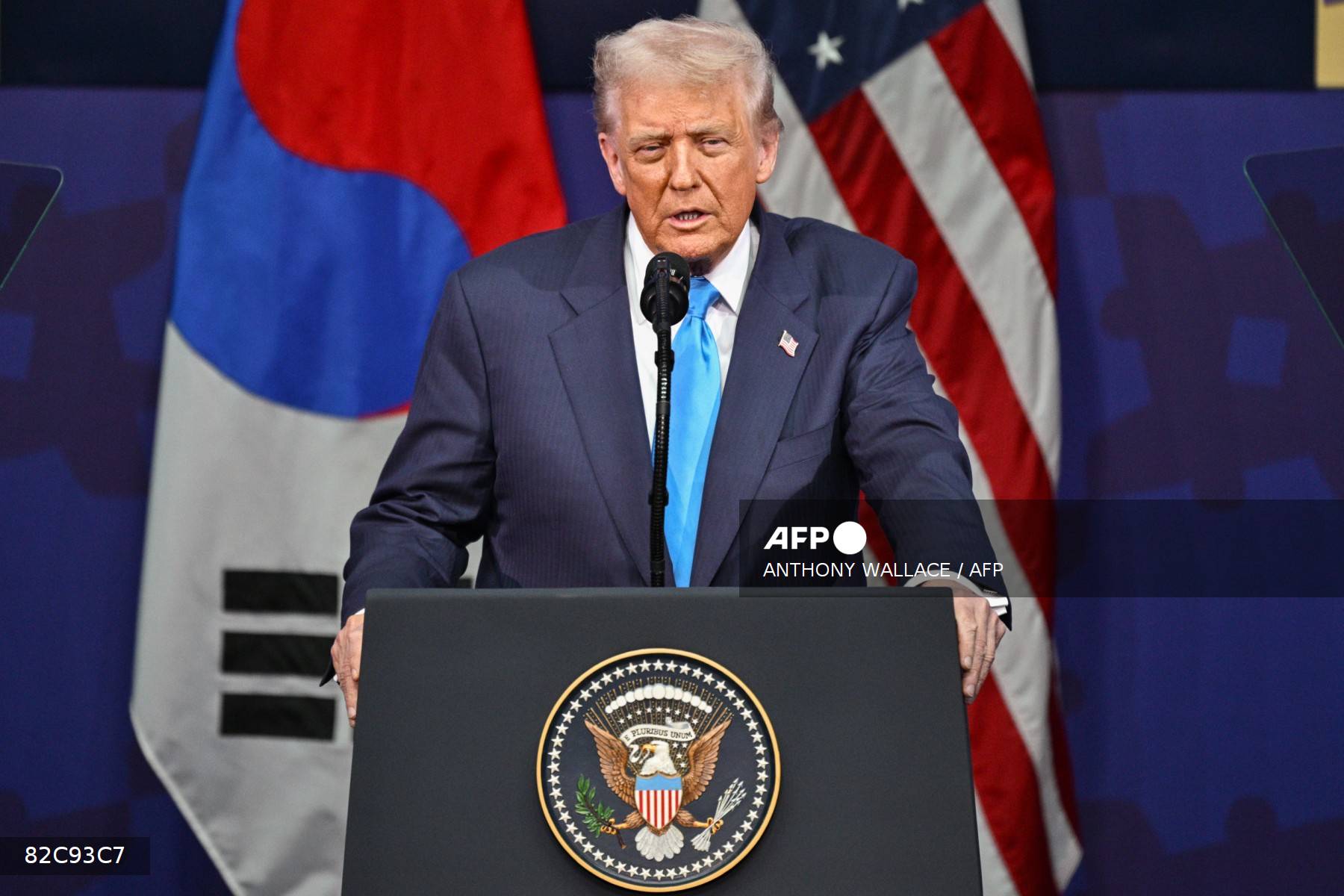
President Donald Trump announced the move, declaring the formal termination of the 2009 “endangerment finding,” a policy that classified six greenhouse gases as threats to public health and welfare under the Clean Air Act.
“We are officially terminating the so-called endangerment finding,” Trump said, describing the policy as “disastrous.”
The endangerment finding has served as the legal foundation for federal limits on planet-warming emissions from power plants, the oil and gas sector, and vehicles since it was introduced during the Obama administration. It has been widely regarded as the federal government’s most powerful tool for addressing climate change.
Alongside the repeal, the administration is also finalizing the rollback of vehicle greenhouse gas emissions standards, which were based on the endangerment finding. Under former President Joe Biden, the EPA had tightened those standards in an effort to encourage automakers to produce more fuel-efficient and electric vehicles. Portions of the auto industry have since retreated from those commitments.
Although the full text of the repeal was not immediately released, legal experts told CNN the administration’s justification is likely to rely more on arguments that greenhouse gases cannot be regulated under the Clean Air Act, rather than disputing established climate science.
The move reopens a legal debate that has been addressed multiple times by the US Supreme Court. In 2007, the Court ruled that the EPA has the authority to regulate greenhouse gases under the Clean Air Act. In 2022, the Court reaffirmed that authority in relation to power plant emissions, though it significantly narrowed the agency’s scope.
The repeal is expected to face immediate legal challenges from environmental groups, potentially leading to years of litigation that could ultimately return to the Supreme Court.
Joe Goffman, who led the EPA’s Office of Air and Radiation under President Biden, said the administration appears to be pursuing a long-term legal strategy.
“Their definition of winning, I believe, has been and will be when they take final action and defend their action in the courts, to permanently remove EPA’s Clean Air Act authority to regulate greenhouse gases,” Goffman said.
Jeff Holmstead, an energy attorney and former senior EPA official under President George W. Bush, said that if the repeal is upheld, future administrations would be unable to regulate carbon dioxide emissions under existing law. While Congress could pass new legislation explicitly granting such authority, bipartisan agreement on climate policy remains limited.
Environmental organizations swiftly condemned the move and pledged to challenge it in court.
“Earthjustice and our partners will see the Trump administration in court,” said Abigail Dillen, president of the environmental law group. “There is no way to reconcile EPA’s decision with the law, the science, and the reality of disasters that are hitting us harder every year.”
Attorneys for the Natural Resources Defense Fund also signaled legal action, noting that the EPA’s authority to regulate greenhouse gases has been upheld repeatedly, even by a conservative Supreme Court.
Meredith Hankins, NRDC’s legal director for federal climate, described the administration’s legal approach as largely untested. “It’s not something that has been done before,” she said.
The repeal marks one of the most significant reversals of US climate policy in recent years and is likely to have global implications, as the United States remains one of the world’s largest greenhouse gas emitters.
The story is developing.
