

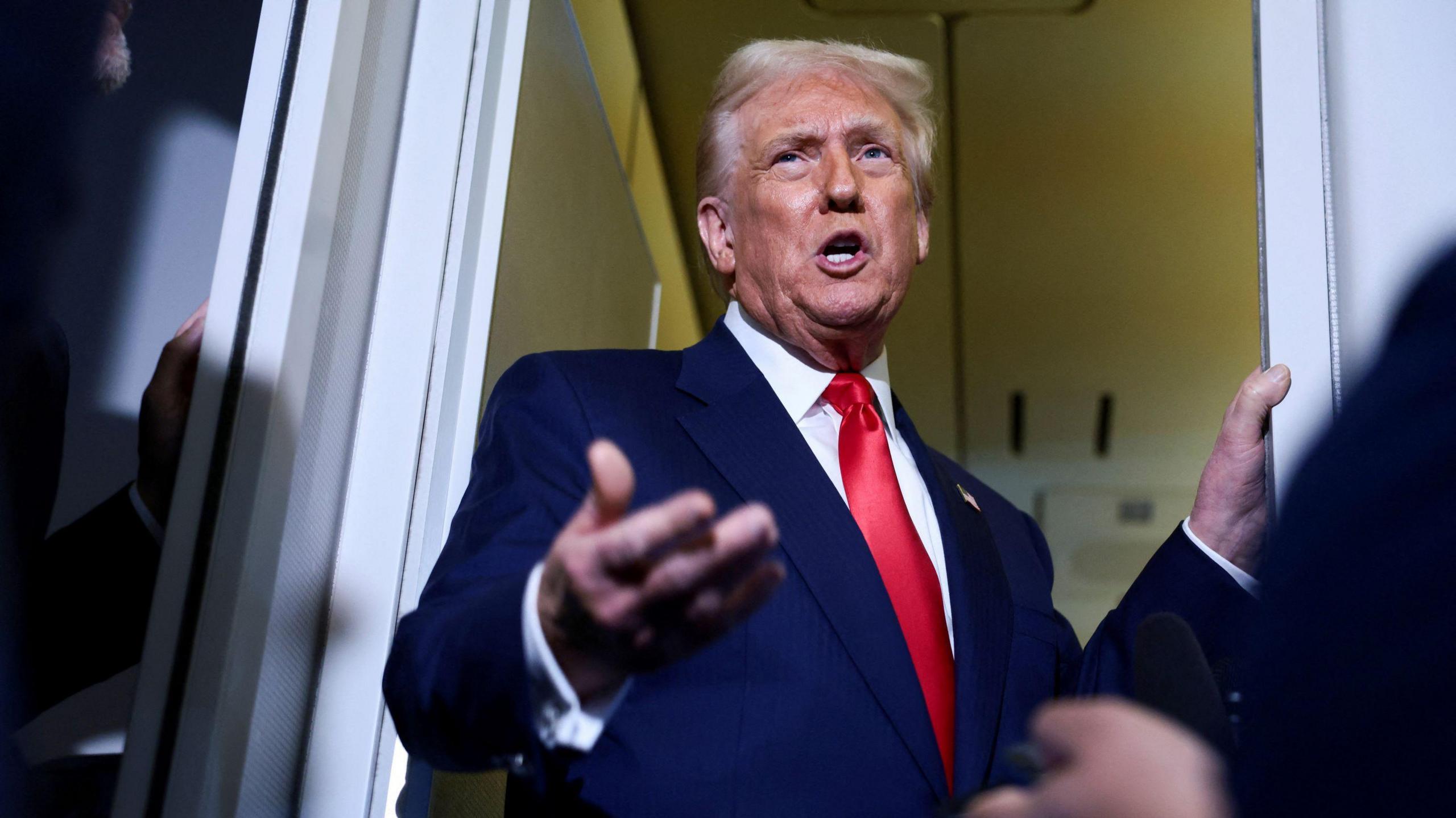
By Peter Omopo
Global attention is fixed on Nigeria after United States President Donald Trump threatened to invade the West African nation and reclassified it as a “Country of Particular Concern (CPC)” — a move sparked by allegations of widespread persecution of Christians.
The controversy began after international advocacy groups and social media campaigns claimed that thousands of Christians had been killed in Nigeria, prompting Trump’s decision and renewed international scrutiny. Comedian and TV host Bill Maher further inflamed the debate in September, describing the situation as “genocide,” citing claims that Boko Haram had killed over 100,000 people and destroyed 18,000 churches since 2009.
Nigeria Rejects Trump’s Allegations
The Nigerian government in Abuja has firmly rejected the allegations, calling them “misleading and unreflective of the realities on ground.”
Chief of Defence Staff, General Olufemi Oluyede, condemned Trump’s statement, insisting that Nigeria’s main challenge is terrorism, not religious persecution.
“No one is persecuting Christians in Nigeria,” Oluyede said in a press briefing. “The insecurity we face affects both Christians and Muslims alike. It is a national challenge, not a religious one.”
He added that terrorism is a global problem, urging international cooperation rather than division: “We welcome support from any country willing to help us defeat terrorism and restore peace.”
U.S. Lawmakers Back Trump’s Stand
Prominent U.S. lawmakers, including Texas Senator Ted Cruz, have backed Trump’s reclassification decision. Cruz claimed that “over 50,000 Christians have been killed and 18,000 churches destroyed in Nigeria since 2009,” accusing Nigerian officials of “ignoring or supporting” the attacks.
Cruz, along with Congressmen Riley Moore and Tom Cole, is leading a campaign urging U.S. Secretary of State Marco Rubio to maintain Nigeria’s CPC designation, which is typically reserved for nations accused of severe violations of religious freedom.
Investigation Questions Credibility of Data
Disinformation Unit launched an investigation into the figures used by Trump’s supporters and found that much of the data originated from a single NGO — the International Society for Civil Liberties and Rule of Law (InterSociety).
While InterSociety’s August 2025 report claimed that jihadist groups had killed over 100,000 Christians and 60,000 moderate Muslims since 2009, the organisation provided no verifiable sources for these figures, raising concerns about accuracy.
Tinubu Responds for the First Time
President Bola Tinubu, chairing Thursday’s Federal Executive Council (FEC) meeting, publicly addressed Trump’s threats for the first time.
Tinubu expressed confidence that Nigeria would “overcome” the U.S. decision and defeat terrorism at home. “Nigeria is one family,” he said. “We will do everything necessary to bring peace to our country and protect our sovereignty. We call on our international friends to support our ongoing fight against terrorism.”
Experts Warn Against U.S. Intervention
Security expert Dr. Buhari Ubandawaki warned that any U.S. military intervention would be a violation of Nigeria’s sovereignty. He urged the government to strengthen counterterrorism operations, improve security in remote areas, and demonstrate capability to handle internal threats.
“Allowing such an invasion would set a dangerous precedent,” Ubandawaki said. “Nigeria must respond decisively by eliminating major threats like Boko Haram and bandit leaders to boost domestic and international confidence.”
Call for Stronger Security Measures
Dr. Ubandawaki also advised the Nigerian government to:
- Increase deployment of troops and modern weapons in affected areas.
- Invest in drone and intelligence technologies for precision strikes.
- Enhance border security to curb arms smuggling.
- Improve the welfare and morale of security personnel.
“Nigeria must show the world that it can manage its security challenges without foreign interference,” he concluded.
Background:
- Trump first declared Nigeria a Country of Particular Concern on 31 October 2025.
- The move followed renewed international campaigns alleging religious genocide.
- Nigeria maintains that the country’s insecurity stems from terrorism and banditry, not religion
