

By Peter Omopo
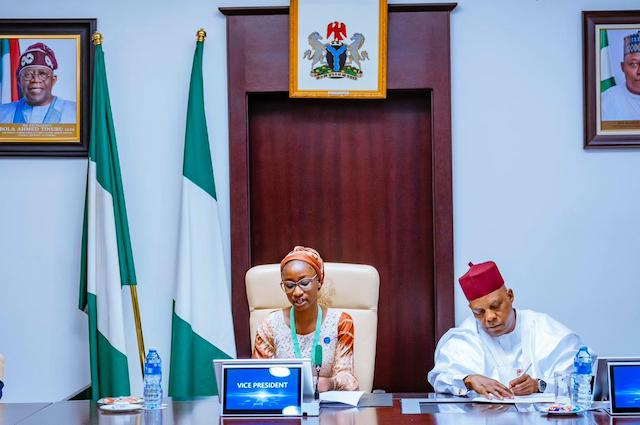
Abuja, Nigeria – A teenager, Joy Ogah, made history on Monday as she symbolically assumed the role of Vice President of Nigeria for a day, using the opportunity to champion the cause of girl-child education and empowerment across the country.
The event took place at the Presidential Villa, Abuja, during a meeting between Vice President Kashim Shettima and a delegation from PLAN International, led by Helen Mfonobong Idiong, the organisation’s Director of Programme, Quality, and Innovation.
According to a statement issued by the Office of the Vice President on Tuesday, the initiative formed part of PLAN International’s “Girls Takeover” campaign, which aims to highlight the importance of girls’ leadership and participation in decision-making processes.
Seated in the Vice President’s chair, Ogah delivered a stirring message on the urgent need to invest in education and equal opportunities for girls.
“We must invest in education that is safe and inclusive for every child in Nigeria,” she said, lamenting that over 10.5 million Nigerian children remain out of school, with more than 60 per cent of them being girls.
Ogah called on government and private stakeholders to prioritise policies that address barriers to girls’ education, including poverty, early marriage, and lack of access to hygiene facilities. She urged the government to provide free sanitary products, ensure clean water and proper sanitation in schools, and promote nutrition programmes for pupils.
“Every girl deserves a classroom, a choice, and dignity — not silence. I may be the Vice President for a day, but the struggles I represent cannot end in a day. They must continue in our policies, our classrooms, our conversations, and our budgets,” Ogah declared.
In his response, Vice President Shettima commended Ogah’s courage and advocacy, reaffirming President Bola Tinubu’s commitment to advancing inclusive education and gender equality nationwide.
“We will continue our engagement with PLAN International and explore areas where government’s strength can complement your advocacy for girl-child education,” Shettima said.
“In President Bola Tinubu, you have an ally you can believe in and invest your trust in.”
The symbolic handover comes amid growing national momentum toward gender inclusivity in education. Just a day earlier, advocacy groups urged governments at all levels to invest more in girl-child education, mentorship, and sensitisation programmes.
In recent months, the Federal Government has introduced multiple initiatives to empower women and girls, including the Renewed Hope Social Impact Interventions (RH-SII774), designed to support over 10 million women across Nigeria through livelihood grants, digital inclusion, and clean energy projects.
Similarly, the Federal Ministry of Education and the National Assembly have reiterated their support for gender parity in education, with policies such as the Student Loans Act and increased funding for inclusive learning environments.
Ogah’s symbolic leadership, observers say, serves as a powerful reminder of the potential of Nigeria’s young girls — and the need to amplify their voices in shaping the country’s future.
