

By Peter Omopo
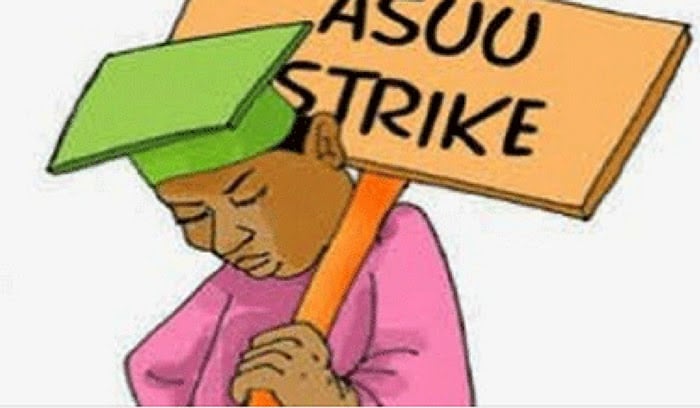
Abuja – The House of Representatives has resolved to intervene in the ongoing industrial dispute between the Federal Government and the Academic Staff Union of Universities (ASUU), following the union’s declaration of a two-week warning strike on Monday.
The move came after a motion raised on the floor of the House on Tuesday by Hon. Sesi Whingan, representing Badagry Federal Constituency under the All Progressives Congress (APC), according to reports by Channels Television.
Whingan noted that the intervention by the Green Chamber’s leadership aims to find a lasting and sustainable solution to the recurring crises that have continued to paralyse academic activities in Nigeria’s public universities for decades.
“This persistent industrial face-off between ASUU and the Federal Government has severely disrupted academic calendars, undermined research productivity, and eroded public confidence in our university system. The House must act decisively to broker peace and restore stability,” Whingan said.
ASUU’s Demands and Government Response
ASUU had on Monday begun a two-week nationwide warning strike following the expiration of a 14-day ultimatum issued to the Federal Government to meet its long-standing demands. The action marks the union’s first nationwide strike in nearly three years.
Among the lecturers’ key demands are the implementation of the renegotiated 2009 ASUU-FGN Agreement, payment of withheld three-and-a-half months’ salaries, revitalisation of public universities, and sustainable funding for tertiary education.
Other grievances include payment of 25–35% salary arrears, promotion arrears dating back over four years, and release of withheld cooperative deductions.
The renegotiation of the 2009 agreement, which has remained a central issue in ASUU’s agitation, has been stalled since 2017 despite the constitution of multiple committees. The most recent, chaired by Yayale Ahmed, submitted its report in December 2024, but implementation has yet to begin.
Government Enforces ‘No Work, No Pay’ Policy
In response to the strike, the Minister of Education, Dr. Tunji Alausa, reportedly directed university vice-chancellors to enforce the Federal Government’s “No Work, No Pay” policy against lecturers participating in the industrial action.
The directive has already sparked tension across campuses, with ongoing examinations disrupted in several universities nationwide.
House Leadership to Mediate Talks
Concerned by the potential escalation of the crisis, lawmakers have called for immediate engagement between the House leadership, ASUU representatives, and government officials to avert a full-scale shutdown of the tertiary education system.
The Speaker is expected to convene a series of meetings with stakeholders in the coming days to explore possible compromises and ensure that universities resume normal academic activities without further delay.
Observers say the House’s intervention could prove crucial in preventing another prolonged strike — a recurring problem that has, over the years, cost students valuable academic time and deepened uncertainty in Nigeria’s higher education sector.
