

By Peter Omopo
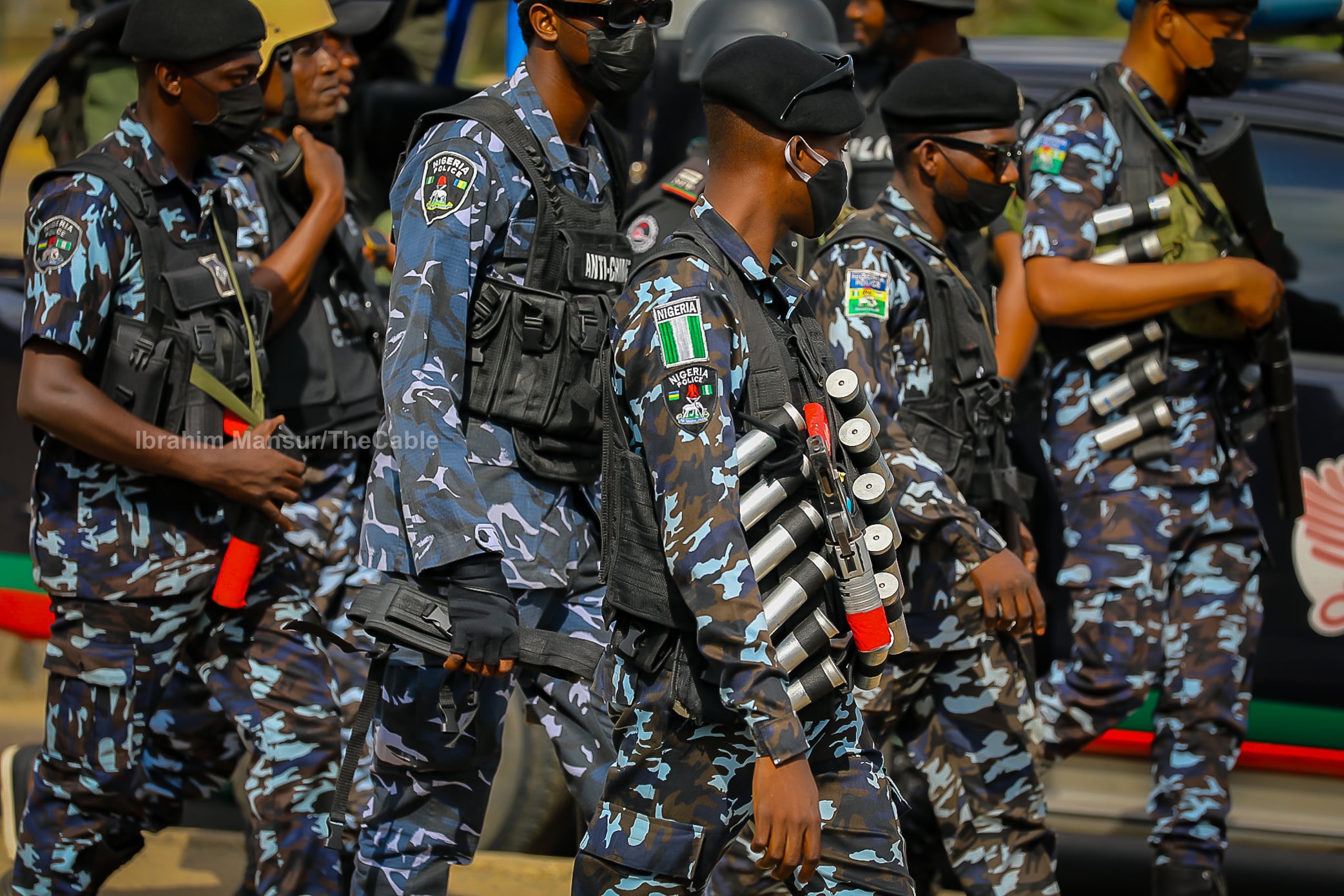
Despite President Bola Ahmed Tinubu’s directive ordering the withdrawal of police personnel from VIP protection duties, mobile police officers attached to private companies and corporate establishments continue to provide security at their posts, Sunday PUNCH investigations have revealed.
The President had mandated the removal of officers from VIP details to enable their redeployment to core policing responsibilities nationwide. Following this, the Inspector-General of Police, Kayode Egbetokun, announced on Thursday that 11,566 officers had already been withdrawn and reassigned.
However, checks across several organisations in Abuja on Friday showed that officers posted to private companies remain fully on duty.
A mobile police officer guarding a construction company in Abuja told Sunday PUNCH that no directive had been issued for them to stand down.
“We have not been asked to leave, and I don’t think we will be asked to go because most of the people here are foreigners,” the officer said when asked why he and his colleagues were still deployed on site.
Similarly, a staff member of a firm in the Jabi district confirmed that mobile police operatives assigned to the facility had continued to report for duty.
“The officers guarding our offices are still there. I spoke with one of them yesterday, and he said the directive didn’t include those attached to companies,” the employee noted.
Efforts to get clarification from the Force Public Relations Officer, Benjamin Hundeyin, were unsuccessful. However, the police spokesperson later issued a statement stressing that the withdrawal exercise was being conducted in phases to avoid exposing citizens and facilities to criminal threats.
“The implementation of the Presidential Directive on the withdrawal of police officers from VIP duties has indeed commenced,” the statement read.
“This process is being carried out in a structured, phased, and professional manner to ensure that no security vacuum is created that could be exploited by criminal elements.”
Hundeyin also dismissed a viral memo allegedly authorising selective withdrawals, describing it as fraudulent.
“The document, supposedly signed by one CSP Suleiman Abdullahi, is fake. There is no such officer in 50 PMF Squadron, nor does a Chief Superintendent serve as Admin Officer in any squadron,” he said, warning the public against misinformation.
Private Security Firms Seek Role in Transition
As police personnel begin returning to frontline duties, private security companies are pushing for formal inclusion in the government’s transition framework.
Maj Gen Elvis Njoku (retd.), Chairman of the Interim Caretaker Management Committee of the Association of Licensed Private Security Practitioners of Nigeria, said the sector was ready to fill operational gaps created by the withdrawal of police from VIP duties.
Speaking with Sunday PUNCH, Njoku noted that the private security industry had “come of age” and was prepared to assume certain responsibilities under proper regulation.
“The President has directed the withdrawal of police officers from VIP duties, and that gap must be filled. The private security industry has come of age. There is no reason we cannot step into some of the roles the police have,” he said.
He confirmed that the association had already begun engagements with the Nigeria Security and Civil Defence Corps, the regulatory body overseeing private guard companies.
“We visited the Commandant-General yesterday and discussed these issues extensively. A lot is being done to ensure a seamless transition as police officers return to core law enforcement.”
Asked about arming private security guards amid rising insecurity, Njoku maintained that the law does not permit the use of firearms by private guards, nor is the association lobbying for immediate change.
“Private security guards in Nigeria cannot carry arms, and we have never insisted on it. Given the proliferation of small arms in the country, I personally do not think Nigeria is ripe for armed private security.”
He added that any future policy shift would depend on national security realities and government decisions.
Further updates are expected as the Federal Government continues implementing its restructuring of VIP protection and security deployment nationwide.
