

By Abu-Ubaida Ibrahim Kuna
Let me begin without ambiguity: what we watched on TVC was not a demonstration of political strength, it was a clear exposure of political immaturity.
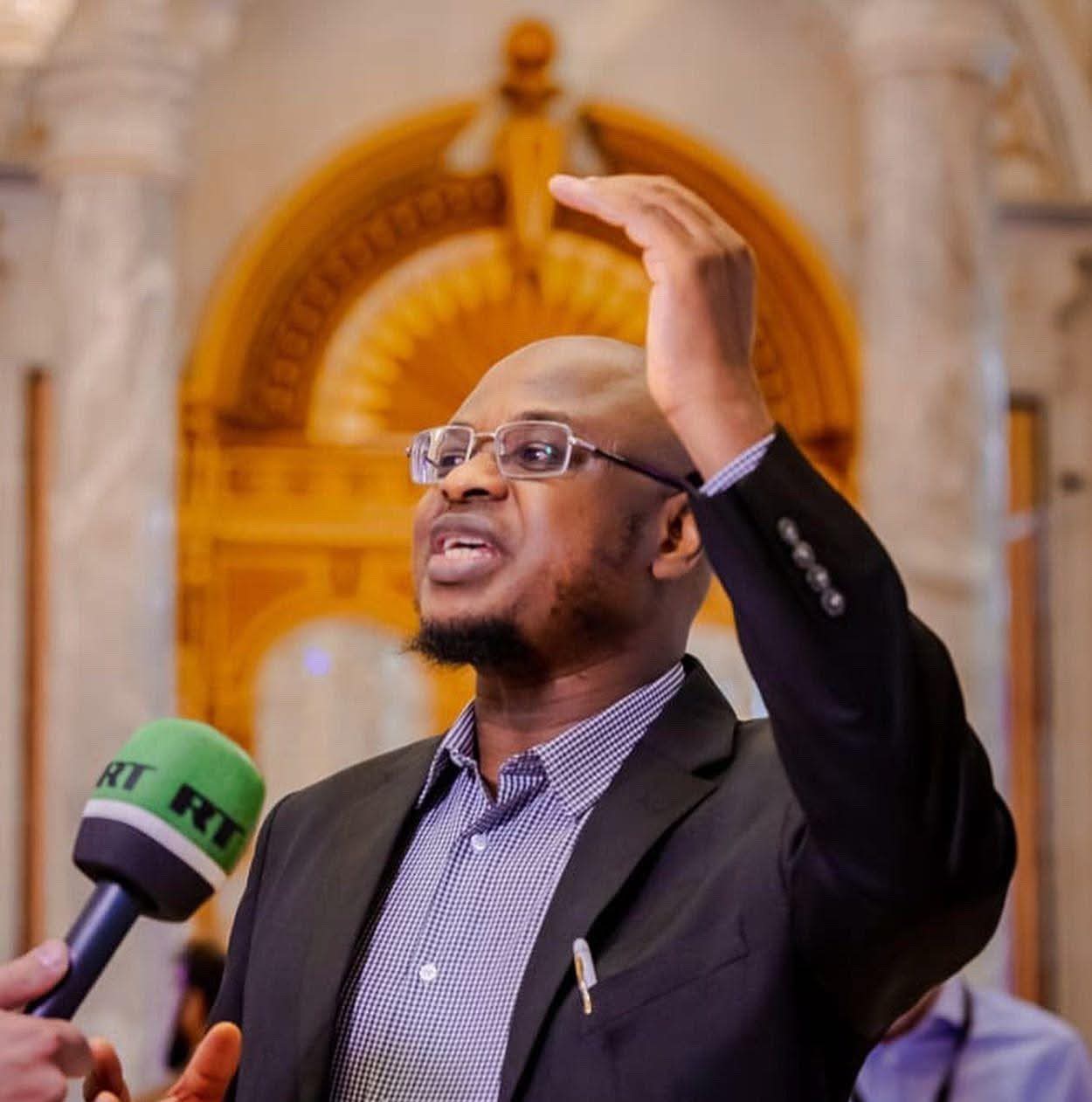
The recent interview granted by Hon. Isa Ali Pantami on the Gombe APC’s consensus has raised more questions than answers. Rather than strengthening his claim to relevance, it has only reinforced a troubling reality, that he is still operating at what can best be described as “play class” level in practical politics.
One of the most astonishing claims he made was his reliance on online and physical voting allegedly conducted by social media promoters, NGOs and academics to justify his popularity. This is not just weak but dangerously naïve. Politics, particularly at the level of gubernatorial contest in a state like Gombe, is not determined by social media polls or loosely coordinated surveys. It is rooted in grassroots structures, verified party membership, and real engagement with the people.
For a Professor of his standing, especially one grounded in technology, to present online polls as credible political validation is not just ironic, it is intellectually disappointing. He, more than anyone, should understand the manipulation, demographic distortion, and geographic irrelevance that define such digital exercises. The truth is simple: most of those who participated in these so-called polls are not even from Gombe State. They are drawn from his national visibility, not local political strength. That is why it has been rightly observed that Pantami has a national profile, but a clear local disconnect.
Even more revealing was his attempt to showcase “achievements.” But governance and leadership are not measured by vague claims, they are measured by impact. Where are the water supply projects? Where are the hospitals? Where are the improved schools with real infrastructure? Where is the support for farmers and traders who form the backbone of Gombe’s economy? Where are the youth empowerment programs? These are the real indicators of service to the people. Instead, what was presented were computers in schools and digital centres, initiatives that fall squarely within existing government policy frameworks on digital inclusion. These are not personal political achievements; they are standard implementations expected within government systems. Presenting them as exceptional contributions is, at best, underwhelming.
Then comes the claim of providing jobs to about 700 individuals. Even if we accept this figure, serious questions remain about transparency and inclusiveness. Who exactly benefited? What criteria were used? Why does it appear selective? More importantly, in a state battling widespread unemployment, 700 jobs is not a benchmark of political superiority. When placed side by side with others in the same political space, the contrast becomes even clearer. Figures like Dr. Jamil Isyaku Gwamna have facilitated over 5,000 jobs across public institutions and corporate structures from his time at the Gombe State Water Corporation to KEDCO, while individuals such as Dr. Abubakar Ali Gombe are associated with opportunities exceeding 10,000 across federal, State and private platforms. If job creation is the yardstick, then the uncomfortable truth is that Pantami does not rank among the top ten in Gombe State not even close.
His reliance on online polls becomes even more questionable when one considers the nature of those driving these numbers. A prominent promoter, Abba Sani Pantami, commands a large following that is largely outside Gombe State. By his own admission, a significant portion of his audience is based in Kano and beyond. This raises a fundamental issue: how can non-Gombe participants determine the political direction of Gombe? It is not just flawed but misleading. Digital noise is being mistaken for grassroots legitimacy.
Perhaps the most politically troubling assertion in the interview was his self-description as “Party Leader.” This raises a fundamental constitutional and political question: is he unaware that the sitting Governor remains the leader of the party in the state? Or is this a deliberate attempt at political impersonation? Even more surprising was his reliance on being addressed as such by Presiden Bola Ahmed Tinubu. Every experienced politician understands that such remarks are often rhetorical or politically flattering not formal endorsements. To elevate such a statement into a claim of authority reflects a serious misreading of political language and structure.
At this point, it is only fair to demand transparency. Let him and his supporters present verifiable data of the so-called physical voting. Let them show how many participants are registered members of the APC. Because the reality remains that only card-carrying members of the APC determine party primaries not online spectators. If he is confident in his claim, he should conduct a fresh poll strictly limited to verified APC members in Gombe State. That would be a more honest test of political relevance.
He also claimed that contributions were made to purchase his nomination form. Once again, simple questions arise: how many of those contributors are actually from Gombe State, and how many are outsiders leveraging his national image? Transparency on this matter will further reveal whether his strength is truly local or merely borrowed from a broader but less relevant audience.
Another most alarming aspect of the interview, however, was his claim that the late President Muhammadu Buhari assigned him oversight over the cyber operations of the Independent National Electoral Commission (INEC). This is not just controversial, it is deeply troubling. How can a card-carrying member of a ruling party and a serving Minister be responsible for overseeing the cyber infrastructure of the country’s electoral body? This raises serious concerns about conflict of interest, electoral integrity, and national credibility. At a time when the 2023 elections were already subjected to scrutiny and allegations from both domestic and international observers, such a claim demands urgent clarification. Anything less would be irresponsible.
The conclusion is unavoidable. Pantami is mistaking visibility for viability. He is mistaking digital applause for political acceptance. Most dangerously, he is mistaking theory for reality. Politics is not a classroom exercise. It is not social media validation. It is not self-projection. It is structure, impact, credibility, and genuine connection with the people.
Until that gap is bridged, every public appearance will continue to expose rather than elevate his political standing.
Kuna writes from Gombe State, Nigeria.
