

By Oluwabukunmi
The Oyo State Government has announced that its sustained investments in agriculture over the past three years have significantly increased food production and contributed to a drop in food prices across the state.
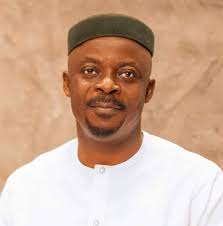
The Commissioner for Agriculture and Rural Development, Olasunkanmi Olaleye, made this known on Thursday while receiving the Commissioner for Information and Orientation, Dotun Oyelade, who paid him a courtesy visit in Ibadan.
Olaleye attributed the gains to Governor Seyi Makinde’s administration’s deliberate policies on mechanised farming, seed distribution, fertiliser support, and farmer training, which he said had collectively strengthened food security and rural development.
“Cassava, which sold for about N600,000 per truck three years ago, now goes for less than N150,000. This reduction is a direct result of the state’s massive investments in agriculture,” the commissioner said.
According to him, four key interventions have reshaped the state’s agricultural landscape:
- Distribution of 65,000 bundles of cassava stems to farmers
- Provision of hybrid and high-yield seeds
- Free fertiliser distribution
- The tractorisation programme, under which the government covers 50 per cent of ploughing costs
“If a farmer plans to plough 20 acres, the government pays for 10. This has doubled production capacity for many farmers, resulting in increased food supply across the state,” Olaleye explained.
He revealed that over 7,000 farmers have benefited from this year’s round of mechanised farming support, cultivating more than 21,000 acres of farmland, compared to 6,000 acres last year. Additionally, more than 12,000 bags of fertiliser have been distributed free of charge to nearly 6,000 farmers, depending on their farm size.
The commissioner said the interventions had eased the burden of high production costs, allowing farmers to expand operations and sell produce at more affordable prices.
Between November and April, about 4,800 farmers were trained on modern agricultural practices — including seed timing, fertiliser application, and pest control — leading to improved efficiency and yields.
Olaleye also disclosed that over 20,000 tonnes of cassava had been exported through the Ibarapa axis, signalling a boom in agricultural trade and plans to introduce a modest export tax regime.
The commissioner added that the state recorded major strides in animal husbandry, with the free vaccination of over 120,000 cattle and 89,000 sheep and goats, resulting in a sharp reduction in livestock mortality. Poultry and piggery farmers also benefited from the free distribution of animal feed.
“Our farmers are smiling this year because livestock survival rates have improved significantly,” he said.
Olaleye further noted that the initiatives were part of the Social and Economic Recovery Programme introduced by Governor Makinde to cushion the impact of fuel subsidy removal, which had driven up transport and food costs nationwide.
“The tractorisation and input distribution schemes were designed to make farming cheaper and more productive despite economic challenges,” he explained.
He reaffirmed the government’s commitment to sustaining the agricultural transformation agenda, stating that the long-term goal is to make Oyo State a leading food-producing hub in Nigeria.
In recent years, Oyo State has prioritised mechanisation, input accessibility, and youth participation in agriculture, positioning the sector as a key driver of job creation and economic growth.
According to the National Bureau of Statistics (NBS), Nigeria’s food inflation rate stood at 16.87 per cent in September 2025, prompting federal and state governments — including Oyo — to intensify efforts to boost local food production and stabilise prices.
