

By Peter Omopo
The Federal Inland Revenue Service (FIRS) and the Government of France have entered into a new tax administration partnership, weeks before Nigeria formally transitions to the Nigeria Revenue Service (NRS) in January 2026.
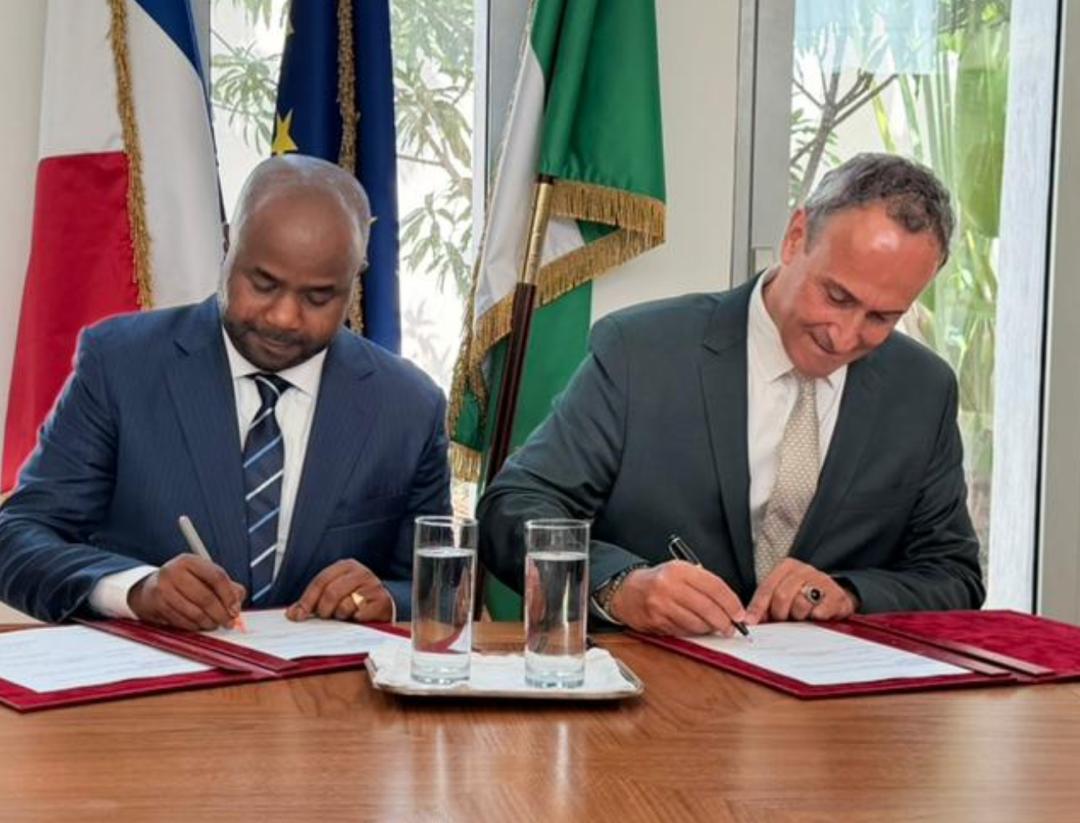
The agreement was sealed in Abuja between FIRS Chairman, Zacch Adedeji, and the French Ambassador to Nigeria, Marc Fonbaustier. Details of the Memorandum of Understanding were contained in a statement issued on Wednesday by Adedeji’s Special Adviser on Media, Dare Adekanmbi.
Signed at the French Embassy, the pact places FIRS in a formal working relationship with the Direction Générale des Finances Publiques (DGFiP), France’s tax authority widely regarded as one of Europe’s most technologically advanced revenue institutions.
Adedeji described the partnership as a major step toward strengthening Nigeria’s tax system in an era shaped by digital technology, artificial intelligence and rapidly evolving global public finance standards.
He noted that digital transformation sits at the core of the agreement, with Nigeria seeking to tap into France’s expertise in automated compliance systems, data-driven audits, and advanced taxpayer service platforms.
According to him, the collaboration is mutually beneficial, as France also stands to gain from Nigeria’s expanding digital economy, youthful tech-driven population, and emerging innovations within Africa’s largest market.
“This two-way exchange is essential as both countries adapt to emerging challenges such as artificial intelligence deployment, cybersecurity and cross-border taxation,” Adedeji said.
He added that the FIRS will continue to strengthen ties with international partners as it prepares to evolve into the NRS under the Federal Government’s new Fiscal Responsibility and Revenue Administration reforms.
Workforce development is another major component of the pact. Adedeji said Nigeria hopes to learn from France’s structured human capital management, professional standards and culture of continuous training.
Conversely, he noted that DGFiP would benefit from Nigeria’s experience in managing a young, diverse and fast-paced workforce, which offers new insights into building dynamic public finance institutions.
“Together, we can develop models that strengthen institutional culture, build global competencies, and prepare our respective institutions for the future of public finance administration,” he said.
The agreement marks one of the key international engagements shaping Nigeria’s shift to a modernised tax administration architecture ahead of the 2026 transition.
