

By Peter Omopo
A non-profit organisation, Ashoka Africa, has concluded a year-long professional development programme for 102 teachers across Lagos State, aimed at promoting innovation, social responsibility, and problem-solving in classrooms.
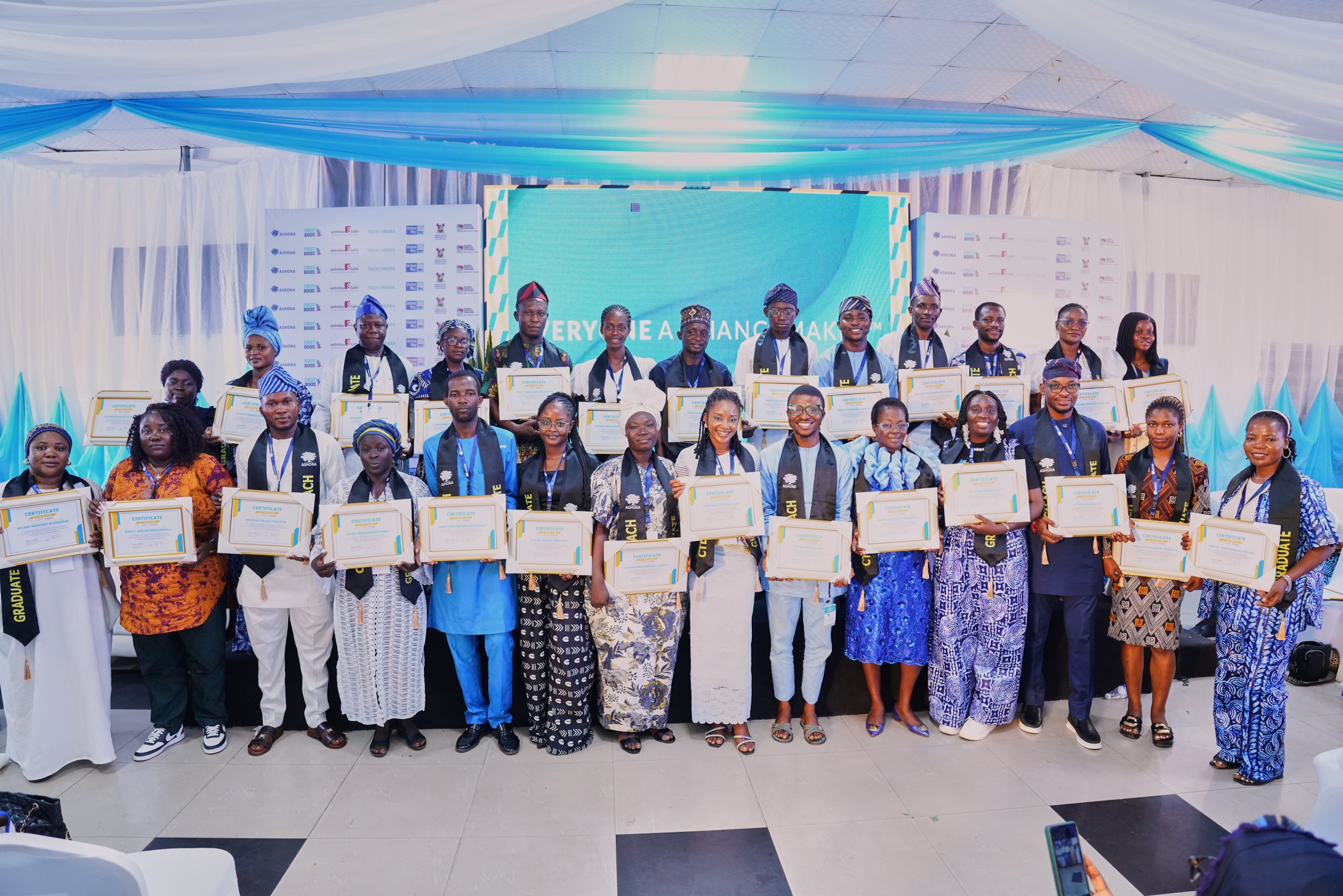
The initiative, known as the Changemakers Teacher Activation Programme (CTEACH), culminated in a graduation and induction ceremony held in Lagos, marking the end of a year-long effort to integrate “changemaking education” into the state’s school system.
PUNCH Online recalls that in October 2024, Ashoka Africa graduated its first cohort of 52 teachers, drawn from various local government areas across Lagos. This year, the organisation inducted a second cohort of 100 new teachers while also launching the CTEACH Documentary and Changemaking Storybook, which showcase youth-led projects inspired by the programme.
According to a statement by Ashoka Africa’s Head of Communications, Confidence Awak, the initiative is designed to equip teachers with 21st-century teaching methods that encourage students to collaboratively tackle social and environmental challenges.
“The project seeks to address the national paradox of producing smart graduates but few problem-solvers,” the statement read. “Graduates of the programme are expected to replicate the CTEACH model in their schools, mentoring colleagues and students to sustain the impact across the state.”
Awak added that the initiative, supported by luxury watchmaker Audemars Piguet through First Book, could ultimately influence thousands of learners if the trained teachers continue to apply and share the knowledge gained.
Speaking at the event, Dr. Peace Sule, recently recognised as Africa’s Best Teacher 2025, highlighted the urgent need to reform Nigeria’s education system, noting that innovation begins when teachers and students take ownership of societal challenges.
“We read, pass, graduate, work, and repeat that cycle. Nobody is thinking of solving real problems,” Sule said. “If I can change the mindset of students, this country can become a better place to live. Teachers should be researchers — documenting problems and proposing solutions.”
Sule, who also sponsors school uniforms and organises adult literacy classes, called on educators to become more proactive in community development.
In her remarks, Ashoka Africa’s Co-President and Director of the CTEACH Programme, Angelou Ezeilo, said the project responds to a global reality where challenges are multiplying faster than solutions.
“We want students to care about their current situations rather than flee from them,” she said. “It takes an ecosystem — teachers, parents, NGOs, and administrators — to raise change-makers. Teachers spend more time with young people than parents; they are the true change-maker-makers.”
Ezeilo emphasised that while the initiative has entered its final pilot phase with 400 new participants, its long-term sustainability depends on continuous support from corporate partners and philanthropists.
Also speaking, Ashoka Africa’s Co-Leader, Okechukwu Uzoechina, noted that the real impact of CTEACH lies in transforming educators’ mindsets.
“Once teachers internalise change-making, they can plant those seeds in families and communities. We are shifting thinking,” he said.
Earlier beneficiaries also shared success stories at the ceremony. One of them, Samuel Agboola, said the training transformed his teaching approach and even earned him recognition within his district.
“I no longer raise my voice or cane — just questions, curiosity, and hope,” Agboola said. “The real measure of change-making is what we do next.”
The event reinforced Ashoka Africa’s mission to create a generation of educators who empower students not just to learn, but to lead change in their communities.
