

By Peter Omopo
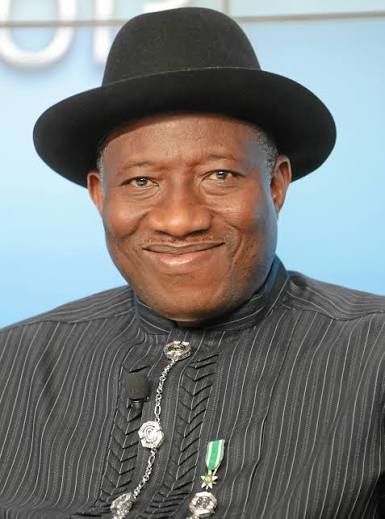
Abuja – Former President Goodluck Jonathan has clarified his recent comments about ex-President Muhammadu Buhari’s alleged nomination by Boko Haram during his administration, insisting that his remarks were misinterpreted and never intended to portray Buhari as sympathetic to terrorists.
Jonathan made the clarification in a statement issued on Saturday by his Special Adviser on Media and Public Affairs, Ikechukwu Eze, following a backlash triggered by comments made at the public presentation of the book “Scars: Nigeria’s Journey and the Boko Haram Conundrum,” authored by former Chief of Defence Staff, Gen. Lucky Irabor (rtd.), in Abuja on Friday.
At the event, Jonathan had stated that a committee set up by his government was informed that Boko Haram had “nominated Buhari to lead their negotiation team.” He added that he had thought the insurgents might have surrendered their arms when Buhari became president three years later.
However, Garba Shehu, former Senior Special Assistant on Media and Publicity to Buhari, dismissed Jonathan’s comments as misleading, insisting that Buhari was never nominated by the insurgents for such a role.
Responding, Jonathan’s spokesman said the ex-president’s words were “grossly misrepresented,” clarifying that the reference to Buhari was merely to illustrate Boko Haram’s “deceptive tactics” during its early years.
“At no time did Dr Jonathan suggest, imply, or insinuate that President Buhari had any connection with Boko Haram or that he supported the group in any form,” Eze said.
He explained that various individuals and factions had, without consent, falsely named prominent Nigerians as potential mediators with the group.
“The point Dr Jonathan sought to make was that Boko Haram, in its characteristic deceit, often invoked the names of respected public figures to sow confusion, exploit political divisions, and undermine public confidence in government,” the statement added.
Jonathan further argued that if Boko Haram had genuinely regarded Buhari as a trusted mediator, the insurgency would have ceased when Buhari assumed office in 2015. He emphasised that both leaders shared a common goal of restoring peace and stability during their respective administrations.
Meanwhile, reactions have continued to trail the controversy on social media, with many Nigerians recalling that reports from 2012 indeed mentioned Buhari among individuals named by a Boko Haram faction as preferred negotiators.
On Facebook and X (formerly Twitter), users cited multiple media reports from 2012 and 2013 that corroborated Jonathan’s claim. One user, Udom Owodiong-Idemeko, noted, “In November 2012, several credible Nigerian newspapers published reports that a Boko Haram faction listed General Buhari among six people it preferred as mediators in peace talks with the Federal Government.”
Others criticised Garba Shehu’s denial, describing it as an attempt to rewrite public history.
