

By Peter Omopo
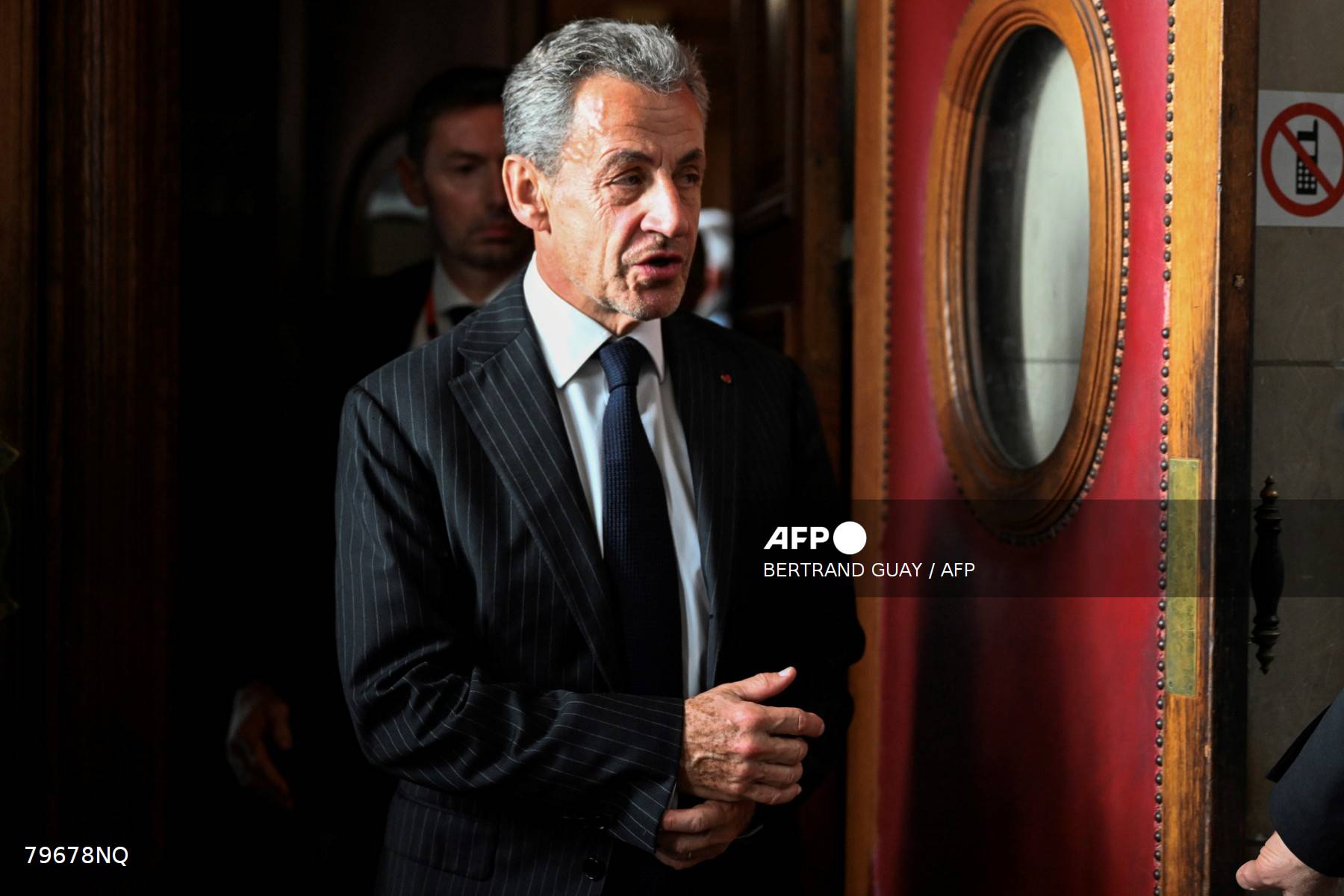
PARIS, Oct. 19, 2025 — Former French President Nicolas Sarkozy is set to begin a prison sentence on Tuesday, marking a historic moment as he becomes the first former head of state of an EU country to serve jail time for criminal conspiracy.
Sarkozy, who led France from 2007 to 2012, was convicted in late September for his alleged involvement in a scheme to secure illegal campaign financing from late Libyan dictator Muammar Gaddafi for his 2007 presidential bid.
The 70-year-old former leader will be incarcerated at La Santé Prison in Paris on October 21, following a five-year sentence handed down by a Paris court. The verdict described the offence as being of “exceptional gravity.”
Despite his conviction, Sarkozy has continued to deny any wrongdoing, describing the verdict as a “profound injustice.”
“If they absolutely want me to sleep in prison, I will sleep in prison — but with my head held high,” Sarkozy told reporters shortly after his sentencing on September 25.
Historic Incarceration
Sarkozy’s imprisonment makes him the first French leader to be jailed since Philippe Pétain, the World War II-era head of the Vichy regime who was convicted for collaborating with Nazi Germany.
Prison authorities told AFP that Sarkozy is expected to be kept in solitary confinement in a nine-square-metre cell to protect his privacy and safety. This arrangement would prevent him from interacting with other inmates or being photographed with smuggled mobile phones.
Legal Proceedings and Possible Appeal
It remains uncertain how long Sarkozy will remain in detention. His legal team is preparing to appeal the ruling, and the appeals court is expected to examine the case within two months.
Under French law, the court could decide to release him under judicial supervision or place him under house arrest with an electronic ankle monitor. However, if judges believe there is a risk of evidence tampering or witness intimidation, his detention may continue.
During solitary confinement, Sarkozy will be allowed out for a brief daily walk in a private yard.
A Trail of Legal Troubles
Sarkozy’s conviction adds to a growing list of legal challenges that have shadowed his post-presidency career.
He was previously found guilty in two separate cases — including a graft and influence-peddling trial in which he was accused of seeking favours from a magistrate. In that case, he served part of his sentence under home confinement with an ankle monitor, which was removed in May.
In the current “Libyan funding case,” prosecutors alleged that Sarkozy’s aides, acting on his behalf, negotiated with Gaddafi’s regime in 2005 to funnel millions of euros into his 2007 campaign in exchange for restoring Libya’s international image after the Lockerbie (1988) and Niger (1989) airline bombings.
While the court found him guilty of conspiracy, Sarkozy was acquitted of charges of embezzling Libyan public funds, passive corruption, and illicit campaign financing.
Public Reaction and Political Fallout
Sarkozy was stripped of France’s highest honour — the Legion of Honour — following his earlier corruption conviction.
A recent Elabe poll indicates that 60 percent of French citizens believe the new prison sentence is “fair.” Nevertheless, Sarkozy retains significant support within France’s conservative political circles.
His son, Louis Sarkozy, a far-right commentator and aspiring mayor in southern France, has called on supporters to gather outside the family’s Paris residence on Tuesday morning in solidarity.
“Come and show support for my father,” he urged in a social media post.
Security Concerns and Wider Implications
Tensions around the case have escalated after Presiding Judge Nathalie Gavarino received death threats following her verdict, prompting President Emmanuel Macron to condemn the threats as “utterly unacceptable.”
Sarkozy’s incarceration at La Santé Prison places him among a list of notorious inmates once held there, including Carlos the Jackal, Venezuelan militant Ilich Ramírez Sánchez, and Jean-Luc Brunel, a former model agent linked to Jeffrey Epstein who was found dead in his cell in 2022.
As Sarkozy prepares to enter prison, France faces a moment of reflection on political accountability, the rule of law, and the legacy of one of its most polarising leaders.
