

By Peter Omopo
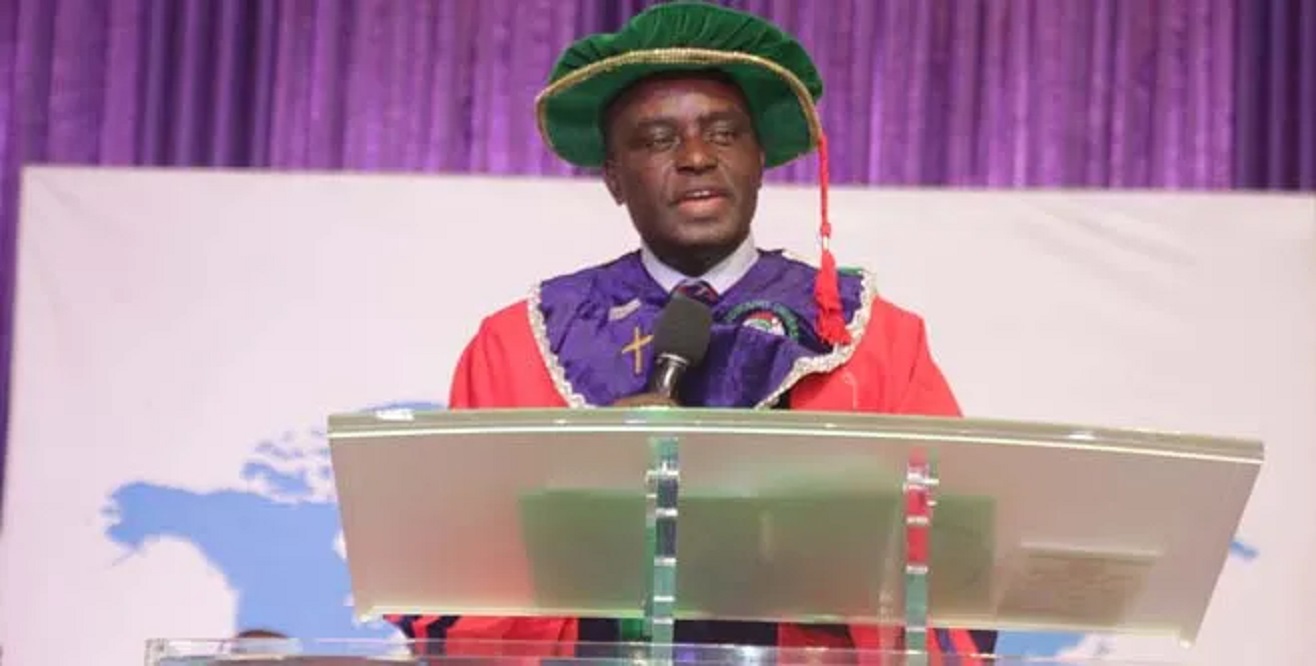
Abuja, September 22, 2025 — A former Executive Secretary of the National Universities Commission (NUC), Prof. Emeritus Peter Okebukola, has unveiled a new method of delivering Science, Technology, Engineering and Mathematics (STEM) education, designed to reflect Africa’s socio-cultural realities and improve student performance.
The new framework, known as the Model-and-Surpass Pedagogy (MSP), was launched during the 2025 International Research Group Conference, co-hosted by the Commonwealth Association of Science, Technology and Mathematics Educators. The event, which ended on September 18, drew participants from the United States, United Kingdom, Ghana, Finland, The Gambia, Mauritius, Sierra Leone, Burundi, and Nigeria.
According to Okebukola, MSP involves a seven-step process where students study the lives of scientists—including their struggles and achievements—before engaging in interactive, experiment-driven lessons. Learners are then encouraged to “model and surpass” the attributes of these scientists in their own work.
Explaining the method, he said:
“The teacher introduces the topic through the lens of two great scientists. Students compare their lives, highlight attributes worth emulating, and then take part in practical activities. The aim is to inspire them not only to model but to surpass these scientists.”
Okebukola revealed that research teams from Nigeria, Ghana, The Gambia, and Sierra Leone—working under the Africa Centre of Excellence for Innovative and Transformative STEM Education at Lagos State University—have begun testing the model to assess its impact. He expressed optimism that MSP would advance the African Union’s Agenda 2063: The Africa We Want, and help Africa move from the “periphery to the mainstream” in global STEM enterprise.
He also disclosed plans to pioneer an AI-based teaching approach within the African socio-cultural context, in collaboration with the National Association of Artificial Intelligence Practitioners, to further revolutionise STEM education across the continent.
“Our students’ poor performance in STEM is linked to the blind adoption of Western teaching models that often fail to suit our context,” Okebukola said. “We must innovate homegrown methods. My overriding goal is to elevate student achievement and improve attitudes toward STEM.”
The conference also featured keynote speeches by international scholars, including Prof. Jomo Mutegi of Old Dominion University, Virginia (USA); Prof. Pascal Doh of the University of Turku (Finland); Prof. Uchenna Maristella Nzewi of the University of Nigeria, Nsukka; and Prof. Shari Watkins of The American University, Washington DC.
In recognition of their contributions to STEM education, Fellowship Awards were presented to Dr. Sue Dale Tunnicliffe (Chair, Board of Trustees of CASTME), Prof. Juma Shabani (University of Burundi), Prof. Ibiyinka Ogunlade (Bamidele Olumilua University of Education, Science and Technology, Ikere-Ekiti), and Prof. Peter Okebukola himself.
