

By Kolawole Omotola Olaide
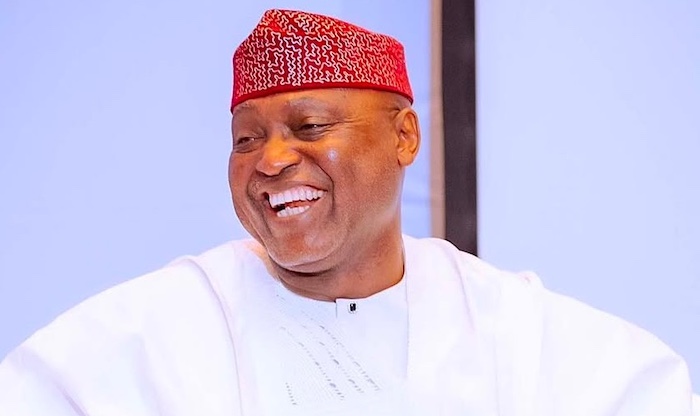
Residents of Ekiti State are trooping out today to elect their next governor in what many political observers describe as a defining moment in the state’s democratic journey. With more than one million registered voters expected to participate, Governor Biodun Oyebanji is seeking to achieve a feat no governor in the state’s history has accomplished — winning consecutive governorship elections without interruption.
Since the creation of Ekiti State, no elected governor has successfully secured back-to-back victories at the polls. Although former governors Ayodele Fayose and Kayode Fayemi each served two terms, their tenures were separated by electoral setbacks and political transitions.
Governor Oyebanji, flying the flag of the All Progressives Congress (APC), enters the contest with strong confidence built on what supporters describe as his achievements in infrastructure development, education, healthcare, and governance over the last three years.
The election is, however, not a one-horse race. Several political parties are challenging the incumbent, including the Peoples Democratic Party (PDP) and the African Democratic Congress (ADC). The PDP has presented Oluwole Oluyede Dare as its candidate, while the ADC is represented by Dare Bejide.
Political analysts note that the PDP has struggled with internal disagreements in recent years, a development many believe has weakened its influence across the state. Meanwhile, the ADC has gained attention nationally following the influx of notable political figures into its ranks.
As voting begins across the state’s 16 local government areas, the Independent National Electoral Commission (INEC) has assured residents of a transparent, peaceful, and credible exercise. The Resident Electoral Commissioner in Ekiti, Dr. Bunmi Omoseyindemi, said all logistical arrangements had been concluded and election materials distributed accordingly.
According to INEC, the Bimodal Voter Accreditation System (BVAS) and the Result Viewing Portal (IReV) will be fully deployed to strengthen transparency and public confidence in the electoral process.
Security agencies have also mobilized personnel across strategic locations, including border communities, to ensure law and order throughout the election period. Authorities imposed restrictions on vehicular movement until 6 p.m. to facilitate smooth conduct of the exercise.
Despite the assurances, election observers have raised concerns over alleged vote-buying, voter inducement, political intimidation, and the circulation of misinformation on social media. Civil society organizations monitoring the election urged political actors to play by the rules and avoid actions capable of undermining the integrity of the process.
They also encouraged voters to exercise their civic responsibility freely and reject any attempt to influence their choices through financial inducement or intimidation.
Voting is taking place across 2,445 polling units located in 177 wards statewide, with millions of eyes across Nigeria focused on the outcome.
As Ekiti people make their choices today, the spotlight remains firmly on Governor Oyebanji, whose quest for a historic re-election could reshape the political narrative of the Fountain of Knowledge State for years to come.
