

By Kolawole Omotola
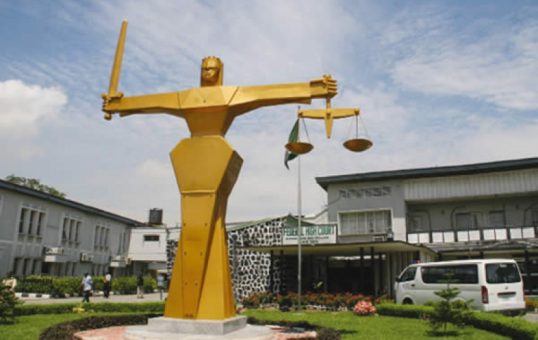
A Federal High Court sitting in Kaduna has adjourned the alleged fraud case involving former Kaduna State governor, Nasir El-Rufai, to March 31, 2026, to allow for the hearing of pending applications, including his bail request.
The case, instituted by the Independent Corrupt Practices and Other Related Offences Commission (ICPC), could not proceed as scheduled, with the presiding judge, Justice Rilwanu Aikawa, fixing the new date to consider all applications before the court.
Counsel to the former governor, Obong Abang, confirmed after the session that a bail application had already been filed and would be heard on the adjourned date. He explained that the delay was necessary to enable the court to address all outstanding legal issues tied to the matter.
According to Abang, the charges against his client largely relate to alleged deposits into a domiciliary account and the monetisation of earnings. He also noted that one Joel Adoga was joined in only one of the ten counts filed by the prosecution.
Proceedings were conducted under tight security, with journalists denied access to the courtroom for undisclosed reasons. El-Rufai, who was brought to court by security operatives in the morning, spent a short time within the premises before being ushered into the courtroom.
The former governor, dressed in traditional attire, was accompanied by family members, including his wives and son, Bello El-Rufai, who represents Kaduna North in the House of Representatives.
El-Rufai has been in ICPC custody since February 19 over allegations bordering on corruption and abuse of office.
Meanwhile, former Anambra State governor and presidential hopeful, Peter Obi, has expressed concern over what he described as growing threats to Nigeria’s democracy. His reaction followed the reported arrest of a Kaduna-based Islamic cleric, Sheikh Ahmad Tijjani Umar.
In a statement shared on his social media platform, Obi condemned the development, describing it as a worrying sign of increasing restrictions on citizens’ rights.
He warned that continued suppression of dissent and perceived political intimidation could weaken democratic institutions and erode public confidence in governance. Obi called on authorities to uphold constitutional freedoms, particularly the rights to expression and movement.
In a related development, the Democracy Watch Initiative (DWI) has commended the ICPC for prosecuting the former governor, describing the move as a strong step toward accountability.
The group, in a statement signed by its Director of Strategic Communication, Tunji Bamidele, said the charges—ranging from alleged fraud to abuse of office—highlight the seriousness of the case.
DWI further noted that the anti-corruption agency had filed related charges in both federal and state courts, describing the approach as thorough and indicative of a commitment to tackling corruption at all levels.
The case is expected to resume on March 31, when the court will determine the pending applications, including whether El-Rufai will be granted bail.
