

By Kolawole Omotola Olaide
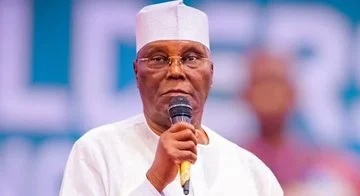
Former Vice President and presidential candidate of the African Democratic Congress (ADC), Atiku Abubakar, has accused the administration of President Bola Ahmed Tinubu of taking steps that could undermine Nigeria’s democratic institutions and weaken opposition parties ahead of the 2027 general elections.
In a Democracy Day message released on Thursday in Abuja, Atiku expressed concern over what he described as a steady decline in democratic values, warning that the country may be drifting away from the ideals that inspired the June 12 struggle.
According to the former vice president, opposition political parties have faced increasing pressure over the past three years through internal crises, political intimidation, defections, and the alleged use of government institutions to silence dissenting voices.
Atiku alleged that agencies and institutions expected to function independently are being used to influence political outcomes and suppress opposition activities. He claimed that anti-corruption bodies, law enforcement agencies, the legislature, and sections of the judiciary have been deployed in ways that place opposition figures at a disadvantage.
The ADC chieftain also criticized the Electoral Act 2026, arguing that some of its provisions favor the ruling party. He further raised concerns over what he described as growing restrictions on freedom of expression, association, and media independence.
Reflecting on the significance of June 12, Atiku said the date should serve not only as a celebration of democratic governance but also as a reminder of the sacrifices made by Nigerians who fought against military rule.
He recalled his involvement in the pro-democracy movement, stating that he personally suffered losses during the struggle to restore democratic governance. According to him, his businesses were seized, his family survived an assassination attempt, and he was eventually forced into exile.
The former vice president also revisited events leading up to the June 12, 1993 election, noting that he stepped aside during the Social Democratic Party (SDP) presidential primaries, paving the way for the late Chief Moshood Kashimawo Olawale (MKO) Abiola to emerge as the party’s candidate.
Paying tribute to notable figures who played key roles in Nigeria’s democratic struggle, Atiku honoured the memories of MKO Abiola, Kudirat Abiola, Alfred Rewane, and Shehu Musa Yar’Adua, among others.
He warned that Nigeria could be witnessing the rise of what he termed a “civilian authoritarian order,” arguing that unlike military regimes, such a system operates through institutions that have gradually been weakened or captured.
Atiku pointed to what he described as a shrinking civic space, intimidation of political opponents, worsening poverty, and a weakened electoral environment as signs that democratic governance is under pressure.
He further expressed concerns that the current political climate could affect the credibility of the 2027 elections if safeguards are not strengthened.
Calling for collective action, the former vice president said he would continue to work with political parties, civil society organizations, labour unions, professional groups, and youth movements to defend constitutional democracy and democratic freedoms.
He urged Nigerians to remain vigilant and committed to protecting democratic principles, insisting that the responsibility of preserving democracy belongs to all citizens regardless of political affiliation.
“The struggle to safeguard democracy continues,” Atiku stated, urging Nigerians to stand united against any form of democratic backsliding.
