

Abiodun Moshood Olowokogbajo
Rashidat Olamidayo Ajakaye says Nigerian youths are not abandoning reading but adapting to new digital platforms, calling for innovative teaching methods that harness technology without compromising intellectual development.


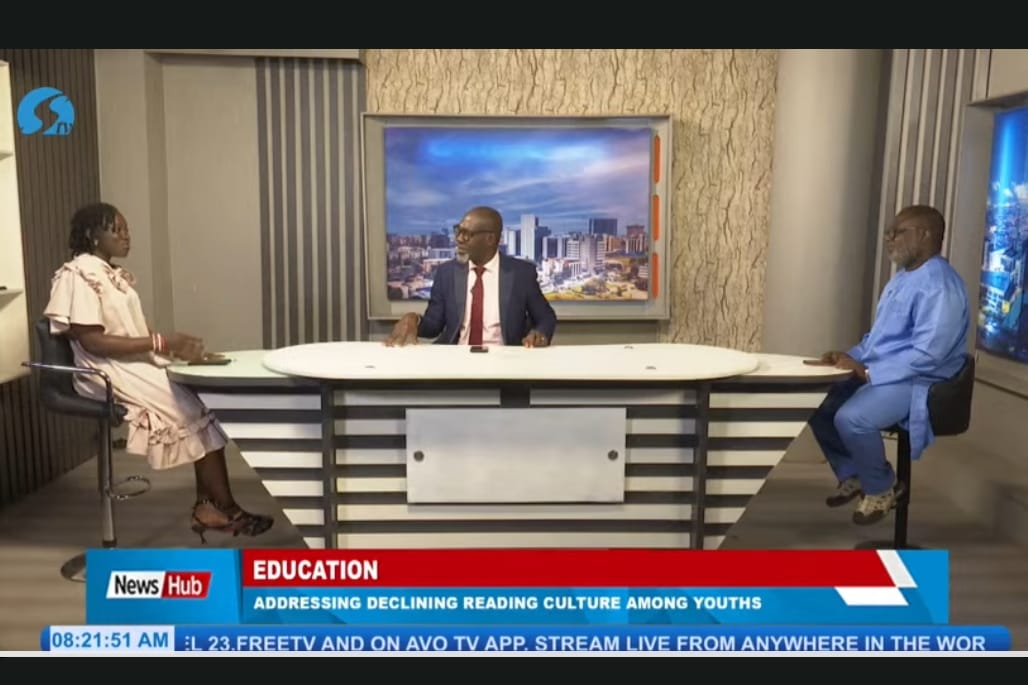
A lecturer at Lagos State University (LASU), Rashidat Olamidayo Ajakaye, has challenged the widely held perception that reading culture among Nigerian youths is declining, arguing that young people are increasingly embracing new ways of accessing and engaging with knowledge through digital platforms. Ajakaye made this submission during a television discussion on Silverbird Television, where she featured as a guest on the programme’s education segment, Addressing Declining Reading Culture Among Youths. The discussion was hosted by David Ubabudike, with Busari Adewale as co-host.
Speaking during the interview, Ajakaye maintained that the apparent decline in reading was better understood as a shift from traditional reading practices to digital and multimodal forms of learning. According to her, the changing preferences of young people should encourage educators to rethink how knowledge is delivered, rather than conclude that students have lost interest in reading. She urged teachers and lecturers to give students greater opportunities to create intellectual content, review books, perform literary works and share their ideas through contemporary media platforms. “Rather, there is a shift,” she explained, emphasising that education must evolve in response to changing lifestyles, technological developments and the expectations of younger generations.
Ajakaye highlighted the importance of integrating digital platforms into teaching and learning, noting that many young people are more comfortable engaging with content through online channels, including social media. Drawing on teaching and learning activities at LASU, she described how students had been encouraged to produce poetry, drama, creative writing and research works, as well as participate in presentations and panel discussions. She explained that such approaches helped students move beyond passive learning to become active creators of knowledge. According to her, when students are given opportunities to express themselves through platforms they understand and enjoy, they are more likely to participate meaningfully in academic activities. She added that educators must strike a balance between established academic practices and contemporary learning methods to prevent classrooms from becoming disconnected from students’ realities.
Addressing concerns about the growing influence of artificial intelligence (AI) on education, Ajakaye argued that the technology should be regarded as a tool for enhancing human productivity rather than a threat to intellectual development. She noted that AI could make research and writing more efficient, but stressed that users must possess a clear understanding of their objectives and provide appropriate instructions to obtain meaningful results. According to her, students should develop their ideas and establish the structure of their work before turning to AI for assistance. She also advocated using AI creatively to make classical literature more accessible to younger audiences. For instance, students could be encouraged to dramatise or reinterpret works by William Shakespeare through AI-generated videos and other digital formats. Such methods, she explained, could help students engage with literary texts that might otherwise appear difficult because of their complex language. However, Ajakaye cautioned that embracing technology must not come at the expense of human creativity, independent thought and intellectual depth. “AI is a tool,” she stressed, maintaining that educators must learn to work with emerging technologies while preserving the essential human contribution to learning and knowledge production.
The LASU lecturer also argued that contemporary education offers significant advantages over traditional systems, particularly in the speed and efficiency with which technology facilitates teaching, assessment and access to information. She pointed to the increasing use of computer systems and mobile devices in educational activities as evidence of how learning processes have evolved to accommodate larger populations and changing demands. Nevertheless, she maintained that technological advancement alone would not guarantee educational progress without effective implementation, adequate structures and competent personnel. On education policy, Ajakaye argued that Nigeria’s major challenge was not necessarily the absence of appropriate policies or curriculum provisions, but the failure to implement existing frameworks effectively. Using language education as an example, she observed that provisions concerning the use of mother tongues and English as languages of instruction already existed within the country’s educational framework, but were not consistently implemented in some schools. She called for stronger collaboration among stakeholders, improved teacher competence and a better alignment between professional qualifications and practical ability. She also emphasised the importance of specialisation in English Language teaching, arguing that subjects such as grammar, comprehension, literature and phonetics require adequate attention from competent teachers. According to her, addressing these structural concerns would improve teaching quality and strengthen the overall learning experience.
Ajakaye’s contribution to the discussion underscored the need for educators, policymakers and school administrators to respond collectively to the changing realities of education. Rather than treating digital technology as a distraction or viewing young people’s reading habits solely through the lens of traditional practices, she advocated an approach that combines the enduring value of books and literary works with innovative methods of engagement. Her position suggests that the future of reading culture in Nigeria may depend not only on encouraging young people to read more, but also on making reading more relevant, interactive and accessible within their everyday experiences.
The discussion concluded with a renewed emphasis on the need to accommodate evolving approaches to reading and learning across primary, secondary and tertiary institutions. As Nigerian schools and universities continue to navigate technological change, Ajakaye’s message remains clear: the task is not to abandon traditional knowledge, but to connect it with contemporary tools in ways that inspire young people to read, think critically and create.
