

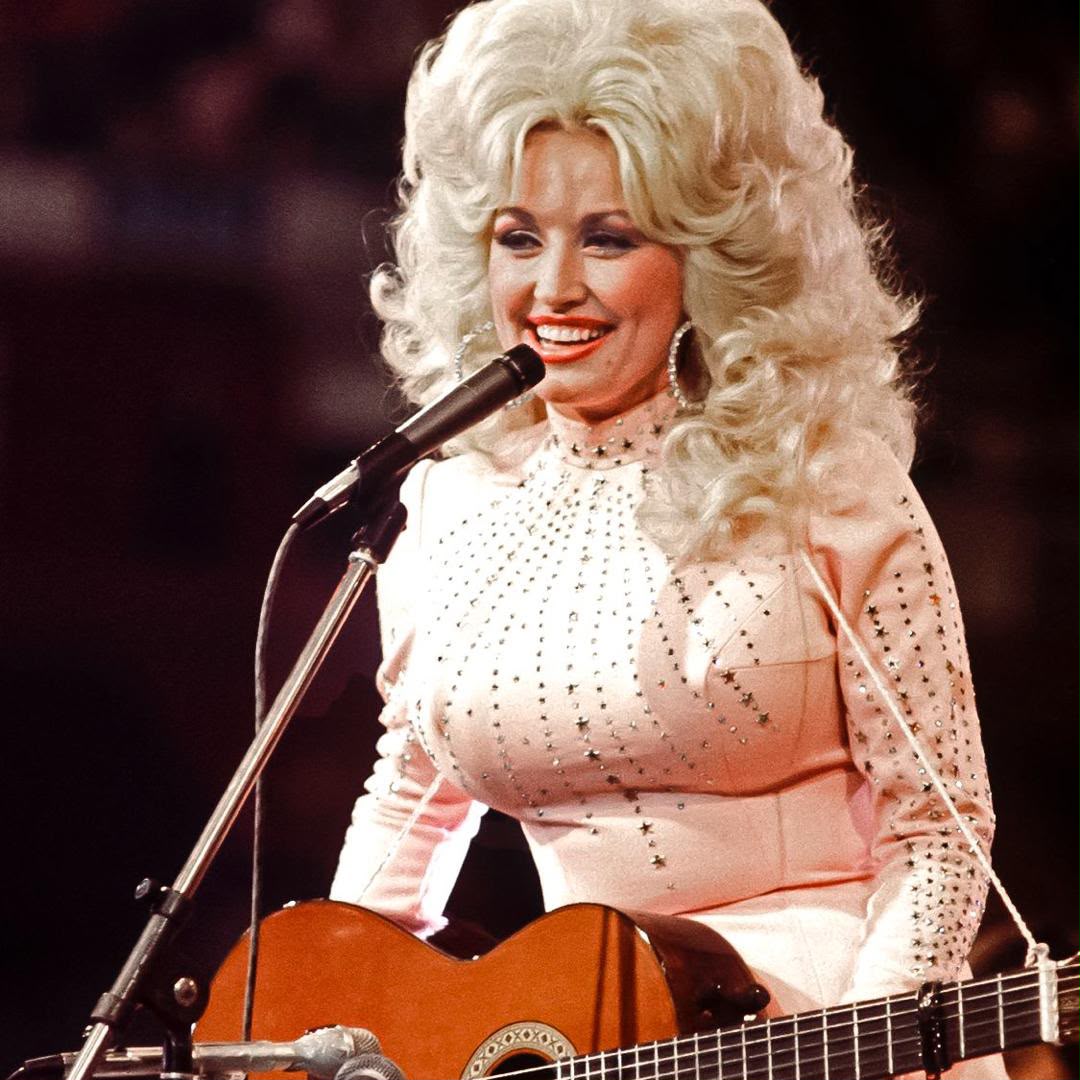
By Bimbo Esho
Another unmistakable voice has fallen silent.
Dolly Parton, one of the greatest singer-songwriters country music has ever produced, has died at the age of 80. And for me, her passing is not simply the death of a music icon. It is the fading of a voice that has lived somewhere in the soundtrack of my childhood for as long as I can remember.
My love for Dolly Parton’s music began at home. My father was the one who introduced me to her songs, and somehow, those songs stayed with me.They were not just songs. They were stories.
Growing up, I discovered that country music had something remarkably different about it. *The great country musicians did not merely sing; they narrated life.* *They told stories about poverty, love, heartbreak, family, jealousy, hope, hard work and the ordinary struggles of ordinary people, just like Highlife Musicians also did.
And Dolly Parton was one of the greatest storytellers among them.
Listening to Dolly was almost like taking a sip of a beautifully chilled glass of wine—smooth, distinctive and lingering long after the last note. Her voice had warmth, but her songwriting had something even more powerful: truth.
Much of her music was rooted in real experiences, memories and emotions. She could take something seemingly ordinary and turn it into a story that millions of people could recognise as their own.
I remember “Coat of Many Colors” particularly well.
For me, that song remains one of Dolly’s most beautiful pieces of storytelling. She sang about growing up poor and about the coat her mother made for her from pieces of discarded cloth. What could have been a painful memory of poverty became a story about love, dignity and the priceless wealth of a mother’s affection.
Dolly herself described the coat as being made from rags her mother had been given. The story eventually became one of the most beloved songs in her catalogue.
That was Dolly’s gift.
She could take poverty and turn it into poetry.
She could take heartbreak and turn it into melody.
She could take memories and turn them into something the world would never forget.
Then there was “Jolene.”
What a song!
Even as a young listener, there was something gripping about the desperation in Dolly’s voice as she pleaded with another woman not to take the man she loved. *Years later, I learned that the song was inspired by a real-life encounter involving a red-haired bank clerk who Dolly believed was flirting with her husband, Carl Dean, when they were newly married.
“Jolene” was not simply a song about jealousy. It was vulnerability set to music. Dolly did not sing as though she were a woman completely certain of herself. She sang as a woman afraid of losing something precious.
That vulnerability is what made the song unforgettable.
And then came “I Will Always Love You.”
Many people, particularly those who discovered the song through Whitney Houston, may not realise that it was originally Dolly Parton’s composition. Dolly wrote it as a farewell to Porter Wagoner when she decided to leave his television and musical partnership. She turned a difficult goodbye into one of the most enduring love-and-farewell songs ever written.
Whitney Houston would later transform it into a global phenomenon through The Bodyguard, but the heart of the song belonged to Dolly.
There was something profoundly Dolly made known about that composition: knowing when to leave, saying goodbye without hatred and acknowledging that separation does not necessarily erase love.
And who can forget “Islands in the Stream,” her unforgettable duet with Kenny Rogers?
I remember the video of those two country giants together almost as much as I remember the song itself. There was something magical about watching Dolly and Kenny Rogers share the screen and sing together.
The song became more than a country hit. It crossed generations and musical boundaries. And for me, seeing those two icons together was one of those childhood musical memories that never really disappeared.
FROM A LITTLE GIRL IN TENNESSEE TO THE WORLD
Dolly Parton’s story was almost as extraordinary as the stories she put into her songs. She was born into a poor family in rural Tennessee and grew up in a large family. She began writing songs as a child and eventually transformed her upbringing into an extraordinary creative legacy. Her songwriting became the bridge between her humble beginnings and international fame.
But Dolly was never only a singer. She became a songwriter, actress, businesswoman, philanthropist and cultural icon. She starred in films such as 9 to 5 and Steel Magnolias. She created Dollywood. She built a remarkable philanthropic legacy through the Dollywood Foundation and her Imagination Library, which promotes childhood literacy by providing books to children.
Her music crossed boundaries that many artists could never cross. Country music listeners loved her. Pop audiences embraced her. Hollywood welcomed her. Children knew her. Older generations admired her. And younger generations continued to discover her.
That is the mark of an extraordinary artist.
FOR ME, DOLLY WILL ALWAYS BE PART OF CHILDHOOD
Rest peacefully, legend. Your voice may have fallen silent, but your songs will keep singing.
