

By Peter Omopo
The Federal Government has launched a high-level inter-ministerial platform aimed at strengthening coordination on family planning, healthcare, human capital development and broader national development.
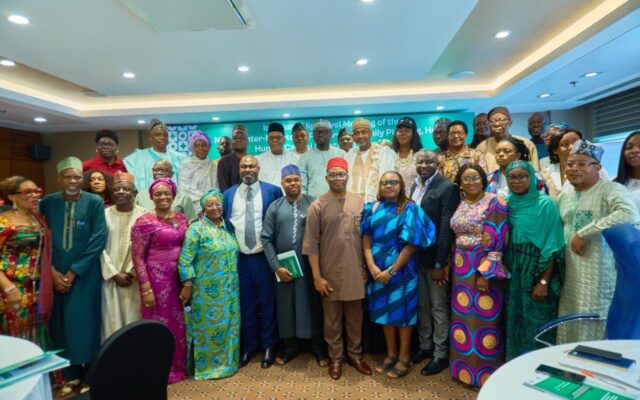
The platform was inaugurated in Abuja by the Coordinating Minister of Health and Social Welfare, Professor Muhammad Ali Pate, who said Nigeria’s growing population could become a major national asset if supported by strategic investments in health, education, empowerment and productivity.
Pate said Nigeria’s population, currently estimated at about 230 million, could rise to between 450 million and 500 million by 2050, making coordinated investment in human capital increasingly important.
He identified family planning, reproductive health, maternal and child health, girls’ education and youth empowerment as interconnected areas that require coordinated action across government.
According to the minister, the new platform will bring relevant ministries, departments and agencies together to align priorities, strengthen accountability and implement practical interventions.
Pate stressed that the success of the initiative would be measured by tangible outcomes rather than the number of meetings held or policy discussions conducted.
The minister also disclosed progress towards the domestic production of family planning commodities, describing the development as a significant step towards reducing Nigeria’s dependence on imported supplies, creating employment opportunities and retaining more economic value within the country.
He called for sustained funding and effective implementation at the sub-national level, stressing that national policies must translate into measurable improvements in the lives of Nigerians.
The Managing Director of the North, West and Central Africa Regional Hub of Family Planning 2030, Dr Alain Damiba, commended the Federal Government for establishing the platform.
Damiba described family planning as a shared responsibility across government and a strategic investment in human capital, noting that its benefits extend beyond healthcare to education, economic productivity and the wellbeing of families and communities.
The Permanent Secretary of the Federal Ministry of Health and Social Welfare, Daju Kachollom S., who was represented at the event by the Director of Family Health, Dr Ahmad Muhammad Ozi, said improved health outcomes required coordinated policies, aligned investments, effective partnerships and shared accountability.
She urged members of the platform to focus on practical interventions that would strengthen collaboration and deliver measurable results.
The Federal Government and participating stakeholders subsequently reaffirmed their commitment to sustained collaboration and coordinated investment in family planning, healthcare and human capital development.
The initiative is expected to strengthen Nigeria’s response to population growth while supporting efforts to build a healthier, better educated and more productive population.
