

By Peter Omopo
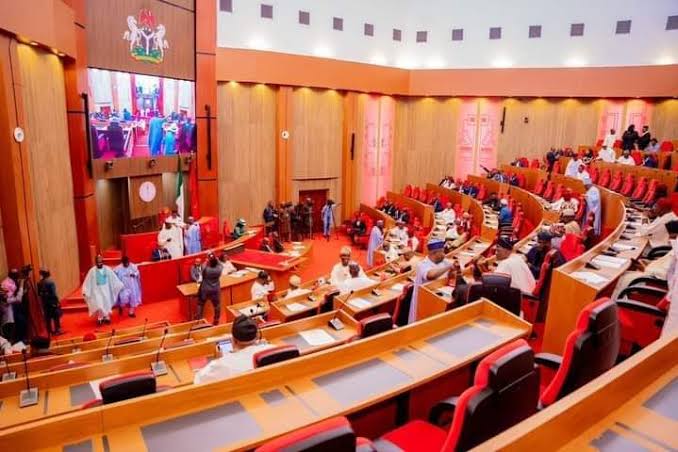
The Nigerian Senate has passed a constitutional amendment bill seeking to establish state police, marking a major step toward restructuring the country’s security framework and addressing persistent security challenges nationwide.
The proposed legislation, which scaled third reading during plenary on Wednesday, seeks to empower individual states to establish and manage their own police forces alongside the Nigeria Police Force.
Lawmakers backing the bill said the move is aimed at strengthening security responses to growing threats such as banditry, kidnapping, insurgency, and communal conflicts across various parts of the country.
Supporters of the proposal argued that decentralised policing would improve intelligence gathering at the grassroots level, enhance rapid response to local security threats, and promote community-based law enforcement tailored to the unique needs of each state.
They further maintained that the establishment of state police would enable governors and state governments to assume greater responsibility for maintaining security within their jurisdictions.
However, the proposal has continued to generate debate among stakeholders, with some expressing concerns that state-controlled police forces could be misused by political leaders to intimidate opponents, suppress dissent, or influence electoral processes.
The state police bill forms part of a broader package of constitutional amendment proposals currently being considered by the National Assembly as part of efforts to reform governance and strengthen institutions.
Following its passage by the Senate, the bill is expected to be transmitted to the House of Representatives for concurrence. If approved by the lower chamber, it will proceed to the state Houses of Assembly for ratification in accordance with constitutional requirements before it can become law.
The development represents one of the most significant legislative efforts in recent years to reform Nigeria’s security architecture amid growing calls for more effective and locally driven policing across the federation.
