

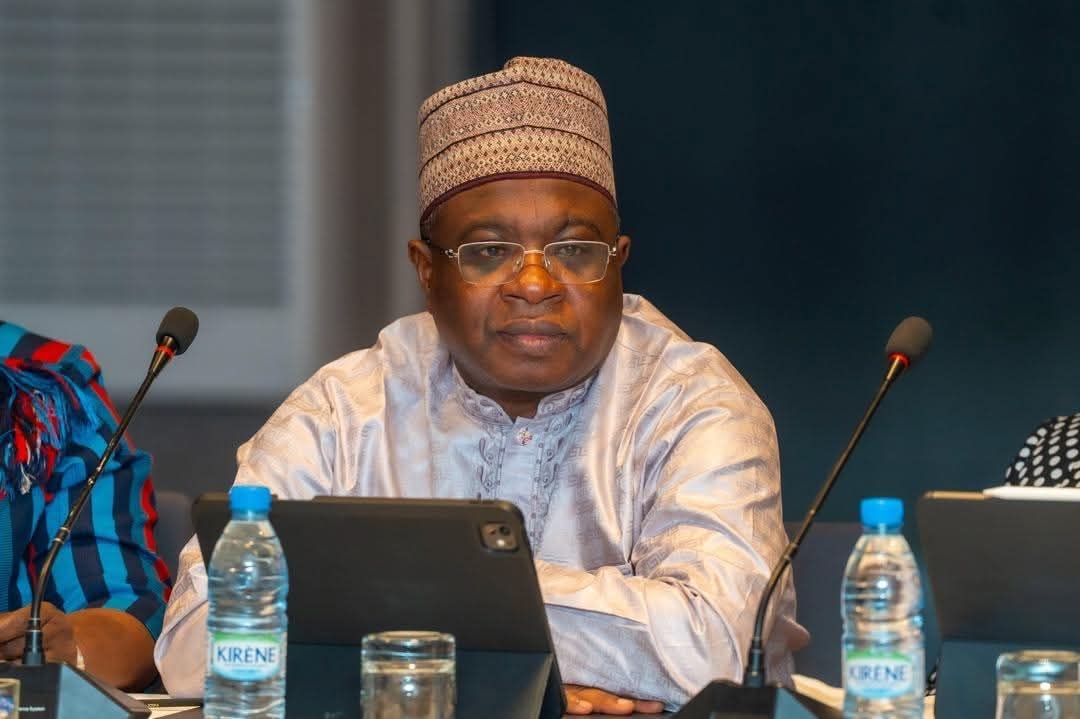
By Abu-Ubaida Ibrahim Kuna
Alh. Umaru Kwairanga (Sarkin Fulanin Gombe) remains one of the most widely recognized names in Gombe State. However, recognition in politics is not always synonymous with acceptance and in his case, public perception continues to carry a heavy burden of history, controversy, and unresolved grievances.
Among many citizens, he is often portrayed not as a grassroots political figure, but as a personality associated more with frequent international travel and elite lifestyle exposure. The prevailing image is that of a man constantly moving from one country to another visiting islands, scenic destinations, and wildlife attractions while remaining largely detached from the everyday realities of the people at home.
Yet, beyond this perception lies a far deeper and more consequential issue the enduring controversy surrounding the privatization of Ashaka Cement Plc.
For many across Gombe, the mention of his name immediately revives painful memories tied to what is widely believed to be his role in the Ashaka Cement factory’s saga. This event is not viewed as an ordinary economic decision, but as a turning point that, in the eyes of critics, triggered a chain reaction of economic hardship not only in Gombe but across parts of Northern Nigeria.
According to widespread public sentiment, the privatization contributed to the:
Decline of local economic strength
Collapse of businesses, particularly from Funakaye LGA and surrounding areas
Resulted in job losses affecting indigenes of Gombe State and
Depened poverty and hardship among families, affecting both parents and children.
For many across this is not just policy; it is personal memory.
Even more striking are accounts suggesting that respected leaders within the state, including the late Emir of Gombe, Dr. Shehu Usman Abubakar, reportedly intervened and appealed against the decision at the time. However, these appeals, according to such narratives, did not alter the outcome further reinforcing the belief among critics that personal or vested interests were prioritized over collective welfare.
Today, the legacy of that decision continues to shape public perception. Many believe that the economic consequences are still being felt, and that the scars left behind have not fully healed.
In political terms, this history presents a significant challenge. Some analysts argue that his re-emergence in the political space could reignite public resentment, rather than inspire renewed confidence. In a state where memory plays a critical role in political decision-making, past actions remain powerful determinants of present acceptability.
Additionally, there is a widely held view that beyond this controversial legacy, there is little evidence of sustained grassroots engagement or impactful contributions to the broader population. Critics argue that his public presence has been dominated more by symbolic visibility photographs, social media appearances, and international outings than by tangible developmental initiatives.
This has led to a perception, particularly among younger political observers, that he is more aligned with personal image-building than public service delivery.
As a result, many citizens question not only his political viability but also his readiness to govern. Some go as far as suggesting that leadership of a complex and evolving state like Gombe requires a different kind of profile one rooted in constant engagement, empathy, and visible commitment to the people.
In the court of public opinion, therefore, his political ambition faces a difficult terrain one shaped by:
Historical controversy
Economic grievances
Perceived detachment from grassroots realities and
Questions around priorities and leadership focus.
In a political season where credibility, connection, and trust are decisive factors, these challenges remain significant.
Ultimately, while Sarkin Fulanin Gombe commands name recognition, the central question persists across Gombe State are:
Can recognition outweigh memory?
Can visibility replace impact?
Can past decisions be separated from present ambition?
For many political observers, the answers to these questions will determine not just his political future but the extent to which the people are willing to revisit a chapter of their history they have not yet forgotten.
Kuna writes from Gombe State, Nigeria.
