

By Peter Omopo
Leaders of the African Democratic Congress (ADC) have called for the immediate resignation or removal of the Chairman of the Independent National Electoral Commission (INEC), Professor Joash Amupitan, over allegations of bias and attempts to undermine Nigeria’s multi-party democracy ahead of the 2027 general elections.
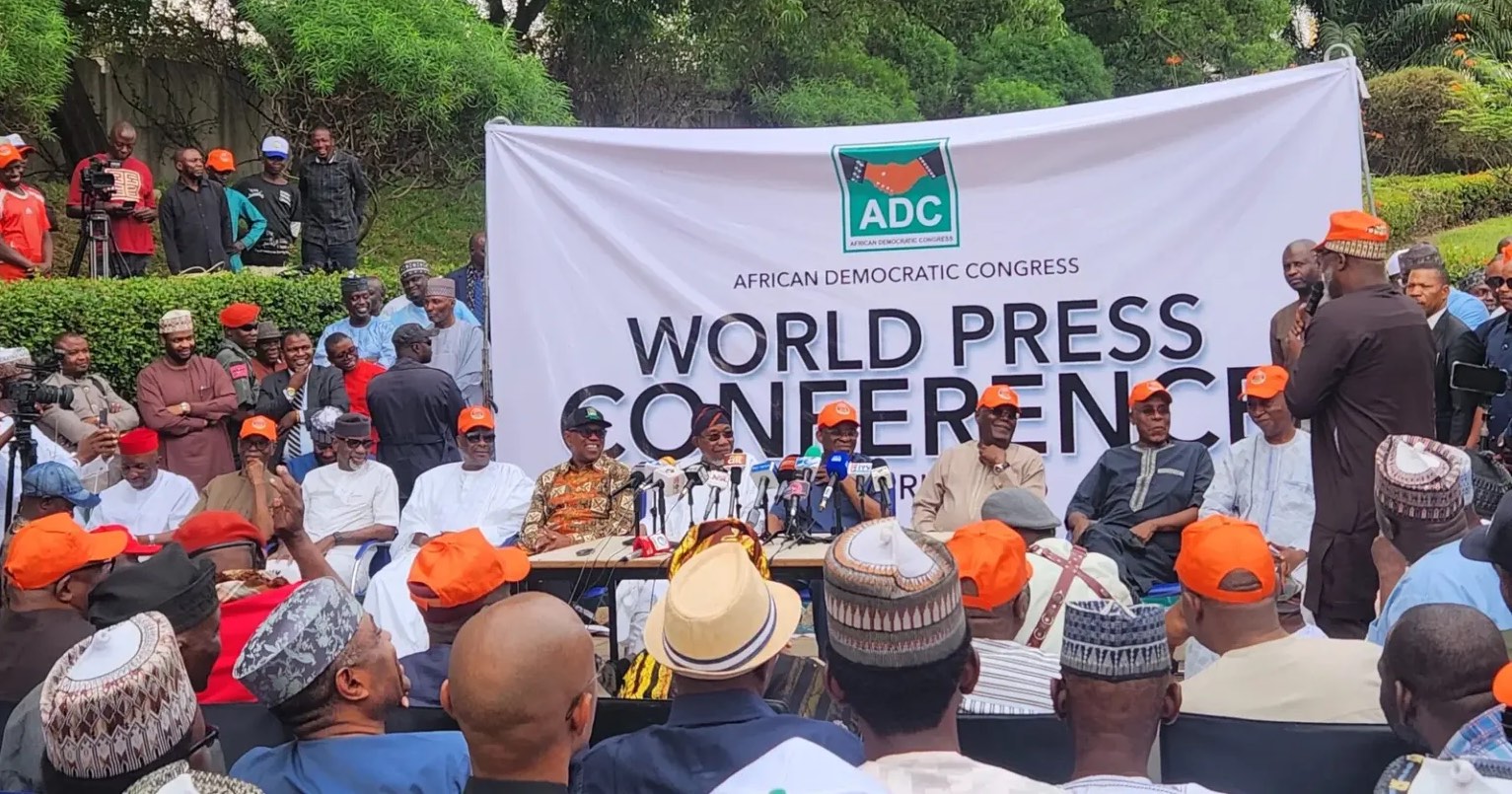
The demand was made at a gathering held at the Yar’Adua Centre in Abuja, where the ADC leadership, alongside prominent opposition figures, accused the electoral body of actions capable of foisting a one-party state on the country.
Reading a joint address, ADC National Chairman, David Mark, alleged that INEC’s recent decision to remove key party officials, including himself and National Secretary Rauf Aregbesola, from its official portal was politically motivated and aimed at weakening opposition parties.
He argued that the move misrepresented a Court of Appeal directive to maintain the “status quo ante bellum,” insisting that INEC’s interpretation had effectively left the party without recognised leadership.
Mark further accused the ruling All Progressives Congress (APC) of influencing the commission’s actions, alleging a broader plan to limit political competition ahead of the next general election.
He stated that the ADC would proceed with its scheduled congresses and national convention, maintaining that INEC’s presence was not a legal requirement for such activities.
Supporting this position, ADC National Publicity Secretary, Bolaji Abdullahi, said the party had already notified INEC of its planned activities in line with statutory provisions and would not halt its processes regardless of the commission’s stance.
However, INEC swiftly dismissed the calls for the chairman’s removal, describing them as a distraction and a direct assault on its independence.
In a statement issued by the Chief Press Secretary to the INEC Chairman, Adedayo Oketola, the commission maintained that its actions were guided strictly by the Constitution and in compliance with a subsisting Court of Appeal order.
The commission stressed that the appointment and removal of its chairman and national commissioners are governed by constitutional provisions, noting that no political party or group has the authority to demand such actions outside the legal framework.
INEC explained that its decision to delist certain ADC officials was aimed at preserving the status quo pending the determination of ongoing litigation, adding that monitoring party activities under the current circumstances would amount to disobedience of court orders.
The electoral body also rejected claims of promoting a one-party system, pointing to the recent registration of additional political parties as evidence of its commitment to expanding democratic space.
Meanwhile, the Peoples Democratic Party (PDP) warned that recent developments could threaten Nigeria’s democracy, urging INEC and other institutions to act with caution and prioritise national interest over partisan considerations.
Civil society groups, including the Nigeria Civil Society Situation Room, also called on INEC to review its decision, expressing concerns that the move could create confusion within the ADC and undermine confidence in the electoral process.
The controversy has heightened political tension, with increased security presence reported at INEC headquarters in Abuja amid fears of protests by opposition supporters.
Observers say the unfolding dispute underscores growing concerns over electoral integrity and political stability as Nigeria prepares for the 2027 general elections.
