

By Peter Omopo
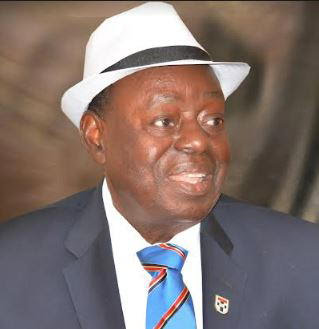
Ado-Ekiti — Renowned legal scholar and founder of Afe Babalola University, Ado-Ekiti (ABUAD), Aare Afe Babalola, has expressed deep concern over the increasing number of illegal and substandard private universities operating across Nigeria.
Speaking in Ado-Ekiti while receiving the Medical and Dental Council of Nigeria (MDCN) accreditation team on a visit to the institution, Babalola urged the National Universities Commission (NUC) to urgently revisit its accreditation processes and clamp down on institutions operating without approval.
He warned that Nigeria’s education system faces serious danger if poor-quality institutions continue to multiply unchecked.
“Nigeria deserves the best and should therefore not tolerate substandard education,” he said. “There is a long list of illegal private universities in Nigeria today. I would like the NUC to seriously consider shutting them down and arresting their owners.”
Babalola, who described ABUAD as a non-profit university built on excellence, lamented that despite massive investments in infrastructure — including an industrial research park and a 400-bed multi-system teaching hospital — the institution has never received substantial endowments or major external financial support.
“As at today, the valuation of the university is over N300 billion. Everything you see — the hospital, the farm, the industrial park, the serene campus — is the product of reinvestment and commitment,” he noted.
He added that functional education remains the bedrock of national development, pointing out that ABUAD continues to prioritise quality teaching, research, and community service in line with global standards.
“No government in the world can fund education entirely,” he said. “This is why, in developed countries, private universities are supported by public-spirited individuals. I am calling on Nigerians to support quality and functional education.”
Earlier, ABUAD Vice Chancellor, Prof. Smaranda Olarinde, described the MDCN’s visit as a crucial phase in the ongoing accreditation of the university’s MBBS programme. She highlighted ABUAD’s rapid progress in medical training since launching the programme in 2011.
Olarinde revealed that the university secured full accreditation for its medical programme within three years — a rare accomplishment in Nigeria — and has so far graduated seven sets of doctors trained through a competency-based curriculum and advanced clinical facilities.
She assured the MDCN team of transparency throughout the accreditation exercise, stressing that ABUAD views such assessments as opportunities to strengthen internal systems and elevate academic standards.
The accreditation process continues as the MDCN evaluates the capacity, facilities, and compliance level of the university’s medical programme.
