

By Peter Omopo
As the Economic Community of West African States (ECOWAS) marks its golden jubilee, regional leaders, scholars, and policymakers have called for deep institutional reforms, renewed unity, and stronger citizen engagement to safeguard democracy and stability across West Africa.
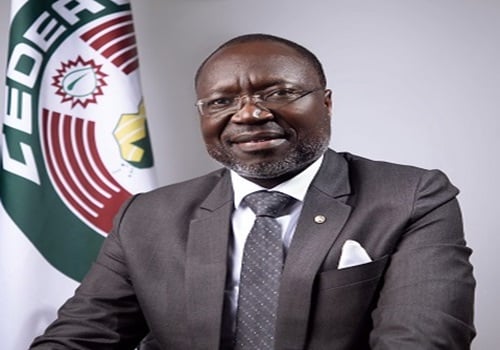
Speaking at a high-level policy debate tagged “Future Proofing Regional Integration in Africa: The African Public Square Debate” held in Abuja on Friday, the ECOWAS Commissioner for Political Affairs, Peace and Security, Ambassador Abdel-Fatah Musah, said the anniversary was an opportunity for “deep reflection, partnership, and renewal.”
Representing ECOWAS Commission President Dr. Omar Touray, Musah commended the collaboration between the Africa Leadership Centre, Amandla Institute, and the Mandela Institute for Policy and Leadership Advancement, describing the event as a critical forum to chart the next phase of ECOWAS’ development.
Reflecting on the bloc’s founding in 1975 by Generals Yakubu Gowon of Nigeria and Gnassingbé Eyadéma of Togo, Musah said ECOWAS’ early achievement lay in uniting the region’s Francophone, Anglophone, and Lusophone countries into one regional economic and political entity.
He outlined ECOWAS’ historical evolution in three phases — the post-independence and Cold War years, its peacekeeping interventions during civil conflicts in Liberia, Sierra Leone, and Côte d’Ivoire, and its current struggle with insecurity and democratic instability.
“West Africa finds itself at a very critical juncture in its evolution. We have a crisis of security and a crisis of democracy. It doesn’t seem like leaders have learned their lesson,” Musah warned.
The commissioner expressed concern over the erosion of competitive politics in several member states, where governments allegedly suppress opposition through manipulation of electoral processes.
“Today’s popular method of capture is the elimination of opponents—political parties or candidates—from the electoral process. That is one of the reasons some member states decided to leave ECOWAS,” he said.
Musah also cited worsening insecurity in the Sahel region, stressing that the bloc must adapt to address the growing threats posed by terrorism, extremism, and governance failures.
He revealed that ECOWAS had begun a series of introspections to produce a citizen-led reform pact that would guide the community’s direction over the next 15 years.
“This generation must discover its mission—either to fulfil it or to betray it. The youth are not just the leaders of tomorrow; they are the drivers of change today,” Musah said, emphasizing the role of young people and civil society in shaping West Africa’s future.
Also speaking, Dr. Kayode Fayemi, former Governor of Ekiti State and Co-founder of the Amandla Institute, described the debate as “a timely and critical conversation” on the shifting dynamics of ECOWAS, the region’s deepening insecurity, and the urgency of reform.
Fayemi cautioned that the bloc risked losing legitimacy among citizens unless it became more inclusive and responsive to grassroots concerns.
“There is an urgent need for a citizen-centred approach that responds to the real concerns of ordinary West Africans. Military takeovers cannot be a response to governance failures. They have only worsened insecurity where they occur,” he noted.
He called on ECOWAS to abandon “business as usual” and evolve strategies that reflect the region’s realities while rebuilding public trust in its institutions.
In her remarks, Professor Funmi Olonisakin, Vice President for International Engagement and Services at King’s College London, called for a “complete reinvention” of the West African integration project, saying the time had come to rethink regional cooperation 50 years after ECOWAS’ founding.
Founded in 1975, ECOWAS was established to promote economic integration, free movement of people and goods, and collective political cooperation among its 15 member states. Over the decades, it has led major peacekeeping and democracy-restoration efforts across the region.
However, a wave of military coups in Mali, Guinea, Burkina Faso, and Niger, coupled with worsening economic conditions and governance crises, now poses a major test to the bloc’s unity as it turns 50.
“The future of ECOWAS will depend on its ability to listen to its citizens, rebuild trust, and renew its founding vision of solidarity and shared progress,” Musah concluded.
