

By Sola Ojewusi
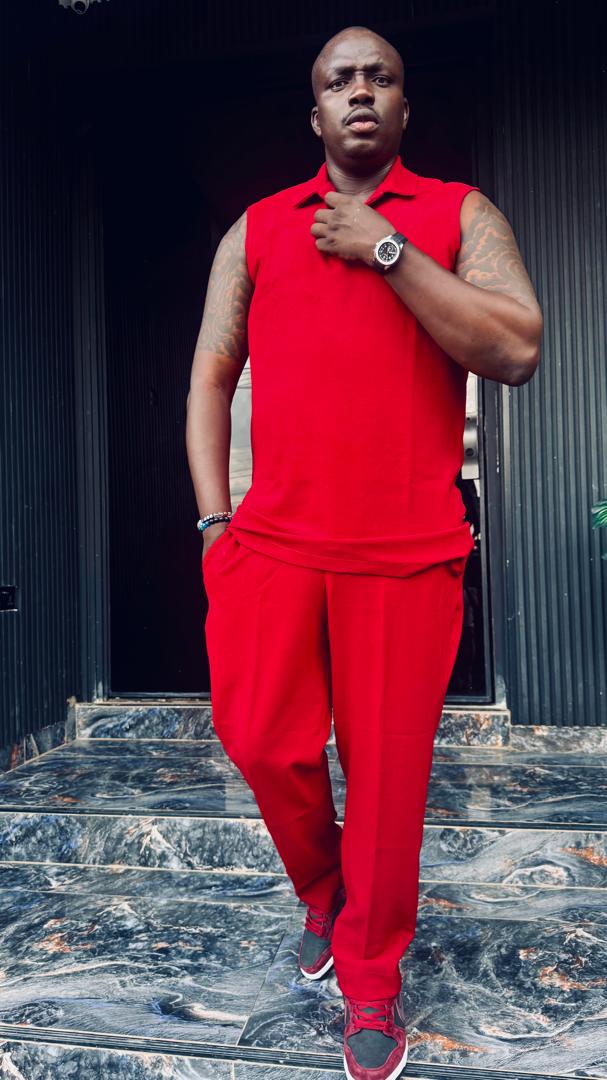
From the boardroom to the movie set, from businessman to aspiring screen star, Big Jovi is chasing a dream he once had to abandon. Now, with an ambitious Yoruba epic directed by Azeez Ijaduade, popularly known as King Zeez, and featuring some of the industry’s biggest names, he is ready to tell his story—and make audiences pay attention.
What happens when a man who has built a life around business, corporate responsibilities and multiple investments decides that the dream he abandoned as a child deserves another chance? Does he quietly test the waters, or does he plunge headlong into the deep end, determined to make up for lost time?
For John Olamide Victor, popularly known as Big Jovi, the answer is unfolding on the movie set, where childhood ambition, business experience, family inspiration and an appetite for adventure are converging in an increasingly compelling entertainment journey. His latest and most ambitious undertaking, Kulende, is not merely another film production. It represents a personal statement, a professional gamble and a bold attempt to establish himself in the competitive world of Yoruba cinema.
And if the names attached to the production are anything to go by, this is a project that deserves the attention of film lovers.
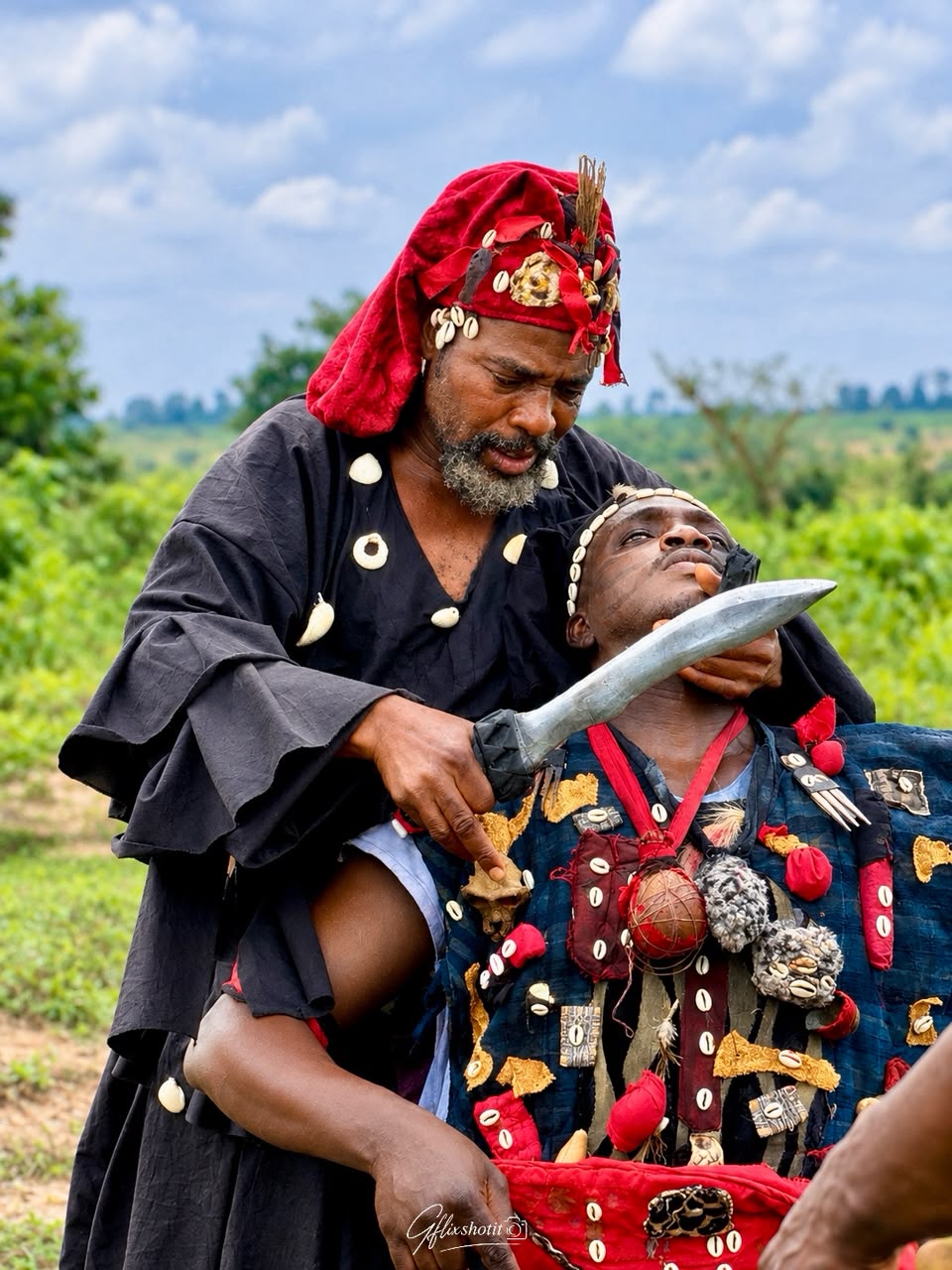
Imagine Ibrahim Chatta, Odunlade Adekola, Kolawole Ajeyemi and Yinka Quadri sharing the same cinematic universe, with Big Jovi stepping into a leading role as a compassionate hunter whose life takes a devastating turn after he is framed and banished from his community. Add betrayal, exile, captivity, preparation for war and an eventual confrontation with the villain, and the ingredients for a gripping Yoruba epic begin to take shape.
Behind this ambitious undertaking is Azeez Ijaduade, popularly known as King Zeez, who functions as the film’s director. His role in steering the production’s creative vision is central to the task of translating the story into a compelling screen experience, bringing together performances, visual storytelling, atmosphere and dramatic tension to give Kulende its intended epic character.



But behind the ambition of the film lies a story that is just as fascinating as the drama unfolding on screen: the story of a man returning to the dream that once refused to leave him alone.
THE BOY WHO WANTED TO ACT
Born in Lagos and raised in Shomolu, Big Jovi says his fascination with acting began long before he became involved in his recent film projects. As a young man, he wanted to become an actor, but his ambition did not receive the encouragement he hoped for at home. His mother, according to his account, did not consider theatre arts a sufficiently promising career path.
For many aspiring performers, such discouragement can become the end of the story. The dream is postponed, responsibilities take over, and the possibility of returning to it gradually fades into the background. Big Jovi chose a different route. He built a life in business, developed a corporate career and took on responsibilities that demanded his time, energy and attention.
Yet the ambition remained.
“I’ve always wanted to be an actor,” he says, reflecting on the desire that has now developed into a serious commitment to film production and performance.
There is something particularly compelling about a man who does not approach acting as his only available means of survival but as a dream he has chosen to pursue despite already having other responsibilities. Big Jovi is not walking away from the world he knows. He is attempting to build another world alongside it, and that distinction makes his journey worth watching.
His business interests span hospitality, apartments, lounges and a five-a-side football facility. He also maintains a career in clearing and forwarding, which he describes as his family’s primary source of livelihood. These are substantial commitments, but they have not extinguished his desire to explore the creative side of his personality.
Now, the boy who once dreamed of becoming an actor is determined to discover how far that dream can take him.
HOW HIS DAUGHTER REOPENED THE DOOR
Interestingly, Big Jovi’s return to filmmaking did not begin with a grand declaration that he was ready to conquer Nollywood. It began with family.
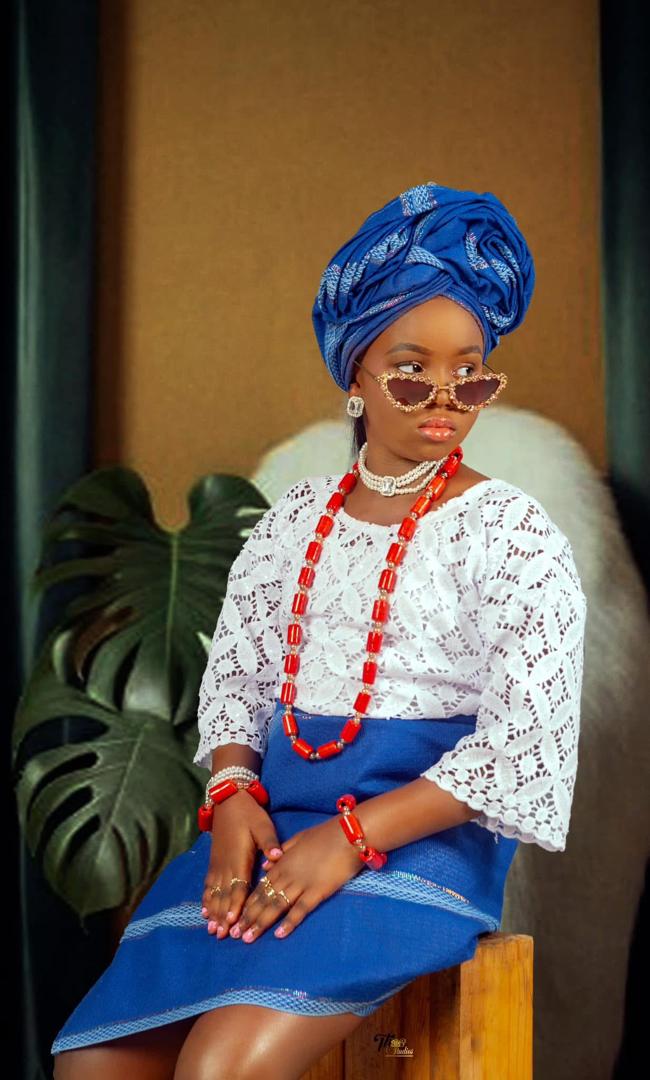
His daughter, Raquel Oyinkansola John, who performs under the stage name Rich Kid Actor, is also pursuing an acting career. Wanting to create an opportunity for her to display her talent, Big Jovi decided to venture into film production. His initial intention was to support her ambitions rather than make himself the centre of attention.
That decision resulted in Contract Marriage, a production he says has been sold to DStv and is awaiting broadcast.
It was supposed to be an opportunity for his daughter. Instead, it became an unexpected doorway into his own long-suppressed ambition.
Conversations with industry personalities, including Lola Smart and Azeez Ijaduade, popularly known as King Zeez, encouraged him to reconsider his place in front of the camera. The more he engaged with filmmaking, the more he realised that supporting his daughter’s dream did not require him to abandon his own.
King Zeez’s contribution to this journey is particularly noteworthy because his involvement goes beyond offering encouragement. As the director of Kulende, he occupies a key creative position in the production, guiding the performances and the film’s overall presentation as Big Jovi takes on one of his most demanding acting assignments.
The result has been a remarkable burst of activity. Big Jovi says he has participated in approximately seven productions over a period of about two months, taking on different roles and exploring different genres.
His recent credits include Dunwo, The Game, Live Drama, Tife Baku, Ajibelorun and Abimbisu, alongside Kulende.
For a newcomer seeking to establish a recognisable identity, this is an intensive introduction to the realities of filmmaking. It also reflects a deliberate desire to learn through experience rather than wait indefinitely for the perfect opportunity.
Big Jovi wants audiences to see him as more than a businessman making a guest appearance in a movie. He wants to demonstrate versatility, moving between romantic characters, gangsters, family dramas and historical epics. In effect, he is inviting the audience to discover what he can do rather than allowing a single role to define him.
That is an ambitious proposition, especially in an industry where credibility must be earned through performance, consistency and the ability to convince viewers that the character on screen is more than the person playing it.
WHY KULENDE IS HIS BIGGEST GAMBLE YET
Of all the projects competing for Big Jovi’s attention, Kulende occupies a special place. It is the production in which his ambition as an actor, his instincts as a producer and his willingness to invest in a challenging creative undertaking appear to converge.
The film was initially conceived for a YouTube release. However, as production developed and the financial commitment grew, the team began considering a more ambitious distribution strategy, including pitching the film to Prime Video. Such a move would represent a significant step up in the project’s commercial aspirations, although a streaming-platform acquisition or release should not be assumed until officially confirmed.
Why does Kulende matter so much?
For one, the film brings together an impressive collection of established Yoruba screen performers. Ibrahim Chatta, Odunlade Adekola, Kolawole Ajeyemi and Yinka Quadri are among the actors associated with the production. Their presence gives the project an important connection to an audience familiar with the depth and traditions of Yoruba storytelling.
But the real attraction lies in the story Big Jovi has been entrusted to lead and the creative direction under which that story is being brought to life.
Under the direction of King Zeez, Kulende follows a compassionate hunter whose life is thrown into turmoil when he is framed for an offence and banished from his community. From the apparent security of familiar surroundings, the character is plunged into a world of hardship, captivity and conflict. His journey takes him towards preparation for war and, ultimately, a confrontation with the villain responsible for his ordeal.
The premise offers opportunities for emotional depth and physical drama. A compassionate man forced to confront injustice can become a powerful central character, particularly when the story explores the tension between personal suffering, communal loyalty, betrayal and the desire for justice.
The hunter’s journey also lends itself naturally to the visual language of an epic: rugged landscapes, traditional costumes, weapons, tense confrontations, moments of vulnerability and the spectacle of warriors preparing for battle.
The director’s task is to ensure that these elements work together, creating a coherent cinematic world rather than a mere succession of dramatic scenes. Performances must serve the story, action must carry emotional significance, and the visual atmosphere must reinforce the cultural and historical setting.
For audiences who enjoy Yoruba historical dramas, the appeal is easy to understand. The expectation is not simply to watch a succession of fights or admire elaborate costumes. It is to enter a world in which honour, courage, loyalty and the consequences of betrayal shape the destinies of individuals and communities.
For Big Jovi, the challenge is to carry that world convincingly on his shoulders. For King Zeez, the opportunity is to guide the production towards a finished work that brings the story’s dramatic possibilities to the screen.
SIXTEEN DAYS THAT TESTED THE DREAM
The making of Kulende was no casual exercise. Big Jovi says the production required 16 days of filming at Ibrahim Chatta’s film village in Oyo State, with cinematographer Biola Ladipo brought on board to help achieve the desired visual quality.
Sixteen days on location can mean much more than showing up, delivering lines and going home. An epic production requires coordination among actors, the director, cinematography and production teams, costume and makeup departments, location personnel and the many people responsible for transforming a script into images that work on screen.
For a producer who is also playing the lead character, the demands are multiplied. He must remain immersed in the emotional and physical requirements of his role while also paying attention to the practical considerations that keep a production moving.
The director must simultaneously maintain the film’s creative direction, work with the actors to shape their performances and help ensure that the scenes contribute to the larger narrative. This relationship between the producer-actor and the director is especially important in a production where the scale of the story demands discipline and coordination.
Big Jovi’s decision to pursue a visually ambitious production suggests that he wants to learn those lessons at a serious level. His stated aspiration is to deliver an epic whose production and post-production quality can stand alongside the standards expected of major screen productions.
The ultimate test, of course, will be the finished film. Audiences will want to see whether the cinematography, editing, sound, performances, action sequences and storytelling come together to produce a convincing cinematic experience. But the scale of the undertaking already signals that Big Jovi is not approaching the project as a passing hobby.
He is putting his ambition to work.
WHEN SPEAKING YORUBA BECOMES A DIFFERENT CHALLENGE
One of the most revealing aspects of Big Jovi’s experience on Kulende concerns language.
Born and raised in Lagos, Big Jovi is from Auchi in Edo State. He had always considered himself proficient in Yoruba, but the production introduced him to a distinction he had not fully appreciated: the difference between everyday conversational Yoruba and the more traditional expressions required in an epic film.
The Yoruba spoken in a contemporary Lagos drama may be quite different from the language appropriate to a historical setting. Familiar expressions, modern turns of phrase and everyday speech patterns may not fit a character living in a world shaped by traditional authority, communal customs and the conventions of an epic narrative.
For a lead actor, that distinction matters enormously. Audiences who understand the language can quickly recognise dialogue that feels unnatural or out of place. Even when the story is compelling, anachronistic expressions can weaken the illusion that the characters inhabit another time and cultural environment.
Big Jovi says the experience forced him to pay closer attention to the language and correct expressions that did not suit the production.
It was an important lesson in humility. Being comfortable with a language does not automatically mean being prepared to perform every register of it, particularly in a genre where speech patterns help establish historical atmosphere and cultural authenticity.
Rather than presenting the challenge as an obstacle that defeated him, his account reveals something useful about his approach to the craft: he is learning, adjusting and discovering that acting requires more than enthusiasm.
For a performer seeking longevity, that willingness to learn could prove as important as the number of productions he completes.
THE BUSINESSMAN’S DILEMMA: WHO RUNS THE BUSINESS WHEN THE PRODUCER IS AWAY?
There is another drama behind the camera, and it has nothing to do with the film’s villain.
Big Jovi’s existing business interests do not disappear simply because he has a production to complete. His hospitality operations, apartments, lounges, football facility and clearing and forwarding career continue to demand attention, even when he is hundreds of kilometres away on a film set.
The 16-day shoot for Kulende required him to leave Lagos and temporarily step away from the physical supervision of his businesses. That experience brought into focus a challenge familiar to many entrepreneurs: how do you pursue a new ambition without undermining the ventures that already sustain you?
Producing a film of this scale demands involvement throughout the process, from planning and logistics to managing people, resources and creative expectations. Acting in another producer’s film is different. A hired actor can generally concentrate on the responsibilities attached to the role, while the production team handles the broader operation.
When the actor is also the producer, however, the responsibilities converge. A delay on set may have financial consequences, while a problem at a business may demand attention at precisely the moment a crucial scene is being filmed.
For Big Jovi, this is a continuing learning curve. The long-term challenge will be to establish systems and trusted teams that allow his businesses to function efficiently while he develops his film career.
His wife has played a significant role in helping the family navigate this new direction. He credits her understanding and support, including her involvement in coordinating activities and accompanying him on productions, as important to his ability to pursue filmmaking.
Her contribution highlights an often-overlooked reality of creative ambition: behind many public careers is a network of family members who help make the work possible.
Big Jovi is also determined to support his daughter’s growth as an actress without losing sight of her education. It is a sensible reminder that a family can encourage creative ambition while remaining attentive to the responsibilities that extend beyond the entertainment industry.
MORE THAN A MOVIE: A FAMILY LEGACY IN THE MAKING?
There is an appealing dimension to Big Jovi’s story that goes beyond the prospect of becoming a recognised actor. His entry into filmmaking was partly motivated by his daughter’s ambition, yet it has developed into a shared family journey.
For Raquel, the opportunity to act is accompanied by the experience of seeing a parent invest in the creative industry and confront its demands firsthand. For Big Jovi, supporting her has also created the space to rediscover a part of himself that he once set aside.
Whether the two ultimately establish lasting careers in the industry will depend on their individual talent, discipline, learning and the opportunities available to them. But the decision to pursue their ambitions together has already given their story a distinctive emotional dimension.
It is also a reminder that dreams do not always arrive at the most convenient time. Sometimes they return when life has become more complicated, when responsibilities have multiplied and when the risks are greater than they would have been in youth.
At that point, the question is no longer whether the dream is attractive. It is whether one is prepared to do the work required to pursue it.
Big Jovi appears determined to find out.
WHY FILM LOVERS SHOULD KEEP AN EYE ON KULENDE
The Yoruba film industry has a rich tradition of storytelling, drawing on history, folklore, communal memory, moral conflict and larger-than-life characters. An epic production can be particularly rewarding when it combines those traditions with strong performances, compelling dialogue and cinematic craftsmanship.
Kulende has several elements that could make it an engaging proposition: a central character whose life is overturned by false accusations, a journey through captivity and preparation for war, an ensemble featuring familiar Yoruba screen names and a lead actor who has a personal stake in making the production succeed.
The involvement of King Zeez as director adds another important dimension to the production. With a story that demands convincing performances, a coherent historical atmosphere and dramatic action, the director’s ability to bring these elements together will be central to the film’s final impact.
The hunter’s story creates an opportunity to explore how an individual responds when a community turns against him. Does compassion survive persecution? What happens when a man loses his place in society through an injustice he did not commit? Can courage and preparation restore what betrayal has taken away?
These are questions that can give an epic emotional substance beyond its action sequences. If the film successfully combines the human story with the spectacle of the genre, it could offer viewers more than a procession of dramatic confrontations.
Its commercial future remains to be established, and the proposed streaming ambitions will depend on the opportunities and decisions that follow production. Nevertheless, the project’s scale, its cast, its directorial leadership and Big Jovi’s determination make it one to watch as the team works towards presenting the finished film to audiences.
For viewers, the appeal is twofold: the promise of an epic adventure and the opportunity to witness a performer taking a significant step towards a dream he has carried since childhood.
THE NEXT CHAPTER BEGINS
Big Jovi’s journey is still at an early stage. A busy production schedule can create momentum, but a sustainable acting career requires more than activity. It demands convincing performances, consistency, professional relationships, continuous learning and the ability to choose projects that build credibility over time.
Kulende is therefore both an opportunity and a test. It places Big Jovi in a demanding role alongside experienced performers, under the direction of King Zeez, within a genre that requires command of language, cultural atmosphere and physical expression. It also challenges Big Jovi to coordinate his responsibilities as a producer without losing sight of his other professional commitments.
For someone returning to a childhood ambition after years in business, that is a substantial undertaking.
But perhaps the most interesting part of Big Jovi’s story is not the possibility of instant success. It is the willingness to begin again, to accept the learning curve and to put time, resources and personal commitment behind an ambition that once seemed impractical.
He began producing to create an opportunity for his daughter. He found himself rediscovering his own calling. Now, with Kulende, he is taking a more substantial step towards building a place for himself in Yoruba cinema.
Will the film become the breakthrough he hopes for? Will audiences embrace his portrayal of the compassionate hunter? Will King Zeez’s direction deliver the dramatic and visual experience the production is aiming for? And can Big Jovi translate his enthusiasm into a lasting screen career?
Those answers will emerge as the film moves towards release and viewers have the opportunity to judge the finished work for themselves.
For now, one thing is clear: Big Jovi is no longer content to wonder what might have happened if he had pursued acting earlier in life. He is determined to find out what remains possible by pursuing it today.
And that makes Kulende a story worth following, both on screen and behind the scenes.
WATCH THIS SPACE. THE HUNTER’S STORY IS COMING, AND BIG JOVI IS READY TO TAKE HIS SHOT.
FOLLOW BIG JOVI
Instagram: @BigJovi01
YouTube: BigJovi TV
Follow his journey, watch for official updates on Kulende, and stay tuned for announcements about the film’s release and distribution.
THE LAGOSIAN MAGAZINE — STORIES THAT INFORM, ENTERTAIN AND INSPIRE.
