

By Kolawole Omotola Olaide
President Bola Ahmed Tinubu has declared that Nigeria isentering what he described as an “age of prosperity”, saying the country has moved beyond the difficult phase of economic reforms and must now focus on translating economic improvements into better living conditions for Nigerians.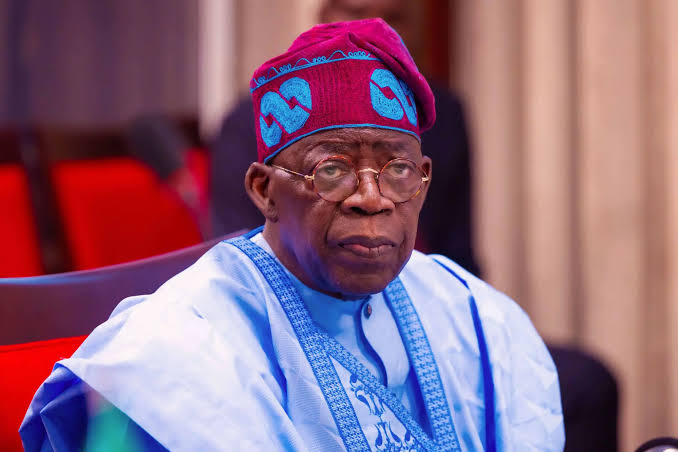
Tinubu made the declaration on Thursday, October 1, 2026, in his Independence Day address to Nigerians as the country marked its 66th anniversary of independence.
Reflecting on Nigeria’s journey since independence in 1960, the President acknowledged the challenges the country has experienced, including economic difficulties, insecurity, political upheavals and periods of military rule.
He said Nigerians had nevertheless continued to demonstrate resilience and faith in the future of the country.
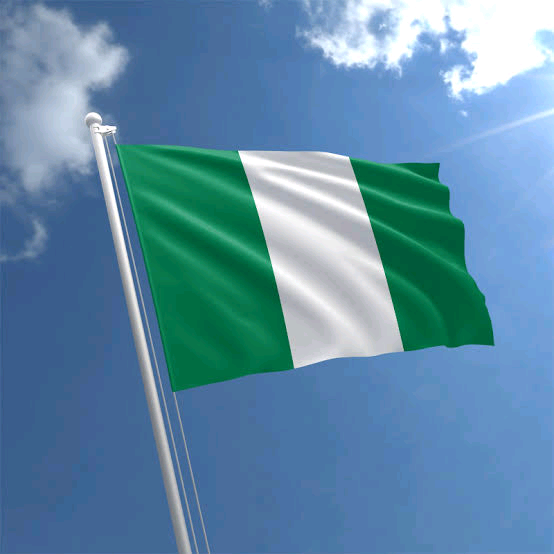
“Sixty-six years ago today, our flag was raised, for the first time, over a free and sovereign nation,” Tinubu said, stressing that Nigeria’s independence represented a larger promise of opportunity, dignity and a better life for its citizens.
According to the President, the economic situation inherited by his administration required difficult decisions, which he said resulted in reforms that have brought significant short-term hardship but were intended to address longstanding structural problems.
Using a medical analogy, Tinubu compared Nigeria’s economic situation to a patient suffering from a serious illness who must undergo difficult treatment rather than merely receive medication to suppress the symptoms.
He said previous administrations had postponed difficult decisions, while his government chose to confront the underlying problems.
“When this Administration assumed office, we resolved to do things differently. We chose to excise the cancer,” the President said, while acknowledging that “the side effects were real.”
Tinubu defended the reforms implemented under his administration, arguing that the policies did not create Nigeria’s economic weaknesses but were designed to address them.
“Our reforms did not create the weaknesses in our economy. They confronted them,” he said.
The President said Nigeria’s economic outlook had improved, pointing to economic growth of more than four per cent in 2026, declining inflation from its peak, improved foreign reserves and greater stability in the foreign exchange market.
He also stated that Nigeria recorded more than $6 billion in non-oil export revenue in 2025, describing it as the country’s highest-ever figure. These figures were presented by the President as evidence that the reforms were beginning to produce results.
‘The emergency treatment is over’
A major theme of Tinubu’s Independence Day message was the transition from economic reforms to prosperity.
The President declared that the immediate phase of correcting the country’s economic direction had passed.
“The emergency treatment is over. The foundation has been repaired,” Tinubu said.
He added: “For three years, our overriding purpose was to correct our nation’s course. Now, our purpose is simple: shared and widespread prosperity.”
Tinubu explained that prosperity should not be measured only by economic statistics, but by whether ordinary Nigerians experience improvements in their daily lives.
He said his vision includes farmers being able to cultivate their land safely, factories having reliable electricity, businesses gaining access to credit and young Nigerians finding productive employment.
Cost of living remains a priority
The President acknowledged that the cost of living remains a major concern for Nigerians and said reducing the cost of producing and transporting goods would be central to the next phase of government policy.
He listed mechanised agriculture, irrigation, access to seeds and fertiliser, improved storage, transportation infrastructure, roads, railways and ports among measures being pursued to strengthen production and distribution.
Tinubu said Nigeria has the land and human resources needed to feed itself and that government would continue investing in agriculture and infrastructure to connect farms and factories to markets.
Jobs and industrial production
The President also placed emphasis on Nigeria’s young population, saying the country must create productive opportunities for young people.
He said government would focus on jobs, enterprise and industrial growth, including the use of gas to power industries, support for businesses seeking to revive factories, improved digital connectivity, skills development and access to financing.
Tinubu said the objective is to see more Nigerian businesses produce goods for domestic consumption and export.
‘We will defeat poverty’
Tinubu acknowledged that millions of Nigerians are still struggling with the cost of food, education, healthcare and transportation.
He said some of the difficulti lles were rooted in problems that accumulated over several decades.q
“We cannot erase in four years what accumulated over generations. But we can change its course,” he said.
The President cited government programmes supporting vulnerable households, the National Social Register, the Nigerian Education Loan Fund, CREDICORP, primary healthcare and basic education as part of the measures being used to support Nigerians.
However, he said such interventions should not become a permanent substitute for economic prosperity.
“Our objective is not to manage poverty more efficiently. We will defeat it,” Tinubu declared.
He acknowledged that achieving this goal would require time, discipline, sustained economic growth and the creation of millions of productive opportunities.
‘Now begins the age of prosperity’
In the concluding part of his address, Tinubu urged Nigerians to look forward rather than return to policies that he said contributed to the country’s economic difficulties.
He declared that Nigeria had reached a turning point and described the next phase as one focused on prosperity.
“The age of reform has done its work. Now begins the age of prosperity,” the President said.
He further told Nigerians that the country had corrected its economic course and had “passed through our own Red Sea,” urging citizens to move forward with faith in the country.
Tinubu ended his Independence Day message by expressing confidence in Nigeria’s future and calling for unity as the country enters its 67th year as an independent nation.
“Our destination is in sight. Our foundations are strong. Our direction is clear. So let us go forward. No looking back,” he said.
He concluded: “Happy Independence Day, my fellow Nigerians. God bless you all, and God bless the Federal Republic of Nigeria.”
