

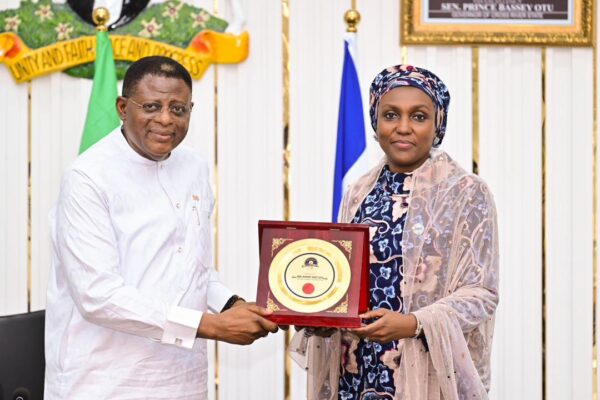
By Peter Omopo
Cross River State Governor, Senator Bassey Otu, has called on the Federal Government to urgently intervene in the recurring flooding affecting several communities across the state, warning that the situation is fast becoming a major ecological crisis.
Governor Otu made the appeal while receiving the Director-General of the National Emergency Management Agency (NEMA), Mrs. Zubaida Umar, and her delegation during a courtesy visit in Calabar as part of the 2026 National Flood Preparedness and Awareness Campaign.
The governor said flooding has continued to devastate many communities in Cross River State annually, destroying homes, farmlands and sources of livelihood.
According to him, despite previous engagements with relevant authorities on flood control measures, the challenge has persisted due to abandoned and incomplete drainage and water channel projects.
Otu noted that the absence of effective flood control infrastructure has intensified the impact of heavy rainfall and water releases, leaving communities located along flood-prone corridors vulnerable to repeated disasters.
He stressed that flooding in the state has gone beyond a seasonal issue and is gradually evolving into a wider environmental threat that requires urgent and coordinated intervention.
The governor therefore urged the Federal Government and relevant agencies to accelerate the completion of critical drainage systems and ecological projects aimed at mitigating the effects of flooding across the state.
Responding, NEMA Director-General, Mrs. Zubaida Umar, said the visit formed part of the agency’s nationwide preparedness campaign following forecasts indicating that several states, including Cross River, are at high risk of flooding in 2026.
She identified vulnerable local government areas in the state to include Abi, Akamkpa, Calabar Municipality, Calabar South, Etung, Ikom, Odukpani, Obubra and Obanliku.
Umar explained that the awareness campaign was designed to strengthen collaboration between the federal and state governments, as well as other stakeholders, to improve preparedness, reduce risks and minimise the impact of flooding on lives and property.
